
Middle East Aviation Crisis: UAE, Saudi Arabia, and Israel Grapple with Rising Fuel Costs
The Middle East aviation sector is facing intense pressure as rising jet fuel prices and operational costs impact major carriers like Emirates, Saudia, and El Al in 2026.

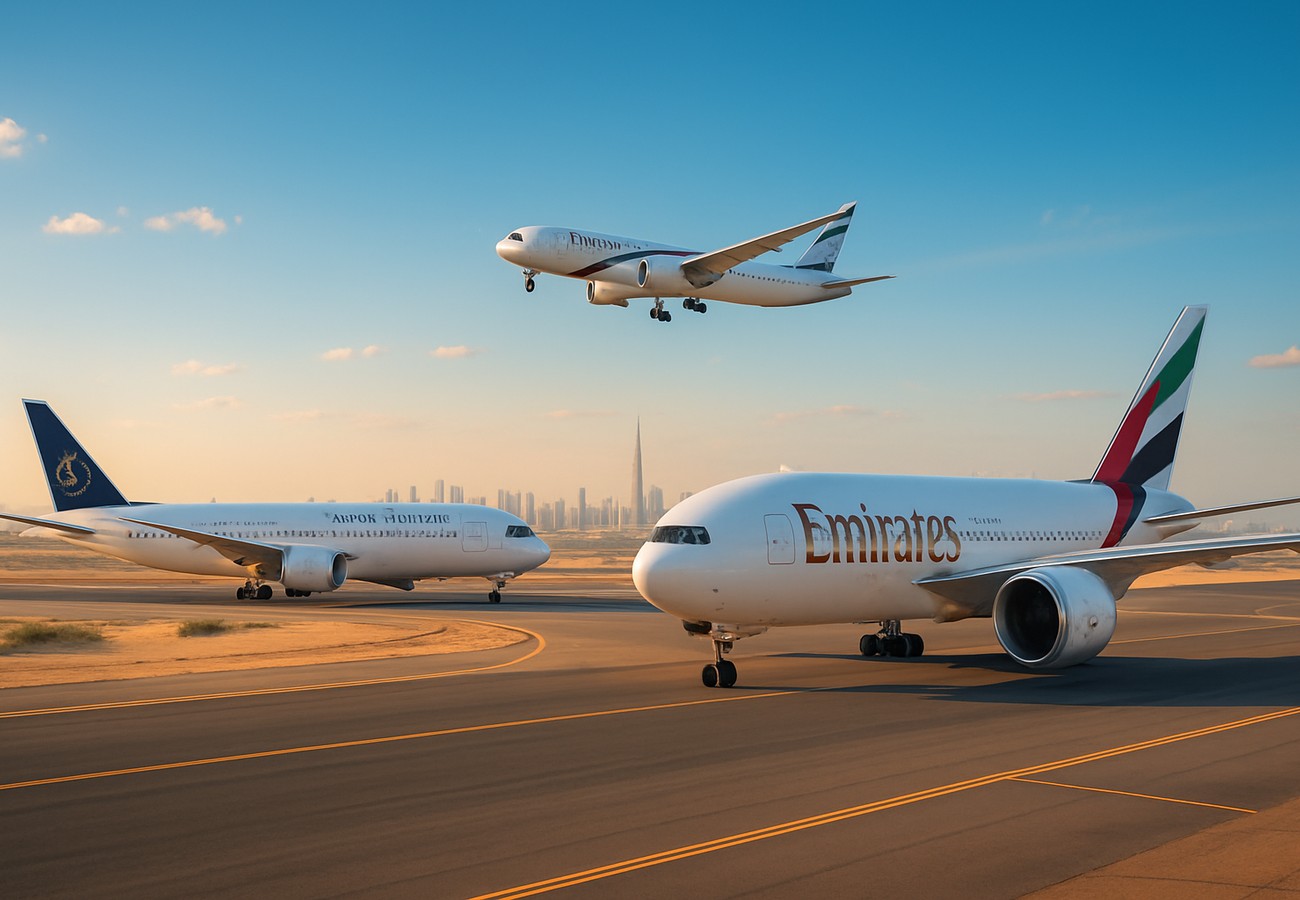
Image generated by AI
The aviation landscape in the Middle East is undergoing a period of significant economic volatility. In May 2026, the UAE, Saudi Arabia, Israel, Qatar, Syria, Bahrain, Russia, and India are all grappling with intensifying travel challenges as jet fuel prices and operational costs soar, directly impacting global leaders like Emirates and Qatar Airways.
As the region continues to position itself as the world’s primary transit hub, the rising cost of energy is forcing a strategic pivot in how these airlines manage capacity and pricing.
The Cost of Connectivity: Rising Airline Expenses
Middle Eastern carriers, known for their high-frequency, wide-body operations, are particularly vulnerable to fuel price spikes. Fuel now accounts for an estimated 38% of operational costs for major regional carriers.
Key Challenges Facing the Region:
- Jet Fuel Price Surge: A 22% year-on-year increase in aviation kerosene prices is thinning the profit margins of long-haul operators.
- Airspace Restrictions: Ongoing geopolitical tensions in the Levant and Eastern Europe have forced longer flight paths, further increasing fuel consumption for flights between Europe and Asia.
- Labor Inflation: A regional shortage of specialized maintenance crew and ground staff has pushed up wages, adding another layer of expense to airline balance sheets.
Impact on Major Carriers
| Carrier | Primary Challenge | Recent Strategic Move |
|---|---|---|
| Emirates | Fuel Burn on A380 Fleet | Accelerating A350-900 deliveries for efficiency. |
| Saudia | Domestic Expansion Costs | Implementing premium-cabin fuel surcharges. |
| Qatar Airways | Airspace Flow Restrictions | Optimizing ultra-long-haul flight paths. |
| El Al | Security-Induced Insurance Hikes | Consolidating European regional routes. |
Regional Ripple Effects: Beyond the Gulf
While the UAE and Qatar are the most visible players, the crisis is hitting secondary markets like Bahrain, Syria, and Russia with equal intensity.
- Syria and Russia: High insurance premiums and limited access to international spare parts have made commercial aviation increasingly unsustainable for regional operators.
- India Connection: As a primary market for Middle Eastern carriers, Indian travelers are seeing a 15% rise in "transit fares" via Dubai and Doha as airlines pass on the rising fuel costs.
- Israel: Despite strong demand, the cost of operating into Tel Aviv (TLV) remains high due to security-related operational requirements and rising airport fees.
Future Outlook: Efficiency vs. Expansion
To mitigate these challenges, Middle Eastern aviation leaders are doubling down on technological and structural innovations:
- Airport-Linked Free Zones: The UAE and Oman are rapidly expanding free zones linked directly to airports to reduce logistics costs and create new non-aeronautical revenue streams.
- SAF Investment: Saudi Arabia and the UAE are investing billions in local Sustainable Aviation Fuel (SAF) production to hedge against future fossil fuel price spikes.
- Fleet Renewal: The region’s airlines have the world’s youngest wide-body fleets, a critical advantage as fuel-efficient aircraft like the Boeing 777X and Airbus A350 become essential for survival.
Related Travel Guides
- Emirates and Etihad Lead Global Free Zone Revolution
- European Airfare Surge: Air France-KLM and Lufthansa React to Fuel Crisis
- Dubai International Airport Resilience Amid Missile Alerts
Akasa Air, India’s fastest-growing airline, is further solidifying its position in the domestic market with the launch of new, seamless direct flights between Delhi and Gwalior. This expansion is a key part of the airline’s strategy to enhance regional connectivity and offer greater travel convenience for both business and leisure travelers in Madhya Pradesh and the National Capital Region.
The move comes as the Indian aviation sector sees a surge in demand for short-haul, point-to-point connections that bypass traditional transit bottlenecks.
Strengthening the Delhi-Gwalior Corridor
Gwalior, a city known for its rich history and emerging industrial presence, has long been a key focus for regional aviation expansion. Akasa’s entry into this route provides a modern, low-cost alternative for the thousands of travelers who currently rely on rail or road transport.
Flight Schedule Details:
- Frequency: Daily direct service.
- Aircraft: Boeing 737 MAX, featuring Akasa’s signature "Cafe Akasa" and comfortable legroom.
- Travel Time: Approximately 60 minutes, significantly reducing the 4-6 hour journey by road or rail.
Impact on Regional Tourism and Business
The launch of this route is expected to have a multi-fold impact on the region:
- Tourism Boost: Gwalior’s iconic fort and palaces are now more accessible to international tourists landing in Delhi, facilitating easier "day-trip" or weekend itineraries.
- Business Connectivity: For industries in the Gwalior and Chambal regions, the direct link to Delhi provides faster access to national and international markets.
- UDAN Synergy: While this is a commercial route, it aligns with the government’s vision of making air travel accessible to every corner of India.
Why Akasa Air is Winning in the Regional Market
Since its inception, Akasa Air has focused on operational reliability and customer centricity, which has resonated well with Indian travelers.
- Youngest Fleet: Operating an all-737 MAX fleet ensures higher fuel efficiency—a critical advantage during the 2026 fuel crisis—and a superior on-board experience.
- On-Time Performance: Akasa has consistently ranked among the top Indian carriers for punctuality, a key requirement for business travelers on the Delhi-Gwalior route.
- Competitive Pricing: By offering "Value-Light" fares, the airline is attracting a new segment of first-time flyers from the Gwalior region.
Advice for Travelers on the New Route
If you are planning to fly Akasa Air between Delhi and Gwalior:
- Book on the Akasa App: Use the official app for the lowest fares and to pre-book your favorite meals from "Cafe Akasa."
- Check Terminal Information: In Delhi, Akasa typically operates from Terminal 2 or 3. Verify your terminal before heading to the airport.
- Gwalior Airport Facilities: The newly expanded terminal at Gwalior offers modern amenities, but we recommend arriving 90 minutes before your departure for a smooth check-in experience.
Related Travel Guides
- SriLankan Airlines Leads South Asia in Service Excellence
- Air India and IndiGo Face Rising Costs Amid Global Fuel Surge
- India Aviation Expansion: New Hubs and Regional Routes for 2026
In a decisive move to capture market share in South Texas, Frontier Airlines has announced a major expansion at San Antonio International Airport (SAT). The ultra-low-cost carrier (ULCC) is launching a series of new domestic and international routes, strategically filling the vacuum created by Spirit Airlines’ recent withdrawal from the San Antonio market.
This expansion solidifies Frontier's position alongside Southwest Airlines, United Airlines, and American Airlines as a primary operator at SAT, offering budget-conscious travelers more options for travel across the U.S. and Mexico.
Filling the Gap: Frontier’s New SAT Network
The withdrawal of Spirit Airlines earlier this year left several key high-volume routes underserved. Frontier is moving rapidly to restore capacity on these critical corridors.
New and Expanded Routes from SAT:
- Mexico Connections: New non-stop service to Cancun (CUN) and Monterrey (MTY), providing essential links for both leisure and business travelers.
- Domestic Hubs: Increased frequencies to Denver (DEN), Las Vegas (LAS), and Orlando (MCO).
- Northeast Access: New direct flights to Philadelphia (PHL) and Baltimore (BWI), catering to the growing demand for affordable East Coast travel from Texas.
Competition at SAT: The New Landscape
| Route | Primary Carriers | Frontier’s Advantage |
|---|---|---|
| SAT to Orlando | Southwest, Delta | Ultra-low base fares for families. |
| SAT to Denver | United, Southwest | Higher frequency and "GoWild!" pass flexibility. |
| SAT to Cancun | United, American | Lower costs for year-round sun seekers. |
Why Frontier is Doubling Down on San Antonio
Aviation analysts point to three primary reasons for Frontier’s aggressive Texas strategy:
- Market Vacuum: Spirit’s exit provided an immediate opportunity to acquire gate space and capture a ready-made customer base that prioritizes low base fares.
- SAT Infrastructure Growth: San Antonio International is currently undergoing a multi-billion dollar expansion, including the construction of a new Terminal C, making it a more attractive long-term base for ULCCs.
- Cross-Border Demand: The "nearshoring" boom in Northern Mexico has led to a surge in business travel between San Antonio and Mexican industrial hubs like Monterrey, a niche Frontier is keen to exploit.
Advice for SAT Travelers Today
If you are looking to take advantage of Frontier’s new routes out of San Antonio:
- Check the "GoWild!" Pass: Frequent flyers out of SAT can benefit from Frontier’s all-you-can-fly pass, which is particularly valuable for the new high-frequency routes to Denver and Vegas.
- Budget for Add-ons: Remember that Frontier’s business model relies on low base fares with fees for bags and seat assignments. Use a personal item that fits under the seat to maximize savings.
- Arrive Early for International: For new routes to Mexico, arrive at SAT at least 3 hours early to navigate customs and immigration procedures at the newly expanded international gates.
Related Travel Guides
- San Antonio Airport Delays: Spirit and Delta Face Setbacks
- Spirit Airlines Exit US Markets: 21 Million Seats Lost
- Southwest Launches New Flight Route from Las Vegas to San Jose
Zone Revolution: Emirates, Etihad, and Qatar Airways Lead Global Economic Shift" date: "2026-05-05" updatedDate: "2026-05-05" excerpt: "The UAE, Qatar, Saudi Arabia, and Oman are sparking a global economic revolution through airport-linked free zones, led by aviation giants Emirates, Etihad, and Qatar Airways." coverImage: "https://images.nomadlawyer.org/images/blog/airline-news/2026/05/airport-free-zones-revolution-2026.jpg" coverImageAlt: "A futuristic aerial view of Dubai South (DWC) showing massive logistics hubs, free zone offices, and an Emirates cargo jet taking off." coverImageCaption: "Image generated by AI" metaDescription: "UAE, Qatar, Saudi Arabia, and Oman reshape global economics with airport-linked free zones in 2026. Learn how Emirates, Etihad, and Qatar Airways are leading the charge." keywords: ["airport free zones Middle East", "emirates logistics hub", "qatar airways cargo expansion", "saudi arabia aviation free zones", "oman airport linked economy", "global logistics revolution 2026"] tags: ["UAE", "Qatar", "Saudi Arabia", "Oman", "Emirates", "Etihad Airways", "Qatar Airways", "Economics", "Airline News"] slug: "emirates-etihad-qatar-airport-free-zones-economic-revolution-2026" category: "airline-news" author: "Kunal K Choudhary"

The Middle East is at the heart of a "Free Zone Revolution" that is fundamentally reshaping global trade and logistics. Led by aviation powerhouses Emirates, Etihad Airways, Qatar Airways, and flydubai, the nations of the UAE, Qatar, Saudi Arabia, and Oman are leveraging airport-linked free zones to create a new economic paradigm for the 2020s.
These specialized economic zones, located within or adjacent to international airports, are becoming the world's most efficient hubs for high-value manufacturing, e-commerce, and global distribution.
The Power of Proximity: Why Airport Free Zones Work
By integrating logistics, warehousing, and customs-free operations directly into the airport infrastructure, these nations have eliminated the "last-mile" bottlenecks that plague traditional global trade.
Key Drivers of the Revolution:
- Zero Taxes and Tariffs: Businesses operating within these zones benefit from 100% foreign ownership and zero corporate or personal income taxes.
- Rapid Transshipment: Goods can be moved from an aircraft to a sorting facility and onto another flight in under 4 hours, a speed unmatched by sea-air combinations.
- E-commerce Optimization: Major global players like Amazon and Alibaba have established massive distribution centers in Dubai South (DWC) and Doha's Hamad Airport Free Zone to serve the "Middle Corridor" between Asia and Europe.
Leading Free Zone Hubs in the Middle East
| Country | Key Hub | Leading Carrier | Primary Focus |
|---|---|---|---|
| UAE (Dubai) | Dubai South (DWC) | Emirates SkyCargo | Global E-commerce & Pharma |
| Qatar | Hamad Airport (HIA) | Qatar Airways Cargo | High-Tech & Perishables |
| Saudi Arabia | King Salman Int'l (RUH) | Riyadh Air | Manufacturing & Diversification |
| Oman | Muscat Airport (MCT) | Oman Air | Regional Logistics & Sea-Air |
Reshaping Global Supply Chains in 2026
The impact of these zones extends far beyond the Middle East. They are acting as a "stabilizer" for global supply chains during periods of maritime disruption.
- Defying Airspace Chaos: Despite regional geopolitical tensions, these free zone-linked airports have maintained 24/7 operations, acting as safe harbors for high-value cargo.
- Riyadh Air’s Ambition: Saudi Arabia’s new carrier, Riyadh Air, is building its entire business model around the massive free zone currently under construction at the new King Salman International Airport, aiming to connect 100 destinations by 2030.
- Pharma and Cold Chain: The UAE and Qatar have become the global centers for pharmaceutical distribution, with dedicated cold-chain facilities within their free zones capable of handling millions of vaccine doses and temperature-sensitive medicines.
Impact on Passengers: The "Airport City" Experience
For the average traveler, the growth of these free zones is leading to the rise of the "Aerotropolis"—where the airport is no longer just a transit point but a destination in itself.
- Luxury Layovers: The revenue generated from free zone operations is being reinvested into world-class passenger amenities, such as the tropical gardens at HIA or the massive luxury shopping districts at DXB.
- Business Connectivity: Transit passengers can now conduct business meetings in high-tech office spaces located within the secure zone of the airport, eliminating the need for visas and city commutes.
- Faster Cargo for All: The sheer volume of cargo handled by these hubs ensures that passenger flights remain profitable even with fluctuating ticket prices, helping to maintain global connectivity.
Related Travel Guides
Disclaimer
This article is for informational and educational purposes only. It does not constitute legal, financial, or professional advice. While we strive to provide accurate and up-to-date information, travel policies, regulations, and conditions change rapidly. Always verify information with official sources before making travel decisions. Nomad Lawyer makes no representations about the accuracy, reliability, completeness, or suitability of the information provided. Readers should consult qualified professionals for advice specific to their circumstances. The views expressed in this article are those of the author and do not necessarily reflect the views of Nomad Lawyer.
Kunal K Choudhary
Co-Founder & Contributor
A passionate traveller and tech enthusiast. Kunal contributes to the vision and growth of Nomad Lawyer, bringing fresh perspectives and driving the community forward.
Learn more about our team →