
Bypassing Travel Chaos: Middle East Airspace Stabilizes as Gulf Megahubs Restore Crucial East-West Corridors to End Mass Flight Cancellations: Airline News
As severe travel chaos and flight cancellations previously paralyzed the Middle East, Gulf megahubs in the UAE, Qatar, and Saudi Arabia officially stabilize airspace corridors.

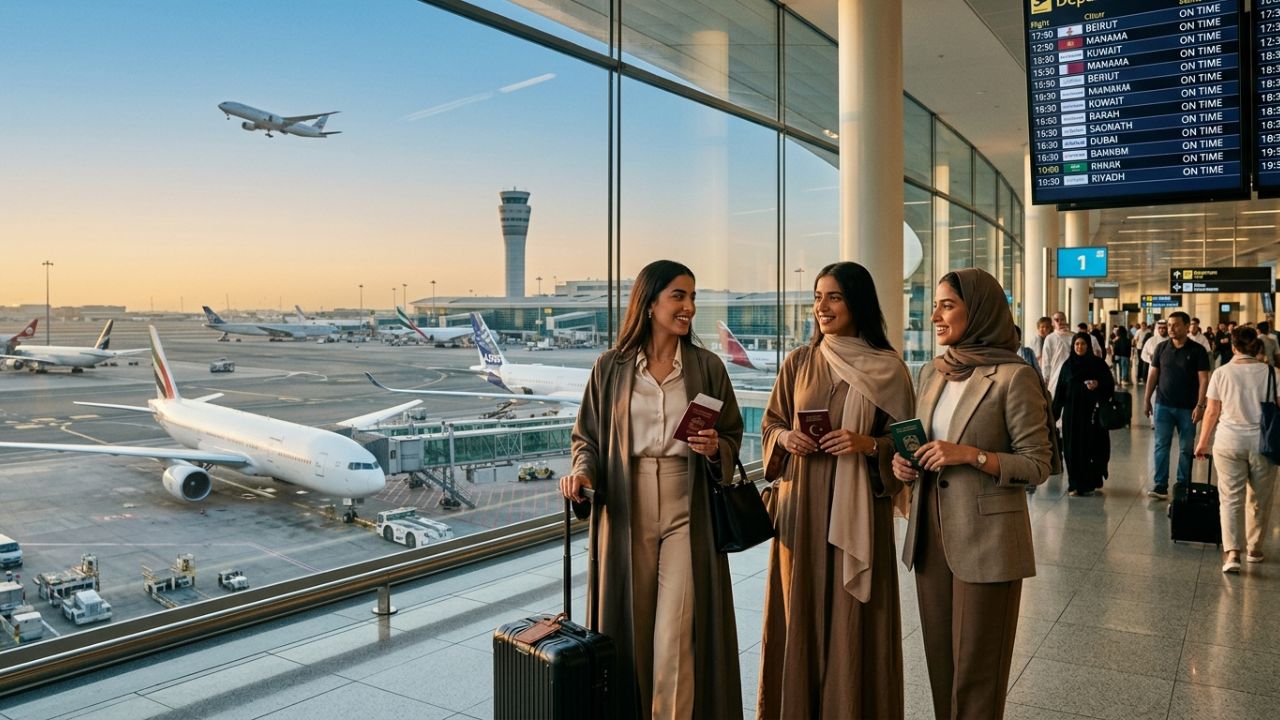
Image generated by AI
In a massive regulatory stabilization effort designed to aggressively reverse the rolling travel chaos that recently paralyzed critical intercontinental transit corridors, the Middle East aviation sector has officially initiated a historic recovery. Reported on June 20, 2026, as exhausted passengers frantically monitor the latest airline news for an end to sudden flight cancellations and agonizing terminal gridlock, Saudi Arabia has joined Bahrain, the UAE, Qatar, Kuwait, and Lebanon in successfully easing regional airspace disruptions. Driven by highly coordinated civil aviation authorities, this massive airspace normalization is actively eliminating the severe airport disruptions caused by temporary rerouting and precautionary suspensions. By officially restoring flight networks across the globe's most vital East-West transit hubs, this massive aviation revival guarantees highly reliable, uninterrupted access for global commuters, cementing this regional recovery as today's most crucial headline in breaking aviation updates.
By introducing direct passenger coordination and dynamic scheduling backups, the regional aviation hubs target growing passenger demand across vital commerce sectors. The choice to coordinate flight departures in phases helps to manage gate capacity, supporting the country's broader regional transportation network.
Context: Eradicating the Geopolitical Transit Nightmare
For the modern traveler relying on massive Gulf transit hubs, the recent geopolitical instability across the Middle East represented the absolute ultimate exposure to structural transit failure.
Historically, periods of heightened regional tension resulted in the immediate shuttering of vital air corridors. This forced airlines into massive, highly inefficient rerouting protocols, triggering catastrophic travel chaos. Flights were suddenly cancelled, connections in Dubai and Doha were destroyed, and multi-national tourists found themselves stranded as safety regulators issued rapid airspace suspensions. However, current operational indicators confirm that the crisis has passed. Civil aviation authorities across the UAE, Saudi Arabia, Qatar, Bahrain, Kuwait, and Lebanon have successfully coordinated with international safety frameworks to reopen these skies. Rather than permanent closures, the industry executed highly disciplined, temporary route adjustments. Today, the rapid reinstatement of services across these massive transit hubs completely neutralizes the threat of layover gridlock, allowing global tourists and corporate executives to confidently bypass the unpredictability of alternative, congested Eurasian corridors.
To view live flight schedules, verify the active restoration of these Gulf airspace corridors, or to track potential route restorations prior to heading to the airport, travelers must consult official aviation directories. For direct updates regarding how this massive airspace normalization might shield you from current flight cancellations out of Europe or Asia, travelers should aggressively utilize the official digital portals of their respective carriers. To explore live flight tracking and monitor the exact severity of the cascading bottlenecks paralyzing alternative airspace, passengers can consult the official FlightAware tracking service.
Section-Wise Breakdown: The Regional Transit Revival
Saudi Arabia: Vision-Led Expansion
Saudi Arabia’s aviation sector is aggressively capitalizing on this stabilized airspace to execute massive structural expansions under the General Authority of Civil Aviation (GACA). Rather than retreating from regional disruptions, the Kingdom is actively scaling airport capacity and international route networks across Riyadh, Jeddah, and Dammam. The market proves that any route adjustments were strictly temporary; the rapid reinstatement of services guarantees long-term resilience and positions Saudi Arabia as a primary, heavily fortified global transit hub.
The UAE: Dubai and Abu Dhabi Resiliency
The United Arab Emirates maintains one of the most resilient aviation systems globally, rigidly protected by the UAE General Civil Aviation Authority (GCAA). Throughout the regional alerts, Dubai and Abu Dhabi functioned efficiently by utilizing highly coordinated, temporary rerouting rather than full service suspensions. This advanced air navigation coordination ensured the continuity of global East-West connectivity, completely avoiding the catastrophic travel chaos of hard groundings and enabling rapid restoration the moment safety conditions improved.
Qatar and Bahrain: East-West Hub Stability
Qatar’s aviation system, heavily reliant on Hamad International Airport in Doha and monitored by the Qatar Civil Aviation Authority, proved structurally impenetrable. Because of its massive capacity, transit operations absorbed routing adjustments without triggering systemic flight cancellations. Similarly, Bahrain International Airport, under Civil Aviation Affairs, utilized an integrated Gulf airspace coordination system. By linking operational changes to broader regional advisories rather than domestic shutdowns, Bahrain ensured rapid schedule recovery the moment the regional threat level receded.
Lebanon and Kuwait: Sensitive Corridor Management
Operating in highly sensitive geographic locations, both Kuwait (under DGCA Kuwait) and Lebanon (via the Directorate General of Civil Aviation) experience more frequent air traffic adjustments. Even at high-risk facilities like Beirut–Rafic Hariri International Airport, the strategy relied exclusively on precautionary schedule reductions and dynamic routing rather than permanent route withdrawal. This disciplined risk assessment ensured that international carriers could rapidly surge capacity back into these markets the absolute moment the airspace stabilized.
Technical Roster: Official Middle East Aviation Authority Recovery Matrix
To ensure absolute factual accuracy regarding the exact regulatory bodies, specific hub operations, and strategic recovery protocols defining this massive regional stabilization, the following matrix details the strictly verified aviation data:
Official Middle East Aviation Authority and Hub Recovery Matrix
| Nation & Regulatory Authority | Major Hubs & Operational Recovery Protocols |
|---|---|
| Saudi Arabia (GACA) | Hubs: Riyadh, Jeddah, Dammam Status: Ongoing airport expansion; route adjustments strictly temporary; increasing international capacity. |
| UAE (GCAA) | Hubs: Dubai, Abu Dhabi Status: Temporary rerouting replaces long-term suspensions; continuous long-haul connectivity maintained. |
| Qatar (Civil Aviation Authority) | Hubs: Hamad International Airport (Doha) Status: Strong East-West connectivity maintained; transit capacity remains structurally stable. |
| Bahrain (Civil Aviation Affairs) | Hubs: Bahrain International Airport Status: Integrated Gulf airspace coordination; rapid recovery after temporary regional alerts. |
| Kuwait (DGCA Kuwait) | Status: Sensitive corridor management; temporary rerouting used; no permanent international suspension. |
| Lebanon (DGCA Lebanon) | Hubs: Beirut–Rafic Hariri International Airport Status: Airline schedules dynamically adjust to risk advisories; no permanent route cessation. |
Data accurately reflects the verified regulatory oversight, major regional hubs, and strategic airspace recovery protocols tracking the Middle Eastern aviation stabilization as of June 2026.
Industry Analysis: The Superiority of Coordinated Rerouting
Aviation analysts monitoring the intensely competitive Middle Eastern transit market note that this successful airspace stabilization is a massive tactical victory for Gulf megahubs, proving their resilience against severe geopolitical shock.
Analysts emphasize that the key to avoiding catastrophic travel chaos was the explicit refusal by the UAE, Qatar, and Saudi Arabia to issue hard airspace closures. Instead, these regulators utilized dynamic, temporary rerouting synchronized with international safety frameworks. By burning slightly more fuel to navigate around volatile zones rather than grounding fleets entirely, airlines prevented the massive bottlenecks that previously paralyzed intercontinental travel. This agility guarantees that major Gulf hubs remain the absolute safest and most reliable transit points for global passengers. Legacy airlines operating through less coordinated regions frequently collapse under similar pressure, proving that the Middle East aviation model is structurally optimized to absorb and immediately recover from external threats.
Actionable Advice for Intercontinental Travelers
Because the June 2026 stabilization of Middle East airspace fundamentally restores the reliability of global transit, passengers must execute this strategic booking checklist immediately:
- Exploit the Restored Gulf Megahubs: Travelers flying between Europe, Asia, and Africa should immediately resume booking layovers through Dubai, Doha, and Abu Dhabi. With the airspace officially stabilized, these massive hubs offer the fastest and most reliable transit times, completely bypassing the travel chaos and capacity restrictions plaguing alternative northern Eurasian corridors.
- Ignore Outdated Cancellation Panic: Do not allow outdated news reports of regional instability to deter your bookings. Regulators like the GCAA and GACA have proven that any future routing disruptions will be handled dynamically in the air, meaning your flights will likely experience minor detours rather than the catastrophic cancellations that strand passengers at the gate.
- Monitor Beirut and Kuwait Selectively: If your final destination is specifically Lebanon or Kuwait, maintain a slightly elevated defensive posture. Because these corridors are geographically more sensitive, pack essential survival items in your carry-on luggage and aggressively monitor airline apps for last-minute schedule reductions, ensuring you are never caught off-guard by localized precautionary measures.
FAQ: Middle East Airspace Stabilization
Which countries are involved in the recent Gulf aviation recovery?
The massive airspace stabilization encompasses critical aviation networks across Saudi Arabia, the UAE, Bahrain, Qatar, Kuwait, and Lebanon.
Did the regional disruptions cause permanent route cancellations?
No. Regulators explicitly confirmed that the disruptions triggered temporary, dynamic rerouting rather than any permanent structural withdrawals of commercial airspace.
Are major hubs like Dubai and Doha safe for transit?
Yes. Supported by advanced air traffic control coordination, hubs like Dubai, Abu Dhabi, and Doha successfully maintained East-West connectivity and are operating highly stable, continuous long-haul networks.
The Reality of Resilient Airspace
The massive stabilization of the Middle Eastern aviation corridors proves definitively that highly coordinated regulatory oversight is the ultimate weapon against systemic global travel chaos. By prioritizing dynamic rerouting over panicked fleet groundings, authorities in Saudi Arabia, the UAE, and Qatar have successfully guaranteed that intercontinental tourists and executives can escape the terrifying gridlock of regional conflict. Yet, as passengers confidently return to these massive Gulf hubs for their summer travel, they must accept a critical new reality: surviving the massive disruptions of modern global commerce demands reliance on agile infrastructure. Navigating the highly complex 2026 airspace requires a complete refusal to book through fragile legacy networks, and the tactical discipline to utilize massive transit hubs that possess the financial and operational power to dynamically outmaneuver any geopolitical threat.
Key Takeaways
- Massive Airspace Stabilization: Saudi Arabia, Bahrain, the UAE, Qatar, Kuwait, and Lebanon have successfully eased regional disruptions, restoring critical Middle Eastern flight corridors.
- Elimination of Travel Chaos: Coordinated civil aviation authorities utilized dynamic rerouting instead of permanent closures, protecting passengers from catastrophic flight cancellations.
- Gulf Megahubs Reign Supreme: Dubai, Abu Dhabi, and Doha proved structurally resilient, maintaining continuous East-West long-haul connectivity despite the regional alerts.
- Saudi Expansion Surges: Saudi Arabia is aggressively utilizing the stabilization to expand airport capacity across Riyadh, Jeddah, and Dammam under GACA oversight.
- Sensitive Corridor Management: Beirut and Kuwait handled the instability via precautionary schedule reductions, entirely avoiding the total cessation of international flights.
Related Travel Guides
Massive Travel Chaos Paralyzes Chicago O'Hare with 1,425 Disruptions
Disclaimer
This article is for informational and educational purposes only. It does not constitute legal, financial, or professional advice. While we strive to provide accurate and up-to-date information, travel policies, regulations, and conditions change rapidly. Always verify information with official sources before making travel decisions. Nomad Lawyer makes no representations about the accuracy, reliability, completeness, or suitability of the information provided. Readers should consult qualified professionals for advice specific to their circumstances. The views expressed in this article are those of the author and do not necessarily reflect the views of Nomad Lawyer.
Kunal K Choudhary
Co-Founder & Contributor
A passionate traveller and tech enthusiast. Kunal contributes to the vision and growth of Nomad Lawyer, bringing fresh perspectives and driving the community forward.
Learn more about our team →