
UAE, Saudi, Qatar & Gulf States Waive Visa Fines for Stranded Travelers
The UAE, Saudi Arabia, Qatar, Kuwait, Bahrain, and Oman have all introduced emergency visa extensions and overstay fine waivers as a Middle East aviation crisis — triggered by mass flight cancellations and sudden airspace closures — leaves travelers from the US, UK, Canada, Germany, China, India, and Bangladesh stranded at both ends of their journeys.

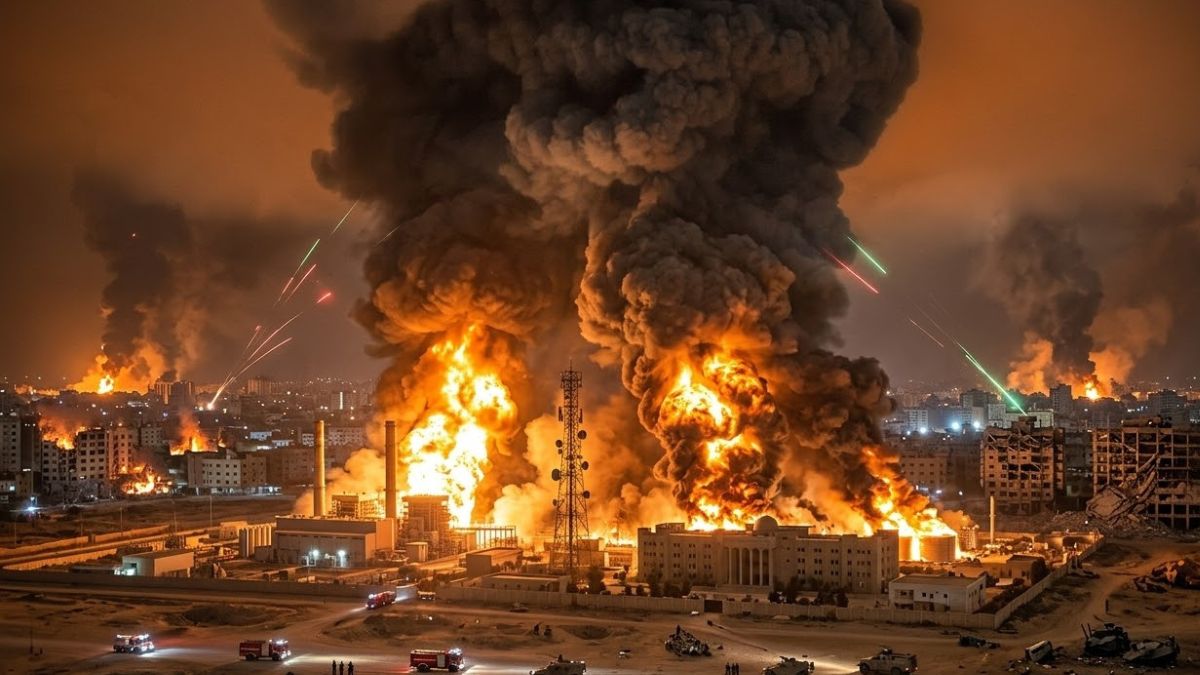
Image generated with AI
**> Quick Summary
- UAE, Saudi Arabia, Qatar, Kuwait, Bahrain, and Oman have all introduced emergency visa extensions and overstay fine waivers as a Middle East aviation crisis traps travelers at both ends of their journeys
- Mass flight cancellations and sudden airspace closures on February 28 left travelers from the US, UK, Canada, Germany, China, India, and Bangladesh unable to depart or return before their visas expired
- Country-specific measures include automatic one-month visa extensions (Saudi Arabia, Qatar, Kuwait), re-entry without new permits until March 31 (UAE), unused visa validity extensions of three months (Bahrain), and temporary immigration relaxation with hotel support (Oman)
- Airlines and major hubs — Dubai, Doha, Riyadh, and Muscat — are working urgently to restore flight networks and rebook stranded passengers**
Six Gulf nations have launched a coordinated wave of emergency immigration relief measures as a Middle East aviation crisis — sparked by regional tensions, mass flight cancellations, and sudden airspace closures on February 28, 2026 — leaves thousands of international travelers stranded, their visas expiring, their flights grounded. The UAE, Saudi Arabia, Qatar, Kuwait, Bahrain, and Oman have each introduced country-specific packages of visa extensions, overstay fine waivers, and special re-entry provisions, shielding travelers from the US, UK, Canada, Germany, China, India, Bangladesh, and other major markets from costly immigration penalties during an unprecedented disruption to global air travel.
The measures reflect both humanitarian urgency and strategic tourism self-interest. Aviation hubs like Dubai, Doha, and Riyadh function as critical connectors between Asia, Europe, Africa, and the Americas — and protecting their reputations as reliable, traveler-friendly destinations is a priority even amid a crisis beyond their control.
UAE: Waived Fines, Re-Entry Without New Permits, and a March 31 Deadline
The United Arab Emirates has unveiled the region's broadest immigration relief package. Tourists, visit-visa holders, transit passengers, and residents who could not depart the UAE after February 28 due to flight disruptions are fully shielded from overstay fines — the standard penalty of approximately AED 50 per day has been temporarily suspended for all disruption-related overstays.
For UAE residents who were stranded outside the country when the crisis hit, the government has introduced a rare measure: residents whose visas expired abroad after February 28 may re-enter the UAE without applying for a new entry permit, with this grace window running until March 31, 2026. After re-entry, residents must renew or adjust their visa status within a limited post-arrival grace period.
| Aspect | Details |
|---|---|
| Coverage inside UAE | Tourists, visit-visa holders, transit passengers, residents unable to leave after Feb 28 |
| Overstay fines | All disruption-related fines waived (normally ~AED 50/day) |
| Residents abroad | May re-enter without a new permit if visa expired abroad after Feb 28 |
| Grace window | Re-entry without penalties permitted until March 31, 2026 |
| Post-arrival requirement | Visa renewal or status adjustment required after re-entry |
Saudi Arabia: Automatic One-Month Extensions, No Application Required
Saudi Arabia — rapidly expanding its global tourism footprint under the Vision 2030 initiative — has implemented automatic one-month visa extensions for all visitors and residents who were unable to depart due to cancelled flights. Crucially, no application is required: the extension is applied automatically, removing administrative burden from travelers already managing difficult rebooking situations.
The measure prevents visitors from falling into overstay status while flights remain suspended or at reduced capacity. Airlines are simultaneously offering flexible rebooking options for affected passengers, with Saudi authorities coordinating directly with carriers on passenger accommodation.
| Aspect | Details |
|---|---|
| Coverage | Visitors and residents unable to leave due to cancelled flights |
| Visa policy | Automatic one-month extension — no application needed |
| Overstay protection | Extensions prevent immigration penalties |
| Airline support | Flexible rebooking options offered by airlines |
| Emergency measure | Temporary response to the aviation crisis |
Qatar: Free, Automatic Extensions and Waived Overstay Penalties
Qatar — home to Hamad International Airport in Doha, one of the world's busiest transit hubs — has introduced a one-month automatic extension for all entry visas, covering tourists, short-term visitors, and all other entry categories affected by the February 28 airspace closure. Extensions are granted free of charge with no application process required, as immigration authorities apply them directly.
Overstay penalties linked to the crisis have also been waived. Qatar's approach mirrors its broader tourism strategy — which gained international attention during the FIFA World Cup — prioritizing visitor welfare and demonstrating the country's capacity to manage exceptional circumstances efficiently.
| Aspect | Details |
|---|---|
| Coverage | Foreign nationals whose visas expired or were due to expire after Feb 28 |
| Main benefit | Automatic one-month extension of all entry visas |
| Fees | Extensions provided free of charge |
| Overstay penalties | Fines waived for disruption-caused overstays |
| Application process | Extensions applied automatically by immigration authorities |
| Future adjustments | Authorities may extend relief depending on crisis duration |
Kuwait: One-Month Visitor Extensions and Three-Month Absence Permits for Residents
Kuwait has responded with a dual-track relief package. Visit-visa holders unable to depart receive an automatic one-month extension, applied electronically without requiring visits to immigration offices. All overstay fines linked to the disruption have been cancelled.
For Kuwait residents who were abroad when the crisis hit, authorities have granted an automatic three-month absence permit, ensuring they can return without losing their residency status — a critical protection for expatriate workers and long-term residents with employment and housing arrangements in the country. Travelers are directed to monitor official updates via the Sahel government app.
| Aspect | Details |
|---|---|
| Coverage | Visit-visa holders and residents affected by regional airspace closures |
| Visit visa policy | Automatic one-month extension |
| Overstay fines | All disruption-related penalties cancelled |
| Residents abroad | Automatic three-month absence permit granted |
| Processing | Extensions applied electronically — no office visit required |
| Official updates | Monitor via the Sahel government app |
Bahrain: Unused Visa Extensions and a One-Month Post-Reopening Grace Period
Bahrain has targeted relief at two distinct groups: visitors already inside the country, and those who obtained Bahrain visit visas but could not travel due to the crisis.
For travelers stranded inside Bahrain, overstay fines have been waived, and visitors may remain without penalties for one month after the airspace reopens. For travelers outside Bahrain who hold valid but unused visit visas that they could not use due to the crisis, visa validity has been extended by three months, preserving their planned trips for a later departure date.
| Aspect | Details |
|---|---|
| Coverage inside Bahrain | Visitors unable to depart due to flight suspensions |
| Overstay fines | Waived for disruption-related overstays |
| Additional grace period | Visitors may remain without fines for one month post-reopening |
| Coverage outside Bahrain | Travelers with unused visit visas affected by the crisis |
| Visa validity | Unused visit visas extended by three months |
Oman: Visa Flexibility and Hotel Accommodation for Stranded Tourists
Oman has combined immigration flexibility with direct hospitality support. Tourists stranded in the country — particularly those in Muscat — have been granted temporary visa extensions and protection from overstay penalties. In parallel, hotels and tourism operators have coordinated with Omani authorities to provide temporary accommodation for affected visitors, ensuring stranded travelers have immediate shelter while they await flight restoration.
| Aspect | Details |
|---|---|
| Coverage | International tourists stranded due to cancelled flights |
| Visa policy | Temporary extensions and relaxed immigration rules |
| Overstay protection | Travelers may remain without accumulating fines |
| Accommodation support | Hotels providing temporary lodging for stranded visitors |
| Tourism hub | Assistance programs centered in Muscat |
Airlines and Hubs Race to Restore Global Routes
The immigration relief measures from Gulf states are being implemented alongside urgent efforts by airlines and airports to stabilize flight networks. Dubai International (DXB), Hamad International Doha (DOH), King Khalid International Riyadh (RUH), and Muscat International (MCT) — all of which serve as critical connectors between Asia, Europe, and North America — have been operating at reduced or disrupted capacity since the February 28 airspace closures.
Carriers are prioritizing passenger rebooking, emergency accommodation, and the restoration of high-volume corridors connecting the Middle East to major markets including the US, UK, Canada, Germany, China, India, and Bangladesh. Industry analysts note that the cascading effect of hub disruptions at Dubai and Doha is felt across dozens of downstream markets — as millions of passengers routing through these hubs each month face broken itineraries, missed connections, and forced extended stays.
Airlines operating at affected hubs are offering flexible rebooking policies, fee waivers, and prioritized accommodation for passengers with long disruption windows. Airspace stability is expected to return gradually as regional tensions ease, though authorities in each country have reserved the right to extend relief measures further if disruption continues beyond current timelines.
Key Facts at a Glance
- 6 Gulf nations — UAE, Saudi Arabia, Qatar, Kuwait, Bahrain, Oman — have introduced coordinated relief measures
- Trigger event: mass airspace closures and flight cancellations effective February 28, 2026
- UAE grace window: re-entry without new permits available until March 31, 2026
- Saudi Arabia, Qatar, Kuwait: automatic one-month visa extensions, no application or fees
- Bahrain: three-month extension for unused visit visas; one-month fine-free grace period after airspace reopens
- Kuwait residents abroad: automatic three-month absence permit protects residency status
- Affected nationalities: travelers from US, UK, Canada, Germany, China, India, Bangladesh, and other major markets
- Key aviation hubs affected: Dubai (DXB), Doha (DOH), Riyadh (RUH), Muscat (MCT)
What This Means for Travelers
If you are a traveler currently stranded in the UAE, Saudi Arabia, Qatar, Kuwait, Bahrain, or Oman — or if you were unable to return to these countries before your visa expired — you are likely covered by one or more of the measures described in this article.
The most immediate priority is to contact your airline to rebook onto the earliest available flight, and to verify with the immigration authority of your specific country of stay which exact measures apply to your visa category and situation. Do not assume uniform rules apply across all six nations — the specific grace periods, coverage categories, and post-crisis obligations differ country by country as detailed in each section above.
Keep all documentation of your original booking, the cancellation notification from your airline, and any correspondence with immigration authorities. This paperwork will be essential when re-entering, renewing a visa, or claiming insurance reimbursement for expenses incurred during the extended stay.
Frequently Asked Questions
Which countries have waived visa overstay fines during the Middle East crisis? The UAE, Saudi Arabia, Qatar, Kuwait, Bahrain, and Oman have all introduced visa relief measures including overstay fine waivers and emergency extensions for travelers stranded by the Middle East aviation crisis triggered by airspace closures on February 28, 2026.
Can I re-enter the UAE if my residency visa expired while I was abroad? Yes. The UAE has specifically addressed this situation: residents whose visas expired abroad after February 28 may re-enter without applying for a new permit until March 31, 2026. After re-entry, you must renew or adjust your visa status within the applicable grace period.
Do I need to apply for an extension in Saudi Arabia or Qatar? No. Both Saudi Arabia and Qatar have implemented automatic extensions — no application, no fee, and no office visit is required. The one-month extension is applied directly by immigration authorities to all affected visa holders.
What should Kuwait residents do if they were stranded outside Kuwait? Kuwait residents stranded abroad are automatically granted a three-month absence permit, protecting their residency status. Monitor official updates via the Sahel government app and rebook onto the earliest available flight back to Kuwait.
Related Travel Guides
Dulles Airport Hit: Flights to Doha, London, Chicago & Orlando Axed
Kona Airport Crisis: 40+ Flights Cut — LA, Seattle, Calgary, Chicago Hit
Massive Flight Chaos at U.S. Airports: Cancellations Hit Hawaii-Bound Travelers Hard
Disclaimer
This article is for informational and educational purposes only. It does not constitute legal, financial, or professional advice. While we strive to provide accurate and up-to-date information, travel policies, regulations, and conditions change rapidly. Always verify information with official sources before making travel decisions. Nomad Lawyer makes no representations about the accuracy, reliability, completeness, or suitability of the information provided. Readers should consult qualified professionals for advice specific to their circumstances. The views expressed in this article are those of the author and do not necessarily reflect the views of Nomad Lawyer.
Kunal K Choudhary
Co-Founder & Contributor
A passionate traveller and tech enthusiast. Kunal contributes to the vision and growth of Nomad Lawyer, bringing fresh perspectives and driving the community forward.
Learn more about our team →