
The Free Zone Revolution: Emirates, Etihad, and Qatar Airways Lead Global Economic Shift
The UAE, Qatar, Saudi Arabia, and Oman are sparking a global economic revolution through airport-linked free zones, led by aviation giants Emirates, Etihad, and Qatar Airways.

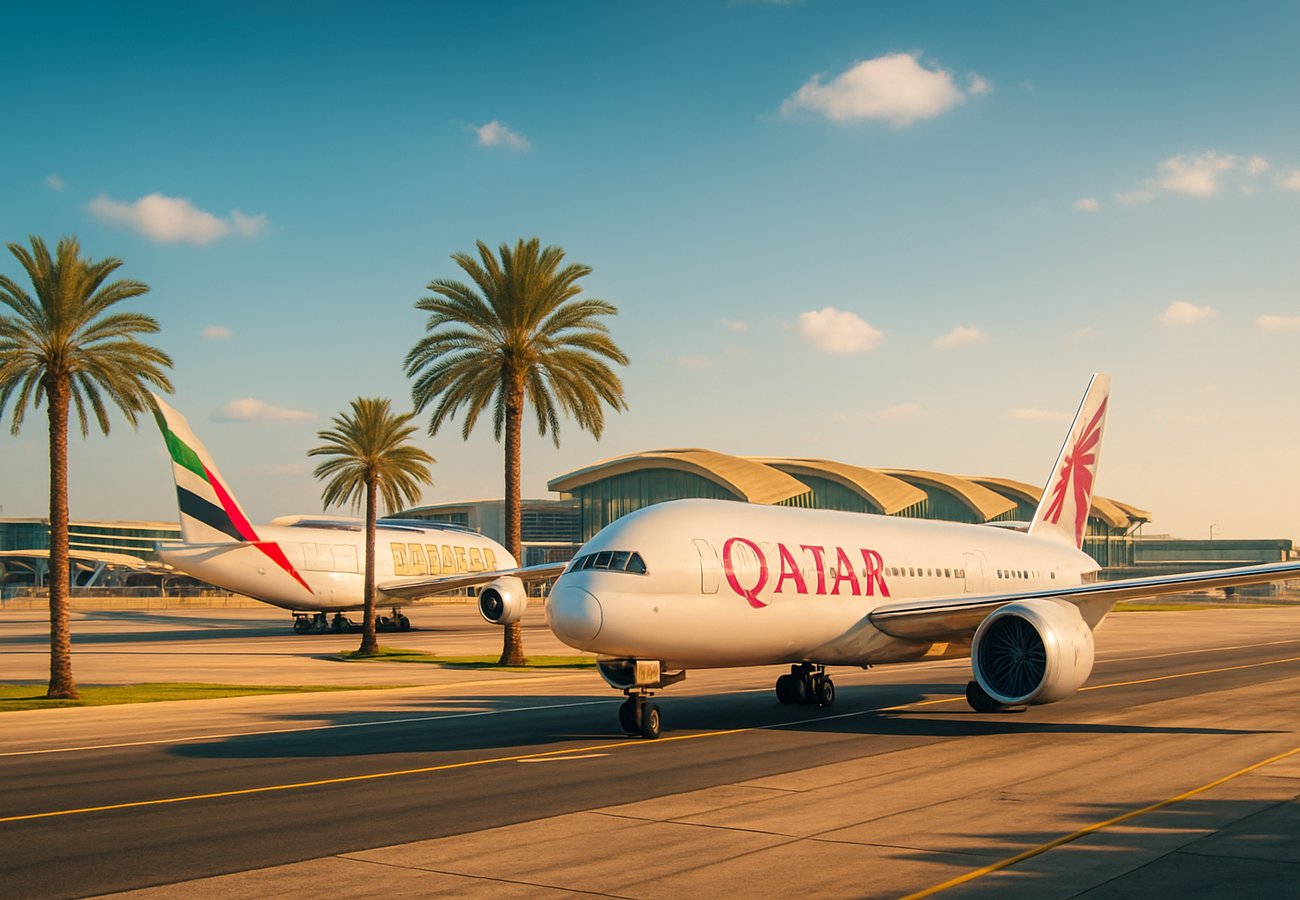
Image generated by AI
The Middle East is at the heart of a "Free Zone Revolution" that is fundamentally reshaping global trade and logistics. Led by aviation powerhouses Emirates, Etihad Airways, Qatar Airways, and flydubai, the nations of the UAE, Qatar, Saudi Arabia, and Oman are leveraging airport-linked free zones to create a new economic paradigm for the 2020s.
These specialized economic zones, located within or adjacent to international airports, are becoming the world's most efficient hubs for high-value manufacturing, e-commerce, and global distribution.
The Power of Proximity: Why Airport Free Zones Work
By integrating logistics, warehousing, and customs-free operations directly into the airport infrastructure, these nations have eliminated the "last-mile" bottlenecks that plague traditional global trade.
Key Drivers of the Revolution:
- Zero Taxes and Tariffs: Businesses operating within these zones benefit from 100% foreign ownership and zero corporate or personal income taxes.
- Rapid Transshipment: Goods can be moved from an aircraft to a sorting facility and onto another flight in under 4 hours, a speed unmatched by sea-air combinations.
- E-commerce Optimization: Major global players like Amazon and Alibaba have established massive distribution centers in Dubai South (DWC) and Doha's Hamad Airport Free Zone to serve the "Middle Corridor" between Asia and Europe.
Leading Free Zone Hubs in the Middle East
| Country | Key Hub | Leading Carrier | Primary Focus |
|---|---|---|---|
| UAE (Dubai) | Dubai South (DWC) | Emirates SkyCargo | Global E-commerce & Pharma |
| Qatar | Hamad Airport (HIA) | Qatar Airways Cargo | High-Tech & Perishables |
| Saudi Arabia | King Salman Int'l (RUH) | Riyadh Air | Manufacturing & Diversification |
| Oman | Muscat Airport (MCT) | Oman Air | Regional Logistics & Sea-Air |
Reshaping Global Supply Chains in 2026
The impact of these zones extends far beyond the Middle East. They are acting as a "stabilizer" for global supply chains during periods of maritime disruption.
- Defying Airspace Chaos: Despite regional geopolitical tensions, these free zone-linked airports have maintained 24/7 operations, acting as safe harbors for high-value cargo.
- Riyadh Air’s Ambition: Saudi Arabia’s new carrier, Riyadh Air, is building its entire business model around the massive free zone currently under construction at the new King Salman International Airport, aiming to connect 100 destinations by 2030.
- Pharma and Cold Chain: The UAE and Qatar have become the global centers for pharmaceutical distribution, with dedicated cold-chain facilities within their free zones capable of handling millions of vaccine doses and temperature-sensitive medicines.
Impact on Passengers: The "Airport City" Experience
For the average traveler, the growth of these free zones is leading to the rise of the "Aerotropolis"—where the airport is no longer just a transit point but a destination in itself.
- Luxury Layovers: The revenue generated from free zone operations is being reinvested into world-class passenger amenities, such as the tropical gardens at HIA or the massive luxury shopping districts at DXB.
- Business Connectivity: Transit passengers can now conduct business meetings in high-tech office spaces located within the secure zone of the airport, eliminating the need for visas and city commutes.
- Faster Cargo for All: The sheer volume of cargo handled by these hubs ensures that passenger flights remain profitable even with fluctuating ticket prices, helping to maintain global connectivity.
Related Travel Guides
Disclaimer
This article is for informational and educational purposes only. It does not constitute legal, financial, or professional advice. While we strive to provide accurate and up-to-date information, travel policies, regulations, and conditions change rapidly. Always verify information with official sources before making travel decisions. Nomad Lawyer makes no representations about the accuracy, reliability, completeness, or suitability of the information provided. Readers should consult qualified professionals for advice specific to their circumstances. The views expressed in this article are those of the author and do not necessarily reflect the views of Nomad Lawyer.
Kunal K Choudhary
Co-Founder & Contributor
A passionate traveller and tech enthusiast. Kunal contributes to the vision and growth of Nomad Lawyer, bringing fresh perspectives and driving the community forward.
Learn more about our team →