
Sydney Turns Pandemic Dining Into Permanent Street Culture With $20 Million Tourism Upgrade
Sydney Turns Pandemic Dining Into Permanent Street Culture With $20 Million Tourism Upgrade

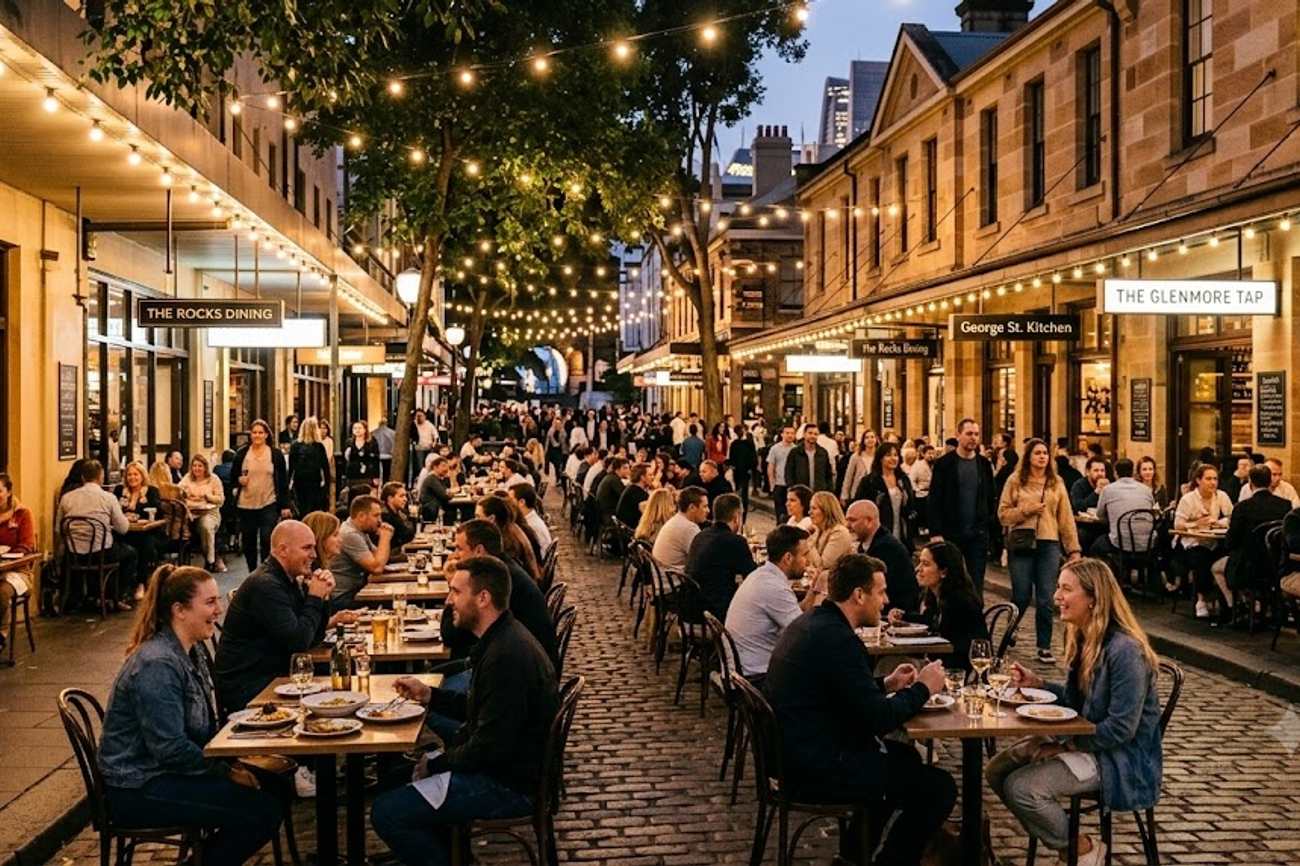
Image generated by AI
Sydney has effectively reclaimed 16,000 square metres of asphalt and concrete, transforming former parking spots and road lanes into open-air dining rooms. What began as a desperate pandemic survival tactic has evolved into a permanent urban redesign, with the city now investing AUD $20 million to replace temporary concrete barriers with high-end permanent infrastructure.
The Permanent Shift in Sydney’s Street Culture
For years, the visual identity of Sydney's dining districts was defined by heavy, industrial concrete blocks—the "temporary" markers of the pandemic era. However, the city is now moving toward a European-style urbanism. Starting in early 2027, Sydney will begin an eight-year rollout to convert roughly 150 locations into permanent pedestrian-friendly zones. This is not merely a cosmetic upgrade; it is a fundamental shift in how the city views its public space.
The scale of this transition is massive. Since November 2020, the City of Sydney waived approximately $25 million in outdoor dining fees to keep the industry afloat. That gamble paid off: more than 2,600 outdoor dining applications were approved, supporting over 1,000 hospitality businesses. The data proves the appetite for this lifestyle: 75% of participating businesses reported additional hiring, and more than one-third saw their turnover increase by over 20%.
By integrating permanent curb extensions and improved paving, the city is removing the "temporary" feel of these spaces. Visitors will no longer dine behind a wall of grey concrete but will instead find themselves in landscaped corridors with planter boxes and high-quality street finishes. This evolution is designed to make the act of walking through a neighborhood as much of an attraction as the destination itself.
What Makes Sydney’s New Urbanism Different
Unlike the rigid zoning often found in North American cities, Sydney is adopting a flexible, neighborhood-centric model. The city has recognized that a street in Kings Cross does not function the same way as one in Erskineville. Consequently, the new framework allows for layouts that adapt to the specific width of the street, the local architecture, and the flow of pedestrian traffic.
The most significant change for the visitor experience is the removal of outdated operational restrictions. In the past, strict rules governed everything from how outdoor heating was installed to whether patrons could stand without a designated table or shelf. These bureaucratic hurdles are being stripped away. The result is a more organic, fluid street life where the boundary between the sidewalk and the restaurant blurs.
For those exploring the city, this means the "dining strip" is becoming a social hub. The focus is shifting toward areas like Darlinghurst Road in Kings Cross, Stanley Street in Darlinghurst, and Erskineville Road. These districts are already cultural anchors, but the addition of permanent, greenery-filled dining spaces transforms them from places you simply visit for a meal into places where you spend an entire afternoon. This approach mirrors the pedestrian-first logic of cities like Paris or Barcelona, utilizing official Australian tourism guidelines to enhance the global appeal of the New South Wales capital.
Visitor Insider Tips
To experience the best of Sydney's evolving outdoor scene, you have to move beyond the Circular Quay tourist loop. The real energy is now found in the inner-city fringes.
Where to Base Yourself: If you want to be at the heart of this transformation, look for accommodation in Darlinghurst or Surry Hills. These areas have the highest density of these "reclaimed" spaces. Staying here allows you to experience the city's rhythm on foot, moving from a morning espresso at a sidewalk cafe to a late-night wine bar without ever needing a ride-share.
Timing the Streets: To avoid the midday rush and the "corporate crowd," aim for the "golden hour" between 4:00 PM and 6:00 PM. This is when the outdoor spaces transition from quiet coffee spots to vibrant social hubs. In neighborhoods like Kings Cross, the energy peaks later, but the early evening is the best time to secure a prime outdoor table without a reservation.
Local Etiquette: Sydney's outdoor dining is becoming more relaxed, but remember that these spaces are often integrated into narrow footpaths. Be mindful of "pedestrian flow"—avoid letting your group spill over into the main walking path. Also, while the city is becoming more flexible with standing areas, it is still customary to order a drink or snack if you are occupying a space near a restaurant's perimeter.
Transport Hacks: Avoid driving into the inner-city districts like Darlinghurst or Erskineville. With the conversion of parking spots into dining areas, street parking has become a rarity. Use the Light Rail or the extensive bus network. For those unfamiliar with the system, checking the Transport for NSW portal is the most reliable way to navigate the changing street layouts.
Cultural and Environmental Context
The transition from temporary barriers to permanent greenery represents a conscious effort to combat the "urban heat island" effect. By replacing heat-absorbing asphalt and concrete with planter boxes and landscaping, the city is attempting to lower street-level temperatures while improving air quality. This environmental shift is a direct response to the increasing intensity of Australian summers.
Culturally, this movement reflects a post-pandemic reclamation of the "third place"—that essential social space between home and work. For too long, Sydney's city center was designed for the commute; it was a place to move through, not a place to be. By prioritizing the pedestrian over the car, the city is fostering a more communal atmosphere.
However, this shift is not without tension. The removal of parking spaces to make room for dining has occasionally sparked friction with local commuters. The city's strategy to mitigate this is through "compliance education," which continues until 1 February 2027. This period allows businesses and residents to adjust to the new rules of the road. Furthermore, by granting permits for up to five years, the city is encouraging businesses to invest in sustainable, high-quality furniture rather than cheap, disposable plastic, reducing the long-term waste associated with the hospitality industry.
For those interested in the broader context of how urban spaces are preserved and evolved, the UNESCO World Heritage approach to urban landscapes emphasizes the importance of maintaining "living heritage." Sydney's move to integrate modern dining into historic neighborhoods like Kings Cross is a practical application of this philosophy—updating the function of the street while preserving its cultural identity.
FAQ: Visiting Sydney 2025-2027
What is the best time to visit Sydney for outdoor dining? Spring (September to November) and Autumn (March to May) offer the most temperate weather, making the outdoor dining districts in Darlinghurst and Kings Cross particularly pleasant without the extreme summer heat.
Do I need a visa to visit Sydney? Most international visitors require a visa or an Electronic Travel Authority (ETA). You should apply through the official Australian government channels well before your departure date.
How do I get to the inner-city dining districts from the airport? The Airport Link train is the fastest way to reach the city center. From there, a short Uber or bus ride will take you to the specific hubs of Darlinghurst, Kings Cross, or Erskineville.
Is it safe for solo travelers to explore these neighborhoods? Yes, Sydney is generally very safe. The new outdoor dining initiatives have actually increased "eyes on the street," making neighborhoods feel more active and secure for solo walkers and diners.
Trade the concrete jungle for a garden terrace and discover a city that finally learned how to slow down.
Related Travel Guides
- South Africa Teams Up With Seychelles In Leading September Tourism Surge As African Nations Target Travellers With Culture And Luxury Experiences
- Oman’s Al Jabal Al Akhdar Sparks a Massive Tourism Revolution as Gulf Tourism Capital 2027 Brings Global Attention and Unmatched Experiences
- Manchester Leads Liverpool in International Visitors as UK Aviation, Culture and Hotel Markets Diverge
Disclaimer
This article is for informational and educational purposes only. It does not constitute legal, financial, or professional advice. While we strive to provide accurate and up-to-date information, travel policies, regulations, and conditions change rapidly. Always verify information with official sources before making travel decisions. Nomad Lawyer makes no representations about the accuracy, reliability, completeness, or suitability of the information provided. Readers should consult qualified professionals for advice specific to their circumstances. The views expressed in this article are those of the author and do not necessarily reflect the views of Nomad Lawyer.
Raushan Kumar
Founder & Lead Developer
Full-stack developer with 11+ years of experience and a passionate traveller. Raushan built Nomad Lawyer from the ground up with a vision to create the best travel and law experience on the web.
Learn more about our team →