
Thailand Steps Up with South Korea and Others to Transform Asia’s Digital Tourism Payments as Vietnam Pushes Beyond 6% QR Acceptance Growth
Thailand Steps Up with South Korea and Others to Transform Asia’s Digital Tourism Payments as Vietnam Pushes Beyond 6% QR Acceptance Growth

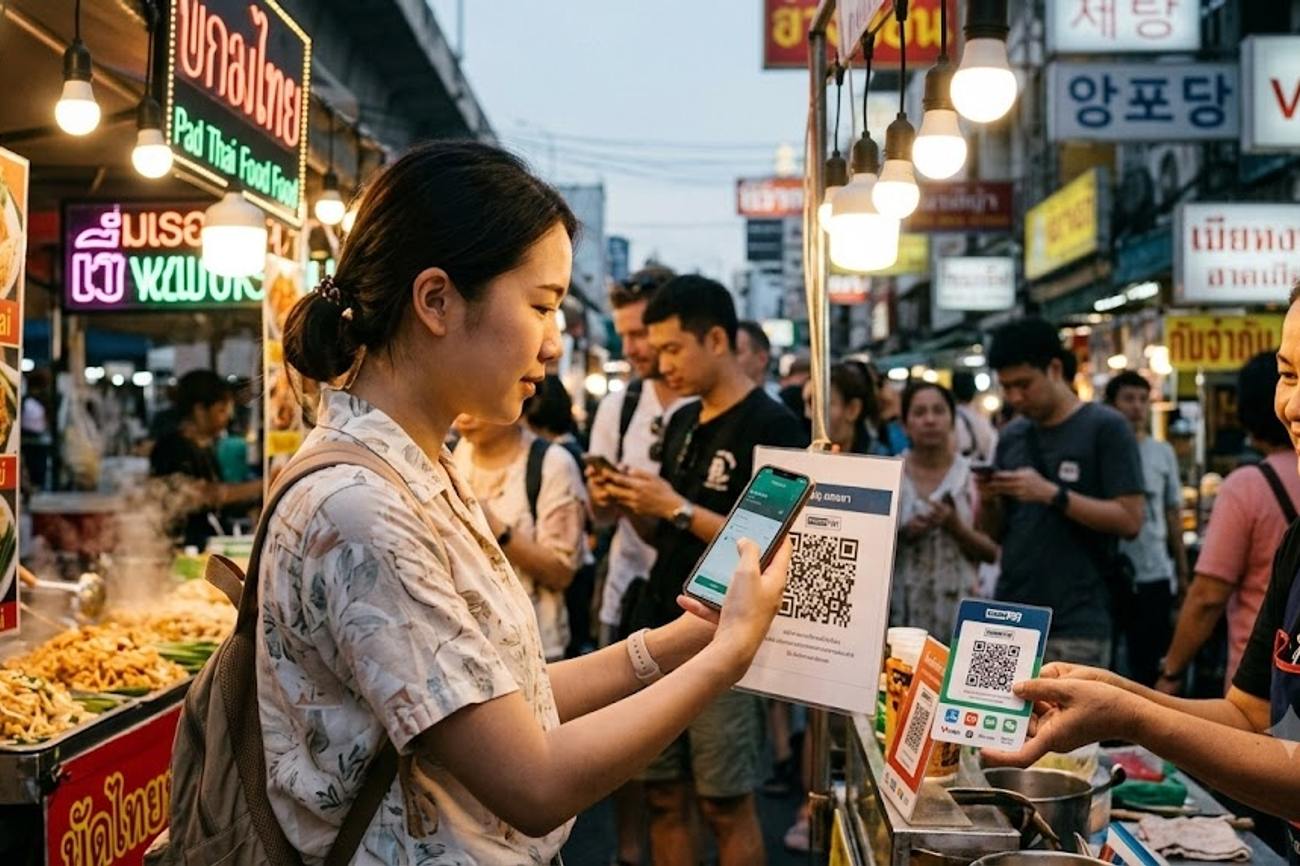
Image generated by AI
[Hanoi, October 2024] — Vietnam is aggressively expanding its cross-border QR code payment infrastructure to integrate with international banking systems, starting with priority links to Thailand and South Korea. The initiative aims to transition the country's tourism economy away from cash dependency by allowing foreign visitors to settle transactions using their home-country banking applications.
The expansion is being driven by a strategic partnership between Vietnam’s banking sector, national payment networks, and economic organizations. By connecting the domestic VietQR framework with global identifiers, the government seeks to remove friction for international arrivals who currently face limited digital payment options outside of major hotels and luxury retail hubs.
The Catalyst for Digital Integration
The primary driver for this shift is a significant gap in current payment accessibility. While Vietnam possesses a massive domestic digital payment network of over 2.5 million payment points, only 154,000 of these—approximately 6 per cent—currently support VietQR Global. This disparity creates a "payment vacuum" where international tourists are often forced to rely on cash exchanges or unfamiliar local methods, potentially stifling spending at smaller enterprises.
The move is also a response to consumer behavior in the Asia-Pacific region. Data indicates that between 85 and 88 per cent of tourists from this market are already fluent in QR payment systems. By aligning its infrastructure with these habits, Vietnam is treating payment accessibility as a core component of destination competitiveness rather than a mere financial utility.
Markets and Infrastructure Impact
The rollout is phased, targeting high-volume tourism corridors first. The integration focuses on the following markets:
| Market Status | Countries Involved | Strategic Goal |
|---|---|---|
| Active/Priority | Thailand, South Korea | Immediate integration of banking apps for high-volume visitors. |
| Established Links | China, Singapore, Cambodia, Laos | Maintaining and optimizing existing cross-border corridors since 2021. |
| Expansion Phase | Japan, India, Malaysia, Indonesia, Philippines | Scaling accessibility for emerging and high-growth tourist segments. |
The impact extends beyond the traveler to the merchant. Small-scale retailers, family-run guest houses, and local transport providers—who typically lack the hardware for traditional credit card terminals—can now accept international payments via a simple QR identifier, allowing them to capture a larger share of global tourist spending.
What This Means for Travelers
For the average traveler, this transition removes the need to carry large sums of physical currency or navigate the fluctuating rates of airport currency exchange kiosks. Instead of searching for an ATM or a merchant that accepts a specific credit card brand, visitors from integrated countries can simply scan a QR code using the mobile banking app they use at home.
Passenger and Visitor Impact:
- Reduced Cash Reliance: Travelers no longer need to carry significant amounts of Vietnamese Dong for street food, local crafts, or small-scale transport.
- Transparent Pricing: Digital transactions provide immediate confirmation of the amount charged, reducing disputes over pricing at local markets.
- Increased Security: By using encrypted banking apps, tourists reduce the risk of theft or loss associated with carrying cash.
- Wider Acceptance: The goal is to move payment capability from "hotel-only" to "street-level," meaning more local experiences will be accessible via digital wallets.
The Roadmap for Global Adoption
The Vietnamese government and the State Bank of Vietnam are positioning this infrastructure as a tool for broader economic growth. The strategy links payment ease directly to increased consumer spending; when barriers to payment are removed, tourist expenditure typically rises.
The next phase of the rollout involves onboarding the remaining 94 per cent of domestic payment points to the VietQR Global standard. This will require a concerted effort to educate small business owners on the benefits of international QR acceptance and provide the necessary digital identifiers to their existing systems.
Furthermore, the expansion into markets like India and Japan is expected to diversify Vietnam's tourism portfolio. By catering to the specific digital habits of these travelers, Vietnam aims to increase its appeal as a seamless, modern destination for the "digital nomad" and high-spending leisure traveler.
FAQ: Vietnam QR Payments 2024
Do I need a special app to use QR payments in Vietnam? No. The system is designed to work with your existing home-country banking application, provided your bank is part of the integrated network (such as those in Thailand or South Korea).
Will I be charged extra fees for using QR codes? Transaction fees depend on your home bank's international payment policies. However, QR payments generally offer more competitive exchange rates than physical currency exchange booths.
Can I use this at small street stalls or just in malls? The initiative specifically targets small businesses and household enterprises. While adoption is currently at 6 per cent, the government is actively expanding this to include local vendors and craft shops.
What should I do if a QR payment fails during my trip? It is recommended to carry a small amount of cash as a backup. If a transaction fails, verify your internet connectivity or contact your home bank to ensure international roaming/payments are enabled.
The era of the currency exchange booth is fading as Vietnam digitizes the tourist experience.
#VietQR #VietnamTourism2024 #CrossBorderPayments #HanoiFinance #AsiaPacificTravel #DigitalWalletIntegration
Related Travel Guides
- Malaysia Partners With Russia in Expanding Arts, Culture and Tourism Collaboration Through New MoU
- Tokyo Overtakes Bangkok as Asia’s Most Revisited Destination in 2026 as Japan Captures Repeat Travellers
- Kyrgyzstan Sets New Central Asia Tourism Direction With Plan to Showcase Regional Heritage Together
Disclaimer
This article is for informational and educational purposes only. It does not constitute legal, financial, or professional advice. While we strive to provide accurate and up-to-date information, travel policies, regulations, and conditions change rapidly. Always verify information with official sources before making travel decisions. Nomad Lawyer makes no representations about the accuracy, reliability, completeness, or suitability of the information provided. Readers should consult qualified professionals for advice specific to their circumstances. The views expressed in this article are those of the author and do not necessarily reflect the views of Nomad Lawyer.
Kunal K Choudhary
Co-Founder & Contributor
A passionate traveller and tech enthusiast. Kunal contributes to the vision and growth of Nomad Lawyer, bringing fresh perspectives and driving the community forward.
Learn more about our team →