
Hong Kong’s Rising Motorsport Stars Gain Real Race Experience As Youth Karting Championship 2026 Opens New Doors
Hong Kong’s Rising Motorsport Stars Gain Real Race Experience As Youth Karting Championship 2026 Opens New Doors

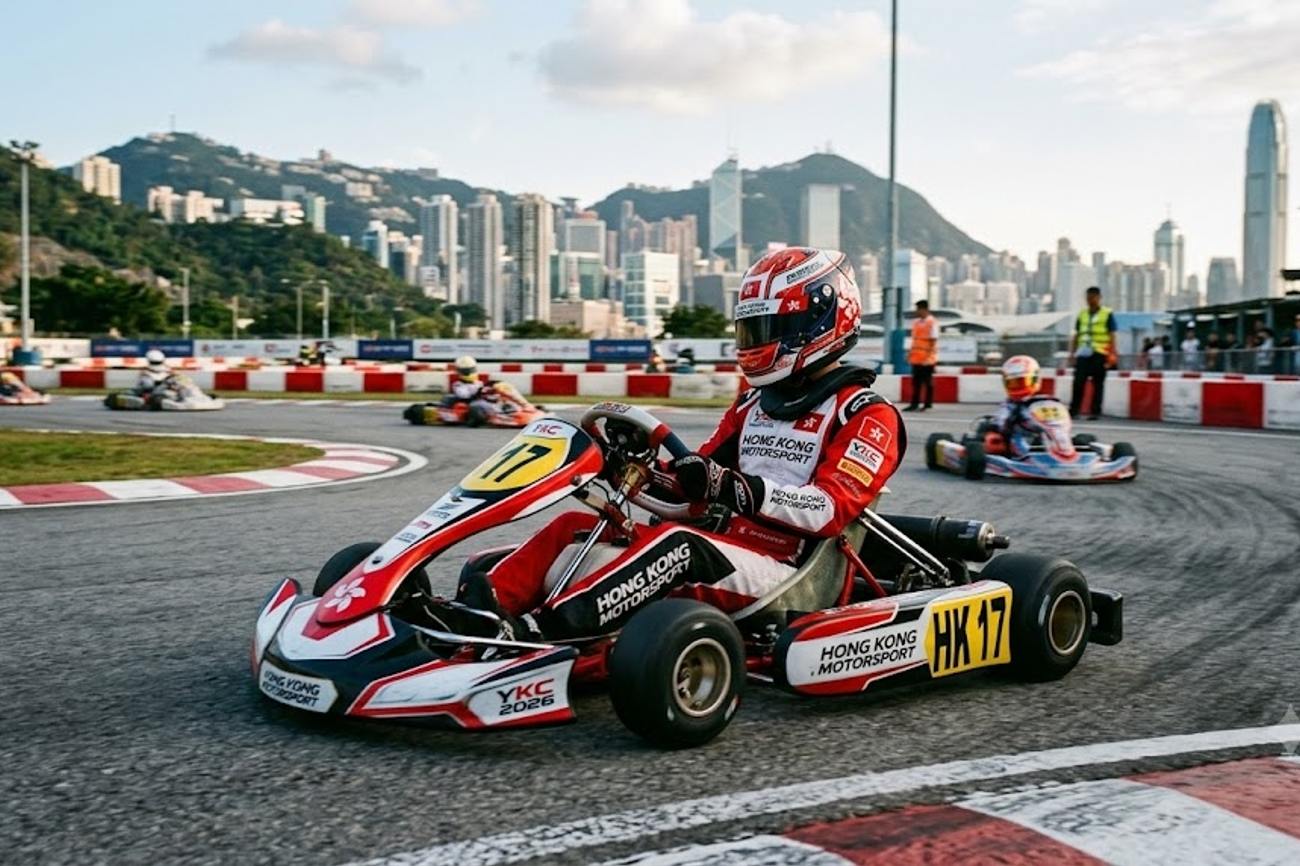
Image generated by AI
14 corners across a 1.2-kilometre circuit served as the primary classroom for the opening round of the HK Youth Karting Championship 2026. This event, orchestrated by the China Hong Kong Motorsports Centre (CHKMC) with backing from the HKAA and IAME Series Asia, marks a strategic pivot toward formalizing the talent pipeline for youth motorsport in the region. By moving competition to the Guangzhou Conghua International Circuit, organizers have transitioned from mere skill-building to a high-pressure environment designed to simulate professional racing dynamics.
The Architecture of Youth Competition
The championship is structured around two distinct age and machinery tiers to ensure developmental appropriateness. The Cadet class is reserved for drivers aged 8 to 12, utilizing 60cc karts, while the Junior category accommodates those aged 12 to 17 in 125cc karts. This tiered approach allows for a gradual increase in mechanical complexity and speed as the driver matures.
The technical layout of the Guangzhou Conghua International Circuit is specifically designed to test a driver's versatility. With 14 corners packed into a 1.2-kilometre span, the track forces young competitors to master rapid transitions between braking and acceleration. The weekend is divided into a three-phase progression: practice sessions for line optimization, qualifying rounds for raw pace, and the final races where tactical awareness takes precedence over pure speed.
Standardizing the Field: The One Make Model
To eliminate the "arms race" often seen in privateer motorsport, the HK Youth Karting Championship employs a "One Make Karting" and "Arrive & Drive" framework. This means every participant utilizes identical equipment, standardized components, and designated tires.
| Category | Age Range | Engine Displacement | Circuit Length | Total Corners |
|---|---|---|---|---|
| Cadet | 8 - 12 Years | 60cc | 1.2 km | 14 |
| Junior | 12 - 17 Years | 125cc | 1.2 km | 14 |
By removing mechanical advantages, the China Hong Kong Motorsports Centre (CHKMC) shifts the competitive variable entirely to the driver. In this environment, a victory is not a result of a superior engine tune or a more expensive chassis, but rather a consequence of superior race craft, better braking points, and more effective strategic decision-making under pressure.
Expert Analysis: The Logistics of Talent Pipelines
For the aspiring racer and their family, the adoption of the "Arrive & Drive" model is a significant logistical shift. Traditionally, motorsport is a capital-intensive pursuit where the wealthiest teams often secure the fastest machinery. By standardizing the hardware, the CHKMC is effectively lowering the barrier to entry while increasing the meritocratic nature of the sport.
The direct consequence of this format is a steeper learning curve for the drivers. When a driver cannot blame their equipment for a poor result, they are forced to analyze their own technical failures—such as missing an apex or failing to anticipate a rival's defensive move. This psychological shift is what separates a hobbyist from a professional athlete.
Furthermore, the connection to the IAME Series Asia creates a tangible career trajectory. The championship is not an isolated event; it is a qualifying mechanism. High-performing drivers in the Cadet and Junior classes now have a documented pathway toward the IAME Asia Final 2026 in Macau. For a traveler or expatriate family in Hong Kong, this represents a structured investment in a child's athletic development with a clear regional endpoint.
The shift toward the Guangzhou Conghua International Circuit also highlights a growing cross-border sporting synergy. Moving Hong Kong talent into mainland China's professional facilities allows these drivers to experience larger-scale infrastructure and more rigorous officiating, which is essential for anyone hoping to eventually transition to international circuits governed by the Fédération Internationale de l'Automobile (FIA).
Key Takeaways
- Meritocratic Framework: The "One Make" and "Arrive & Drive" formats ensure that driver skill, not equipment budget, determines the podium.
- Tiered Development: Specific machinery (60cc for ages 8-12; 125cc for ages 12-17) ensures a safe and age-appropriate progression in speed and power.
- Regional Pathway: Success in the local championship provides a direct bridge to the IAME Asia Final 2026 in Macau.
- Technical Rigor: The 1.2-kilometre, 14-corner layout is designed to prioritize race craft and tactical decision-making over simple lap times.
FAQ: HK Youth Karting 2026
What is the difference between the Cadet and Junior classes? The Cadet class is for children aged 8 to 12 using 60cc karts. The Junior class is for teens aged 12 to 17 using more powerful 125cc karts.
What does "One Make Karting" mean for the competitors? It means every driver uses the exact same kart model, parts, and tires. This removes mechanical advantages and ensures the winner is the most skilled driver.
How can a driver progress from this championship to international racing? Top performers in the HK Youth Karting Championship can earn opportunities to compete in the IAME Asia Final 2026 held in Macau.
Where does the championship take place? The opening round was held at the Guangzhou Conghua International Circuit, providing a professional track environment for Hong Kong's youth.
The road to the podium is no longer paved with the fastest engine, but with the sharpest mind.
Tags: CHKMC, IAME Series Asia, Guangzhou Conghua International Circuit, HK Youth Karting Championship 2026, IAME Asia Final 2026, Hong Kong Motorsports
Related Travel Guides
Disclaimer
This article is for informational and educational purposes only. It does not constitute legal, financial, or professional advice. While we strive to provide accurate and up-to-date information, travel policies, regulations, and conditions change rapidly. Always verify information with official sources before making travel decisions. Nomad Lawyer makes no representations about the accuracy, reliability, completeness, or suitability of the information provided. Readers should consult qualified professionals for advice specific to their circumstances. The views expressed in this article are those of the author and do not necessarily reflect the views of Nomad Lawyer.
Preeti Gunjan
Contributor & Community Manager
A passionate traveller and community builder. Preeti helps grow the Nomad Lawyer community, fostering engagement and bringing the reader experience to life.
Learn more about our team →