
Puerto Princesa Leads Other Asian Cities in Transforming Heritage Tourism with Electric Boats and Ropeways
Puerto Princesa Leads Other Asian Cities in Transforming Heritage Tourism with Electric Boats and Ropeways

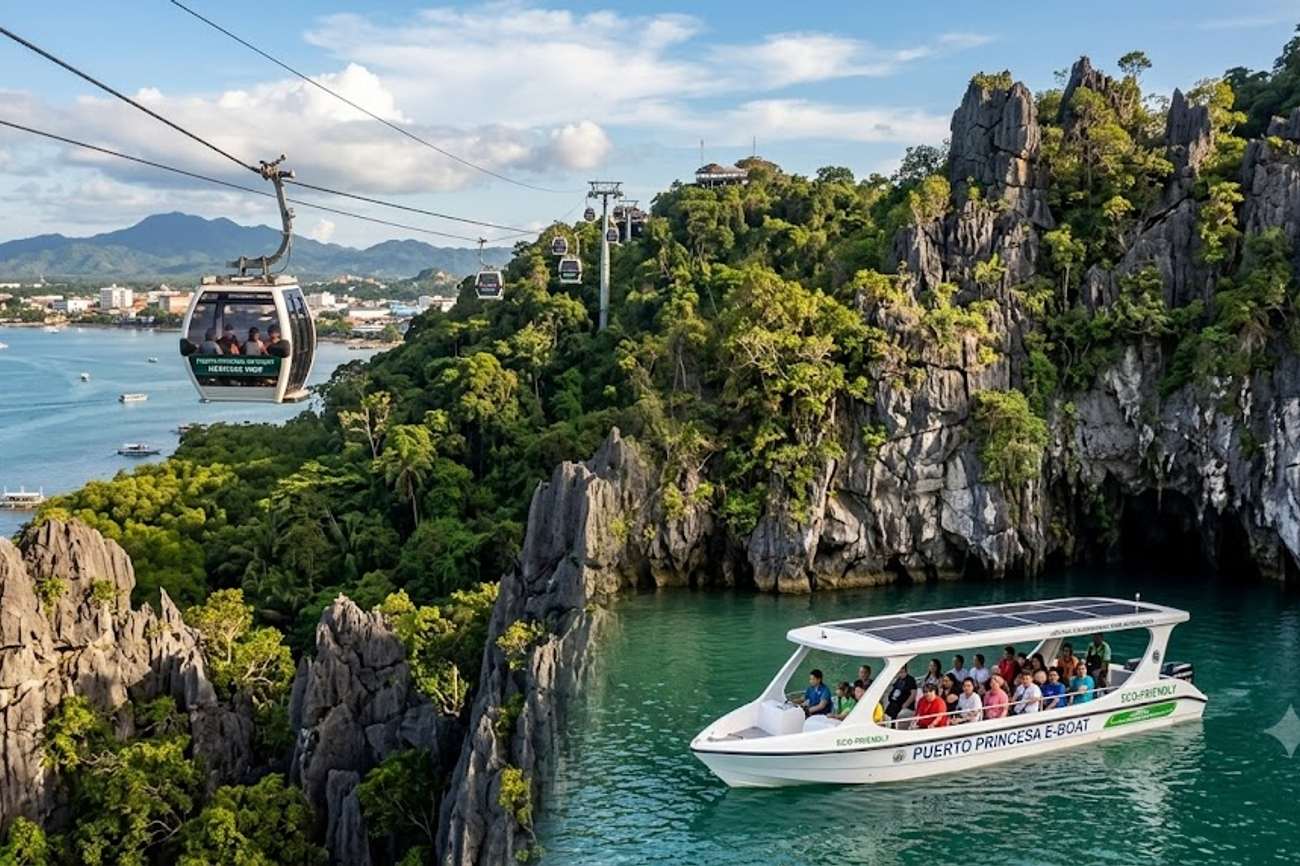
Image generated by AI
Imagine arriving at the Sabang Wharf in Palawan, expecting a serene journey to the Puerto Princesa Subterranean River National Park, only to find your transit disrupted by a systemic shift in how visitors access the site. For the modern traveler, the transition from loud, diesel-powered bangkas to high-tech electric propulsion and aerial ropeways means that the traditional "day-trip" itinerary is being dismantled in favor of a managed, eco-conscious mobility framework.
The Puerto Princesa Eco-Mobility Transition
The municipality of Puerto Princesa is currently executing a radical overhaul of its transportation infrastructure to protect its most vulnerable cultural and natural heritage sites. This shift is not merely an environmental preference but a strategic response to the ecological degradation caused by conventional tourism. For decades, the region has relied on internal combustion engines that discharge nitrogen oxides, soot, and lubricating oils directly into marine sanctuaries.
During the Puerto Princesa Tourism Summit 2026, Mayor Lucilo R. Bayron detailed a long-term framework designed to eliminate the "daytime excursion" bottleneck. Historically, the majority of tourist traffic is concentrated between 09:00 and 15:00, creating immense pressure on the Puerto Princesa Subterranean River National Park (PPSRNP)—a UNESCO World Heritage Site and Ramsar Wetland. To mitigate this, the city is diversifying into MICE (meetings, incentives, conventions, and exhibitions), sports tourism, and seafood culinary circuits, supported by a new integrated fishport terminal.
The technical core of this transition involves replacing the traditional motorized outrigger boats, known as bangkas, which currently produce noise levels between 80 and 95 decibels (dB). This acoustic pollution disrupts the echolocation and foraging of reef fish and the colonies of swiftlets and insectivorous bats residing within the karst systems. The city is now moving toward a multi-modal system that integrates solar-assisted e-bangkas and an aerial ropeway transit corridor to bypass the need for further road construction across virgin karst landscapes.
Affected Transit Routes and Infrastructure
The disruption to traditional travel patterns is concentrated in two primary zones. Travelers should be aware that existing boat operators are currently choosing between retrofitting old vessels or adopting new composite hulls, which may affect vessel availability and pricing.
- Honda Bay Marine Park & Islands: Transitioning from diesel outriggers to solar-assisted e-bangkas utilizing 10 kW to 20 kW Permanent Magnet Synchronous Motors (PMSM). The goal is the total elimination of hydrocarbon slicks.
- Sabang Wharf to PPSRNP Corridor: Implementation of a detachable monocable passenger gondola (aerial ropeway) to replace road-based transit and avoid the impact of monsoon swells.
- Gateway Charging Hubs: Installation of Solar-BESS (Battery Energy Storage System) fast-charging pedestals at both Sabang and Honda Bay wharves to prevent surges in the rural power grid.
- Urban Buffers: Introduction of shielded narrow-spectrum amber illumination at Balayong People’s Park and Mangrove Buffers to protect nocturnal wildlife from phototaxis.
Your Rights as a Passenger and Tourist
While this transition is an environmental necessity, the shift in infrastructure can lead to service disruptions, pricing changes, or cancellations of traditional tour packages. Because these services operate within the Philippines, they fall under the jurisdiction of the Department of Tourism (DOT) and local municipal ordinances.
If you have pre-booked a tour that is cancelled due to the decommissioning of diesel vessels or the implementation of new transit corridors, you are entitled to a full refund or a comparable alternative. Under Philippine consumer protection laws, service providers must deliver the service as advertised. If a "traditional bangka" experience was sold but an electric shuttle is provided, this is generally considered an upgrade; however, if the transition results in a loss of access to a specific site, you have grounds for a claim.
For those traveling internationally to reach Palawan, your rights regarding the flight portion of your journey are governed by the airline's home country and the departure point. For example, if you are flying from an EU airport via a European carrier to Manila or Puerto Princesa and experience a cancellation, you are protected under EU261/2004, which can provide up to €600 in compensation for long-haul flights. For flights departing from the US, the US Department of Transportation mandates prompt refunds for significantly changed or cancelled flights.
To monitor real-time changes to your travel plans or check for flight disruptions heading into the region, utilize FlightRadar24 or the official airline status pages.
Rebooking Strategy and Alternatives
The transition to a "nocturnal economy" and MICE-focused tourism means that the traditional 09:00 to 15:00 window is no longer the only—or the best—way to experience Puerto Princesa. To avoid the crowds and the logistical friction of the fleet transition, consider the following strategies:
Shift Your Timeline The city is actively promoting extended "dwell time." Instead of a rapid day trip, book overnight stays near the Sabang gateway. This allows you to utilize the new shielded amber-lit corridors and avoid the peak congestion of the mid-day rush.
Diversify Your Itinerary Rather than focusing solely on the Underground River, integrate the new seafood culinary circuits and the integrated fishport terminal into your trip. This reduces the pressure on the PPSRNP corridor and provides a more authentic view of the city's economic diversification.
Evaluate Vessel Types If you are booking private charters in Honda Bay, ask your operator if they are using a retrofitted bangka or a purpose-built composite hull. Retrofitted vessels (costing between $4,000 and $15,000) maintain traditional aesthetics but may have higher drag. Purpose-built composite electric vessels ($25,000 to $80,000+) offer superior stability and integrated fire-suppression systems, making them a safer and smoother choice for those prone to motion sickness.
Alternative Transport Hubs Keep an eye on the development of the aerial ropeway. Once operational, this will be the primary method of transit to the PPSRNP. If you are traveling during the monsoon season, the ropeway is a significantly more reliable option than the traditional water-based transit, which is often susceptible to swells.
FAQ: Puerto Princesa Mobility Transition 2026
Am I entitled to a refund if my booked diesel boat tour is cancelled? Yes. If a tour operator cannot provide the service due to the new environmental regulations or fleet decommissioning, you are entitled to a full refund or a rebooking on an electric vessel.
Will the new electric boats be more expensive for passengers? While the capital expenditure (CapEx) for composite hulls is high ($25,000 to $80,000+), the operational costs are lower. However, initial "eco-fees" may be applied to offset the cost of the Solar-BESS charging hubs.
How does the aerial ropeway affect my access to the Underground River? The ropeway is designed to replace road transit from Sabang Wharf to the PPSRNP. It will likely reduce transit time and eliminate the need for vehicles to drive through fragile karst landscapes.
Are there alternative routes to avoid the 09:00-15:00 peak? Yes. The city is now encouraging "nocturnal economy" visits and MICE-related travel. Scheduling your visits to the mangrove buffers and parks in the early morning or late evening is highly recommended.
The era of the diesel engine in Palawan is ending; the future of the archipelago is silent, solar, and sustainable.
Tags: Puerto Princesa, PPSRNP, EU261/2004, Eco-Mobility, Palawan Tourism, Marine Electrification
Related Travel Guides
Disclaimer
This article is for informational and educational purposes only. It does not constitute legal, financial, or professional advice. While we strive to provide accurate and up-to-date information, travel policies, regulations, and conditions change rapidly. Always verify information with official sources before making travel decisions. Nomad Lawyer makes no representations about the accuracy, reliability, completeness, or suitability of the information provided. Readers should consult qualified professionals for advice specific to their circumstances. The views expressed in this article are those of the author and do not necessarily reflect the views of Nomad Lawyer.
Kunal K Choudhary
Co-Founder & Contributor
A passionate traveller and tech enthusiast. Kunal contributes to the vision and growth of Nomad Lawyer, bringing fresh perspectives and driving the community forward.
Learn more about our team →