
Dzanga-Sangha Emerges as Central African Republic’s Premier Eco-Tourism Frontier
Explore how the Dzanga-Sangha Protected Areas are redefining African eco-tourism through gorilla conservation and community-led rainforest preservation.

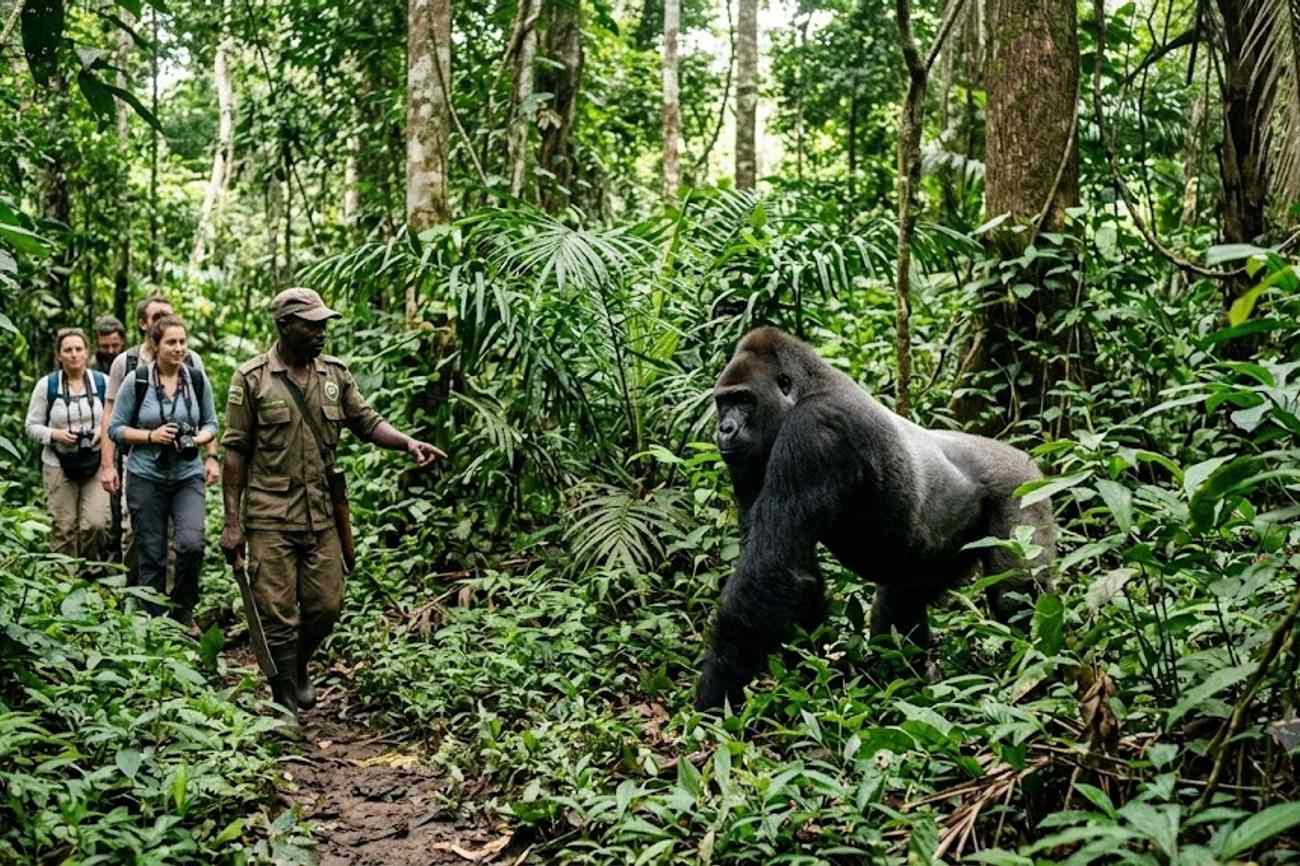
Image generated by AI
[Bangui, September 4, 2026] — The Central African Republic is witnessing a strategic shift in its tourism sector as the Dzanga-Sangha Protected Areas evolve into a global benchmark for rainforest conservation and sustainable travel. By integrating the protection of endangered western lowland gorillas and forest elephants with community-led economic initiatives, the region is offering a sophisticated alternative to the traditional savannah safaris of East and Southern Africa.
A Rare Biodiversity Stronghold in the Congo Basin
While the broader African continent is often associated with the open plains of the Serengeti or the Okavango Delta, the southwest region of the Central African Republic provides a starkly different ecological narrative. The Dzanga-Sangha Protected Areas serve as a critical sanctuary within the Congo Basin, characterized by dense tropical canopies and mineral-rich clearings that attract rare megafauna.
This region is a cornerstone of the Sangha River Tri-national landscape, a massive conservation corridor that bridges the borders of the Central African Republic, Cameroon, and the Republic of Congo. The global significance of this interconnected ecosystem was formally recognized in 2012 when UNESCO designated the area as a World Heritage Site, citing its unparalleled biodiversity and ecological integrity.
For the modern traveler, this destination represents a transition from vehicle-based game drives to immersive rainforest expeditions. The primary draw is the opportunity to witness forest elephant congregations and track western lowland gorillas in one of the few remaining intact ecosystems in Central Africa.
Structural Framework of the Dzanga-Sangha Protected Areas
The institutionalization of conservation in this region dates back to 1990, when the government formally established the Dzanga-Ndoki National Park and the Dzanga-Sangha Special Dense Forest Reserve. This legislative framework was designed to balance the urgent need for species protection with the controlled introduction of scientific research and low-impact tourism.
The management of the region is divided into specific zones, each serving a distinct environmental or economic purpose:
| Area | Primary Importance |
|---|---|
| Dzanga-Sangha Special Reserve | Focuses on rainforest ecosystem preservation and conservation-led tourism |
| Dzanga-Ndoki National Park | Safeguards critical habitats for western lowland gorillas and forest elephants |
| Sangha River Tri-national Landscape | Facilitates cross-border wildlife migration and joint conservation across three nations |
These zones ensure that human activity does not compromise the breeding grounds of the African forest elephant or the foraging territories of the lowland gorilla, both of which face increasing threats from poaching and habitat loss across the continent.
Divergence from Traditional African Safari Models
The value proposition of Dzanga-Sangha differs fundamentally from the "Big Five" tourism model. Rather than focusing on high-volume sightings in open grasslands, this destination emphasizes the intimacy and rarity of the rainforest experience.
Visitors to the region engage with a diverse array of ecological features, including:
- Ancient, primary tropical forests and complex river systems.
- Specialized tracking expeditions for western lowland gorillas.
- Observations of rare avian species endemic to the Congo Basin.
- Cultural immersions with Indigenous forest populations.
A primary highlight is Dzanga Bai, a natural mineral lick. Because the soil here is rich in essential nutrients, forest elephants gather in significant numbers, providing a rare opportunity for observers to see these animals in a natural social setting without the intrusion of heavy machinery.
According to reports from the World Wildlife Fund, this high-value, low-volume model is intentional. By limiting the number of visitors, the region reduces environmental pressure on fragile soils and flora while maximizing the financial contribution per tourist to fund conservation and local healthcare.
Synergy Between Wildlife Protection and Local Economies
The sustainability of tourism in the Central African Republic is inextricably linked to the success of its conservation mandates. The Dzanga-Sangha model posits that protected areas must function as economic engines for the people living on their periphery to prevent illegal exploitation of natural resources.
Current conservation strategies are focused on five primary pillars:
- The stabilization and growth of forest elephant populations.
- The rigorous protection of gorilla nesting and foraging sites.
- The eradication of illegal wildlife trafficking and poaching.
- Continuous biodiversity monitoring through scientific data.
- The integration of local residents into the conservation workforce.
This management structure is a collaborative effort. The Central African Republic’s ministry overseeing forests and wildlife provides the legal and administrative oversight, while international conservation partners provide the technical expertise and funding necessary for field operations.
Integration of Indigenous Knowledge and Ba’Aka Culture
A defining characteristic of the Dzanga-Sangha experience is the involvement of the Indigenous Ba’Aka people. As traditional custodians of the forest, the Ba’Aka possess an ancestral understanding of botanical properties and animal behavior that is unmatched by modern science.
Responsible tourism frameworks in the region are designed to ensure that this knowledge is shared ethically and that the Ba’Aka receive direct benefits. This is achieved through:
- Direct employment as forest guides and trackers.
- Structured cultural exchange programs that prevent exploitation.
- Community support initiatives funded by tourism levies.
- Active participation in biodiversity monitoring.
By positioning the Ba’Aka as essential partners rather than passive subjects of tourism, the region preserves the human history of the rainforest alongside its biological history.
Why This Matters: The Shift Toward Regenerative Travel
For the global traveler, the emergence of Dzanga-Sangha signals a shift from "extractive" tourism—where the goal is simply to see a species—to "regenerative" tourism, where the act of visiting actively improves the environment.
From a logistical standpoint, visiting a destination like the Central African Republic requires more planning than a standard safari, but it offers a significantly higher "information gain." Travelers are not merely seeing animals; they are witnessing a live experiment in how humanity can coexist with the Congo Basin's remaining wilderness.
From an environmental perspective, the success of this model proves that biodiversity can be more valuable alive than dead. When a forest elephant is worth more to a local community as a permanent tourist attraction than as a source of ivory, the incentive for poaching vanishes. This creates a scalable blueprint for other endangered rainforests globally.
Related Travel Guides
Disclaimer
This article is for informational and educational purposes only. It does not constitute legal, financial, or professional advice. While we strive to provide accurate and up-to-date information, travel policies, regulations, and conditions change rapidly. Always verify information with official sources before making travel decisions. Nomad Lawyer makes no representations about the accuracy, reliability, completeness, or suitability of the information provided. Readers should consult qualified professionals for advice specific to their circumstances. The views expressed in this article are those of the author and do not necessarily reflect the views of Nomad Lawyer.
Raushan Kumar
Founder & Lead Developer
Full-stack developer with 11+ years of experience and a passionate traveller. Raushan built Nomad Lawyer from the ground up with a vision to create the best travel and law experience on the web.
Learn more about our team →