
Moab's Hospitality Shift: From Primitive Campsites to Ultra-Luxury Desert Resorts
Moab has evolved from a rugged outpost into a diverse hospitality hub, now offering five distinct lodging tiers to support everything from van-life minimalism

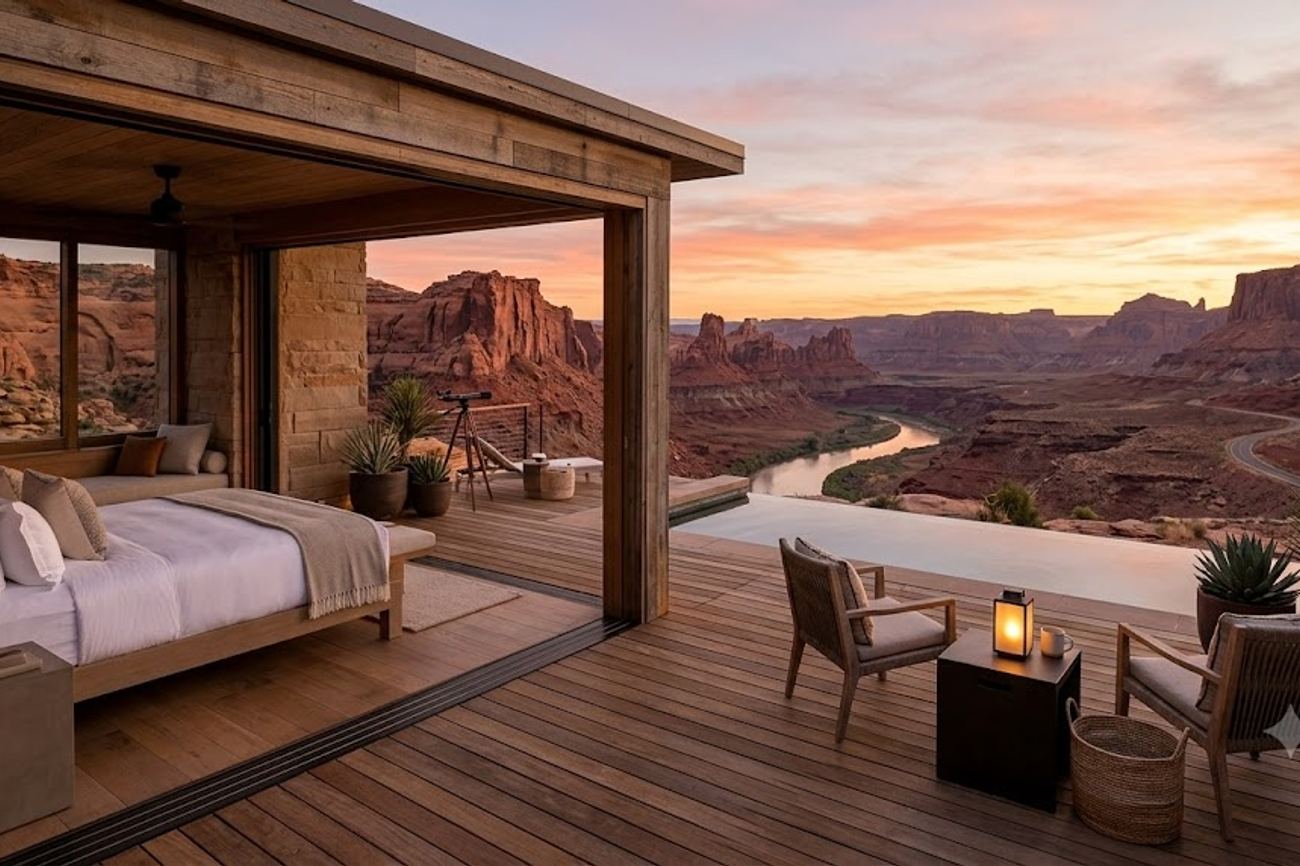
Image generated by AI
The Local Trend Revealed
Moab is no longer just a basecamp for hikers; it has transitioned into a full-scale destination where the accommodation is as much a part of the itinerary as the national parks. The region is seeing a strategic shift toward "integrated hospitality," where resorts are designed specifically around the activities they surround.
Rather than standard hotel rooms, the new wave of development focuses on recreation-centric design. This includes the rise of adventure hotels like Gravity Haus Moab and Moab Springs Ranch, which prioritize community and wellness. These properties move beyond the traditional room-and-board model by incorporating high-end gear storage, professional equipment rinse areas, and recovery amenities specifically for mountain bikers and climbers.
The current market is now segmented into five clear categories to meet diverse traveler profiles:
- Free and Budget Camping: Ideal for van travelers and backpackers seeking direct nature connection.
- Budget Hotels and Campgrounds: Value-driven stays with essential AC and town access.
- Adventure Boutique Hotels: Tailored for cyclists and hikers with specialized gear facilities.
- Luxury Glamping: High-end tents with private bathrooms for photographers and couples.
- Riverside Luxury Resorts: Exclusive cabins and spas for families and high-net-worth travelers.
Cultural & Environmental Value
The expansion of luxury tourism in Moab comes with a heightened responsibility toward the fragile Colorado Plateau. For the visitor, the real impact of this growth is seen in the strict transition toward regulated land use. The Bureau of Land Management (BLM) has implemented rigorous controls to protect cryptobiotic soil—the living biological crust essential for desert health.
Sustainability is no longer optional; it is a requirement for survival in this ecosystem. Because desert conditions severely slow natural decomposition, local authorities now mandate the use of approved waste systems and designated disposal facilities. This shift ensures that as the volume of tourists increases, the "Leave No Trace" ethos is baked into the infrastructure of the town rather than left to individual discretion.
Visitor Insider Tips
To navigate Moab like a local and avoid the common pitfalls of over-tourism, keep these guidelines in mind:
- The "Golden Window": Avoid the peak spring and autumn crowds. Visit during the shoulder seasons or mid-week to secure first-come, first-served spots at the Sand Flats Recreation Area.
- Soil Etiquette: Never step off designated trails. Cryptobiotic soil takes decades to recover from a single footprint; staying on the path is the most critical way to support regional conservation.
- Strategic Basecamps: If you want a hybrid experience, stay at Up the Creek Campground. It offers a tent-focused atmosphere but remains within walking distance of Main Street’s dining and gear shops.
- Gear Logistics: If staying at a mid-range property like the Gonzo Inn or Aarchway Inn, verify their current bike storage security levels, as mountain bike theft is a known risk in high-traffic tourist zones.
Tourism Outlook
Moab is successfully decoupling its identity from being solely a "gateway" to Arches and Canyonlands. By diversifying its lodging—from the ruggedness of BLM designated areas to the opulence of riverside resorts—the town is extending the average length of stay. The long-term trajectory suggests a move toward more eco-conscious, low-impact luxury that prioritizes the preservation of the red rock environment over sheer volume of visitors.
Explore More:
- [Sustainable Trekking in the American Southwest]
- [The Ultimate Guide to BLM Land Camping]
- [Top-Rated Adventure Gear for Utah’s High Desert]
Related Travel Guides
Disclaimer
This article is for informational and educational purposes only. It does not constitute legal, financial, or professional advice. While we strive to provide accurate and up-to-date information, travel policies, regulations, and conditions change rapidly. Always verify information with official sources before making travel decisions. Nomad Lawyer makes no representations about the accuracy, reliability, completeness, or suitability of the information provided. Readers should consult qualified professionals for advice specific to their circumstances. The views expressed in this article are those of the author and do not necessarily reflect the views of Nomad Lawyer.
Naina Thakur
Contributor & Travel Specialist
Travel enthusiast and legal writer covering visa regulations, responsible tourism, and cultural journeys across global destinations.
Learn more about our team →