
Auckland Airport Car and Campervan Rental Guide: Navigating Road Trip Logistics for 2026
A comprehensive guide to securing vehicle rentals at Auckland Airport, covering on-site desks, campervan shuttle logistics, insurance excess, and essential pickup strategies for New Zealand road trips.
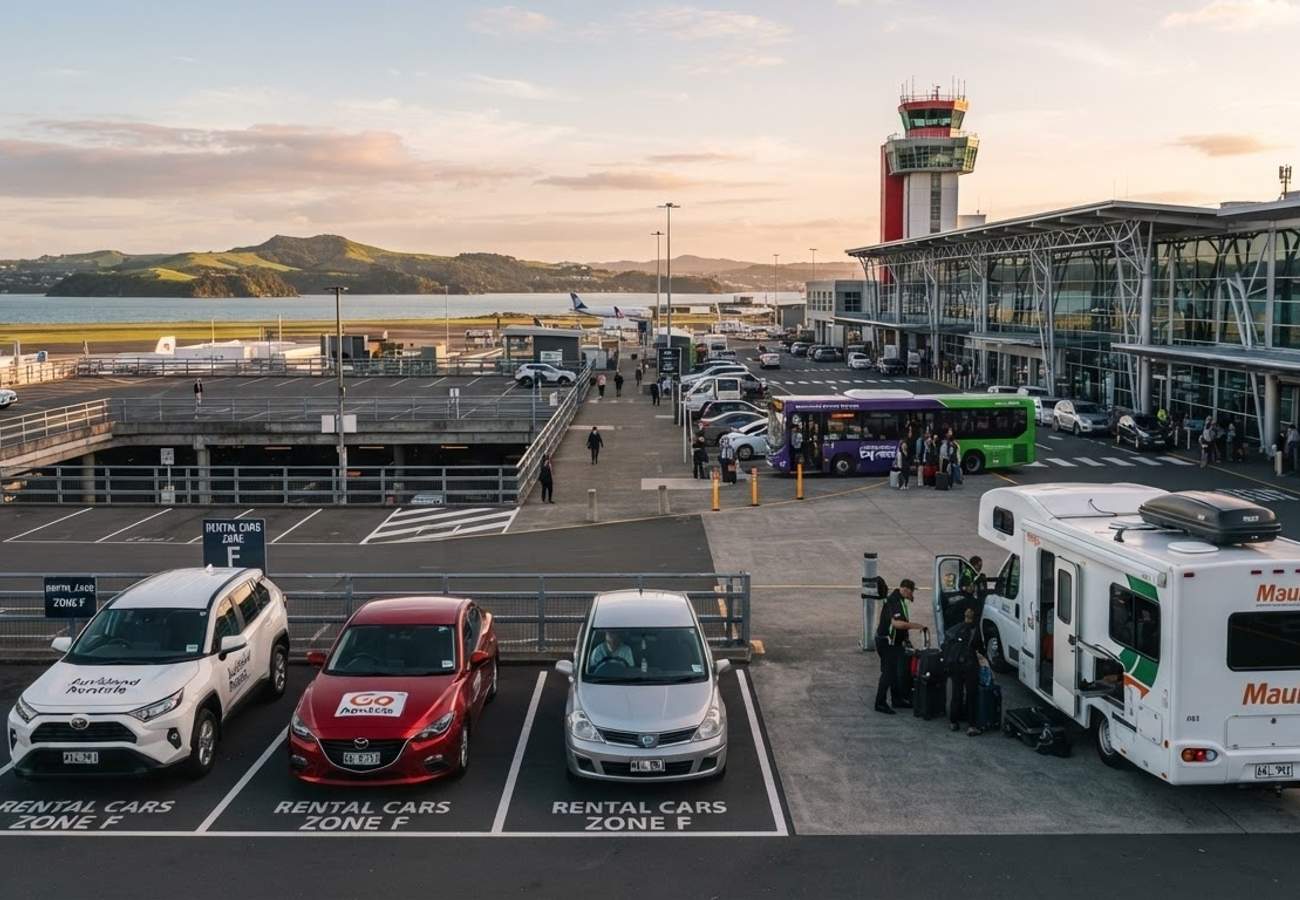
Image generated by AI
Auckland Airport serves as the primary gateway for thousands of international travelers initiating New Zealand road trips, requiring a strategic approach to vehicle collection to avoid costly delays. Whether securing a compact car for a North Island circuit or a heavy-duty motorhome for a nationwide expedition, the logistics of pickup, insurance, and shuttle transfers vary significantly between on-site and off-site providers.
The layout of Auckland Airport is designed to funnel travelers toward two distinct rental ecosystems: the immediate convenience of on-airport desks and the specialized facilities of off-airport campervan depots. For those landing at the international terminal, the Transport Hub acts as the central nerve center for vehicle logistics, while domestic arrivals are primarily served via Car Park R.
Navigating On-Airport Vehicle Collection
For travelers prioritizing speed and efficiency, on-airport rental brands provide the most streamlined experience. Major global operators—including Avis, Budget, Hertz, Europcar, Enterprise, Alamo, and National—alongside domestic provider Ezi Car Rental, maintain a physical presence within the airport perimeter. These desks are strategically located in the Transport Hub near the international terminal and on the ground floor of Car Park R for domestic passengers.
The primary advantage of these providers is the elimination of shuttle transfers. Passengers can walk directly from the arrivals hall to the rental counter. However, this convenience often comes with a premium price tag compared to remote operators. During the peak summer window from late December through February, congestion at these counters is common. Industry data suggests that travelers should allocate 45 to 60 minutes from the moment of landing to actually departing the airport grounds to account for customs and queue times.
The pickup process requires a passport, a valid driver's license, and the original payment card used for the booking. For non-English licenses, an International Driving Permit or a certified translation is mandatory. Once the paperwork is finalized, vehicles are typically located in designated, color-coded zones within the multi-storey car parks. It is highly recommended that renters document the vehicle's condition with photos or video before leaving the bay to avoid disputes over pre-existing damage.
Logistics for Off-Airport Campervan Depots
Unlike standard cars, the majority of motorhomes and campervans are managed from depots located in the surrounding Māngere area or other airport precinct streets. Brands such as Britz, Maui, JUCY, Apollo, and Spaceships operate from these external sites, which provide the necessary space for vehicle orientations and equipment checks.
Access to these depots is facilitated via complimentary shuttle buses. For instance, JUCY operates a distinctive green and purple shuttle connecting the terminals to its branch on Richard Pearse Drive, a trip taking approximately 10 minutes. Spaceships maintains a depot on Aintree Avenue in Māngere, roughly 4 kilometers from the main terminals.
These shuttles typically run every 20 to 30 minutes during standard business hours but are not available 24/7. This creates a critical logistical hurdle for travelers arriving at midnight or in the early morning hours. Because campervan providers require daylight for thorough handovers—explaining gas systems, waste tanks, and bed conversions—pickups are often restricted to mid-morning and late afternoon. Travelers landing outside these windows must arrange overnight accommodation in Auckland or near the airport before collecting their vehicle the following day.
Understanding Insurance Excess and Deposit Structures
Rental insurance in New Zealand operates on an "excess" model, where the renter is responsible for a specific amount of damage before the insurance covers the remainder. These excess amounts are often substantial, typically ranging from NZD 3,000 to NZD 7,500, depending on the vehicle's value and the provider.
To mitigate this financial risk, agencies offer tiered coverage options. While the base rate includes standard insurance with a high excess, renters can opt for "zero excess" or "stress-free" packages.
| Coverage Level | Estimated Daily Cost (Compact Car) | Typical Excess Amount | Included Benefits |
|---|---|---|---|
| Standard Cover | Included in Base Rate | NZD 3,000 – 7,500 | Basic Collision/Theft |
| Mid-Tier Cover | NZD 20 – 30 Extra | Reduced (approx. 50%) | Partial Excess Reduction |
| Zero Excess / Premium | NZD 35 – 50 Extra | NZD 0 | Windscreen & Tyre Coverage |
While some travelers attempt to use third-party travel insurance or premium credit card coverage to avoid these daily fees, this is risky. Certain North American credit cards explicitly exclude New Zealand from their Collision Damage Waiver (CDW) policies. Furthermore, many third-party policies exclude specialized vehicles like 4WDs or heavy motorhomes.
Strategic Considerations for One-Way Rentals
For those planning a linear journey—such as starting in Auckland and ending in Queenstown—on-airport brands often provide a logistical advantage. Due to their larger fleets and established networks, major brands frequently offer more flexible one-way options between Auckland, Wellington, Christchurch, and Queenstown. Smaller, off-airport operators may charge significantly higher relocation fees, sometimes adding several hundred dollars to the total cost of the trip.
Why This Matters: The Traveler's Perspective
From a logistical standpoint, the choice between an on-airport car and an off-airport campervan is a trade-off between time and utility. For the traveler, choosing an on-airport rental means immediate departure, which is ideal for those with tight schedules or those who prefer hotel stays. Conversely, the campervan route requires a "slow start"—factoring in shuttle times and a 30 to 60-minute technical briefing on vehicle systems.
The most significant financial pitfall for visitors is the insurance gap. Relying on a credit card for insurance without verifying New Zealand-specific coverage can lead to a sudden NZD 7,500 liability in the event of an accident. Given New Zealand's narrow, winding roads and frequent gravel sections, the "Zero Excess" option is often a pragmatic investment rather than an unnecessary luxury.
Planning your route carefully ensures the transition from the tarmac to the open road is seamless.
Related Travel Guides
Disclaimer
This article is for informational and educational purposes only. It does not constitute legal, financial, or professional advice. While we strive to provide accurate and up-to-date information, travel policies, regulations, and conditions change rapidly. Always verify information with official sources before making travel decisions. Nomad Lawyer makes no representations about the accuracy, reliability, completeness, or suitability of the information provided. Readers should consult qualified professionals for advice specific to their circumstances. The views expressed in this article are those of the author and do not necessarily reflect the views of Nomad Lawyer.