
Queenstown Airport (ZQN) Arrival Guide 2026: Transport, Terminal Layout, and Passenger Rights
A comprehensive analyst report on navigating Queenstown Airport (ZQN), covering terminal logistics, transfer costs, and essential passenger rights for first-time visitors in 2026.

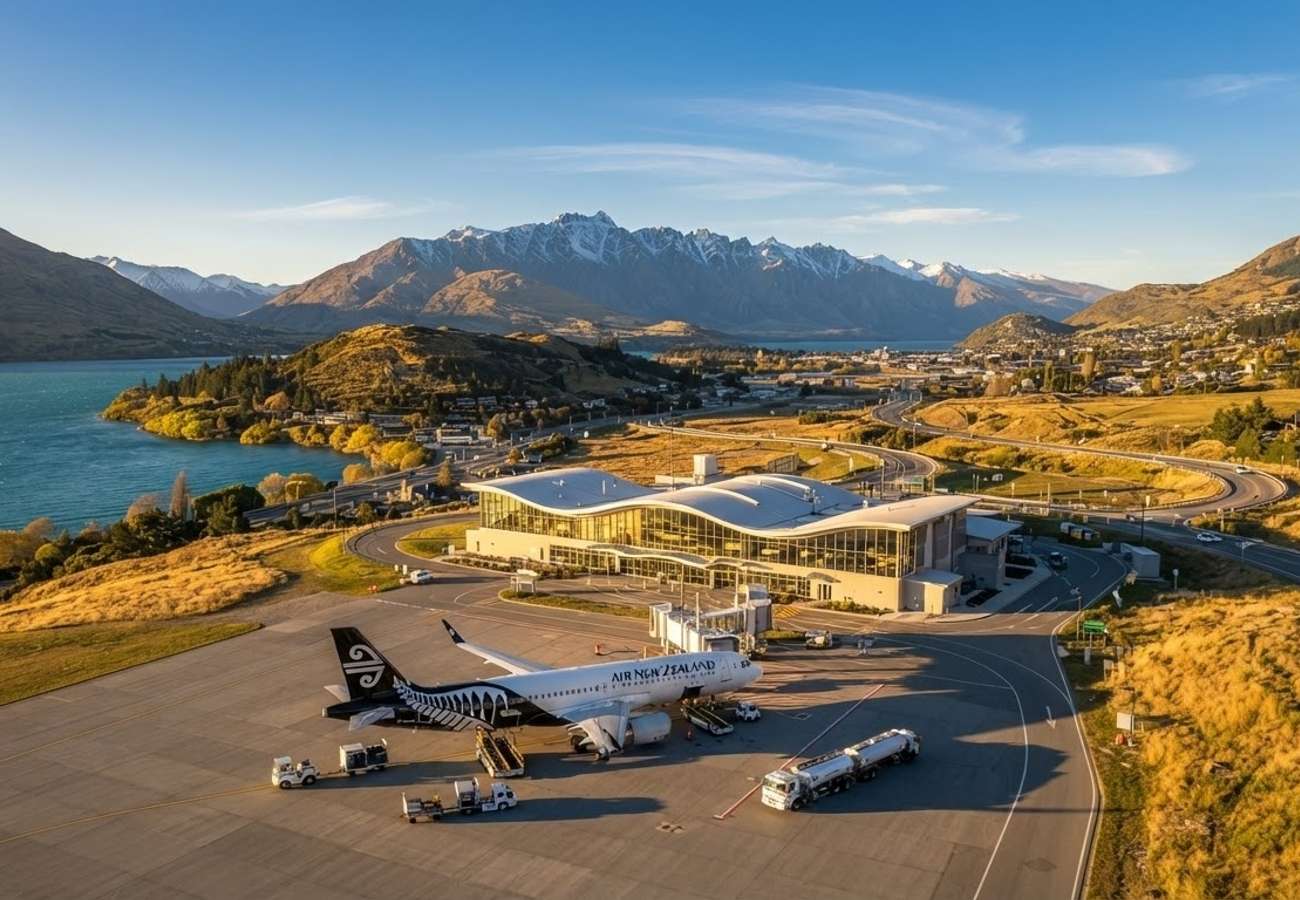
Image generated by AI
Navigating Queenstown Airport (ZQN) requires precise coordination, particularly during the peak ski (June–September) and summer (December–February) windows. For first-time arrivals, the transition from the terminal to the town center involves a critical choice between public transit and private hire.
Terminal Logistics and Arrival Flow
Queenstown Airport is a compact facility located in Frankton, approximately 8 kilometers from the central business district. It operates a single main terminal handling both domestic flights from New Zealand hubs and international arrivals from Australia.
For international passengers, the arrival sequence is rigorous. Our analysis of current protocols indicates that New Zealand’s biosecurity checks are among the strictest globally. Passengers must be prepared for detailed questioning regarding outdoor gear, hiking boots, and food items.
Once biosecurity is cleared, the flow is linear:
- Baggage Claim: Combined arrivals hall with separate domestic and international carousels.
- Service Hub: Rental car counters, shuttle desks, and information points are centralized in the public arrivals space.
- Exit: A single ground-level forecourt serves all transport modes.
The terminal layout is designed for efficiency; flight tracking systems suggest that passengers can move from the baggage carousel to the transport forecourt in under three minutes, provided there are no significant customs delays.
Transport Impact Breakdown: Airport to Town Center
Transport options vary significantly by cost and predictability. The following data outlines the primary transfer methods available in 2026.
| Transport Mode | Estimated Cost (NZD) | Duration | Best For |
|---|---|---|---|
| Orbus (Route 1) | Low single digits (with Bee Card) | 20-30 mins | Budget travelers / Solo flyers |
| Taxi | NZD 35 – NZD 50 | 15-20 mins | Speed / Direct hotel drop-off |
| Uber | Variable (Surge pricing applies) | 15-20 mins | Tech-preferring users / Small groups |
| Shared Shuttle | Per person (capped for families) | 20-40 mins | Groups with heavy ski gear |
Public Transit: Orbus Analysis
The Orbus Route 1 is the primary public artery. It operates every 15 to 30 minutes during peak daylight hours. For maximum cost-efficiency, passengers should utilize a Bee Card (regional smart card), which significantly reduces the fare compared to cash payments.
Private Hire and Rideshare
Taxis are available in a dedicated rank immediately outside arrivals. For a standard trip to the Steamer Wharf area, fares typically range between NZD 35 and NZD 50. Uber operates within a designated rideshare zone; however, our data shows that during the mid-afternoon peak of the ski season, surge pricing often renders Uber less competitive than fixed-price shuttle services.
Passenger Rights & Advisory
For passengers arriving at ZQN, understanding the legal and operational framework of your journey is essential for dispute resolution.
For the affected passenger, this means:
- Baggage Delays: If your luggage is delayed or damaged upon arrival, you are entitled to a Property Irregularity Report (PIR) before leaving the terminal. Our analysis of airline policies suggests that failure to lodge this report immediately can invalidate subsequent compensation claims.
- Transfer Disputes: When using metered taxis, ensure the meter is engaged at the point of pickup. For Uber or shuttle services, screenshot the quoted price at the time of booking to prevent "hidden" surcharge disputes during peak season.
- Flight Disruptions: For those arriving on international legs from Australia, be aware that while New Zealand has consumer protection laws, specific compensation for delays often depends on the airline's Contract of Carriage. If a delay results in a missed pre-paid shuttle, check if your travel insurance covers "missed connection" expenses.
Industry Analyst View: The Seasonal Bottleneck
Queenstown Airport operates as a "boutique" hub that frequently hits capacity during peak windows. The reliance on a single terminal means that the landing of a high-capacity aircraft from Sydney or Melbourne can create immediate bottlenecks at rental car counters and taxi ranks.
To mitigate this, we recommend a "Pre-Booking Strategy." Securing an SUV or a private shuttle 30-60 days in advance is not merely a convenience but a necessity during the winter months. Furthermore, those planning one-way rentals (e.g., ZQN to Christchurch) should expect additional drop-off fees, which are standard across major New Zealand rental agencies.
Precision in planning is the only way to avoid the peak-season chaos of the Southern Alps.
Related Travel Guides
Disclaimer
This article is for informational and educational purposes only. It does not constitute legal, financial, or professional advice. While we strive to provide accurate and up-to-date information, travel policies, regulations, and conditions change rapidly. Always verify information with official sources before making travel decisions. Nomad Lawyer makes no representations about the accuracy, reliability, completeness, or suitability of the information provided. Readers should consult qualified professionals for advice specific to their circumstances. The views expressed in this article are those of the author and do not necessarily reflect the views of Nomad Lawyer.
Raushan Kumar
Founder & Lead Developer
Full-stack developer with 11+ years of experience and a passionate traveller. Raushan built Nomad Lawyer from the ground up with a vision to create the best travel and law experience on the web.
Learn more about our team →