
Guarulhos Airport Taxi Guide 2026: Navigating Guarucoop Fares and Passenger Safety at GRU
A comprehensive safety and pricing guide for passengers using official Guarucoop taxis at São Paulo–Guarulhos International Airport (GRU) to avoid scams and ensure secure transport.

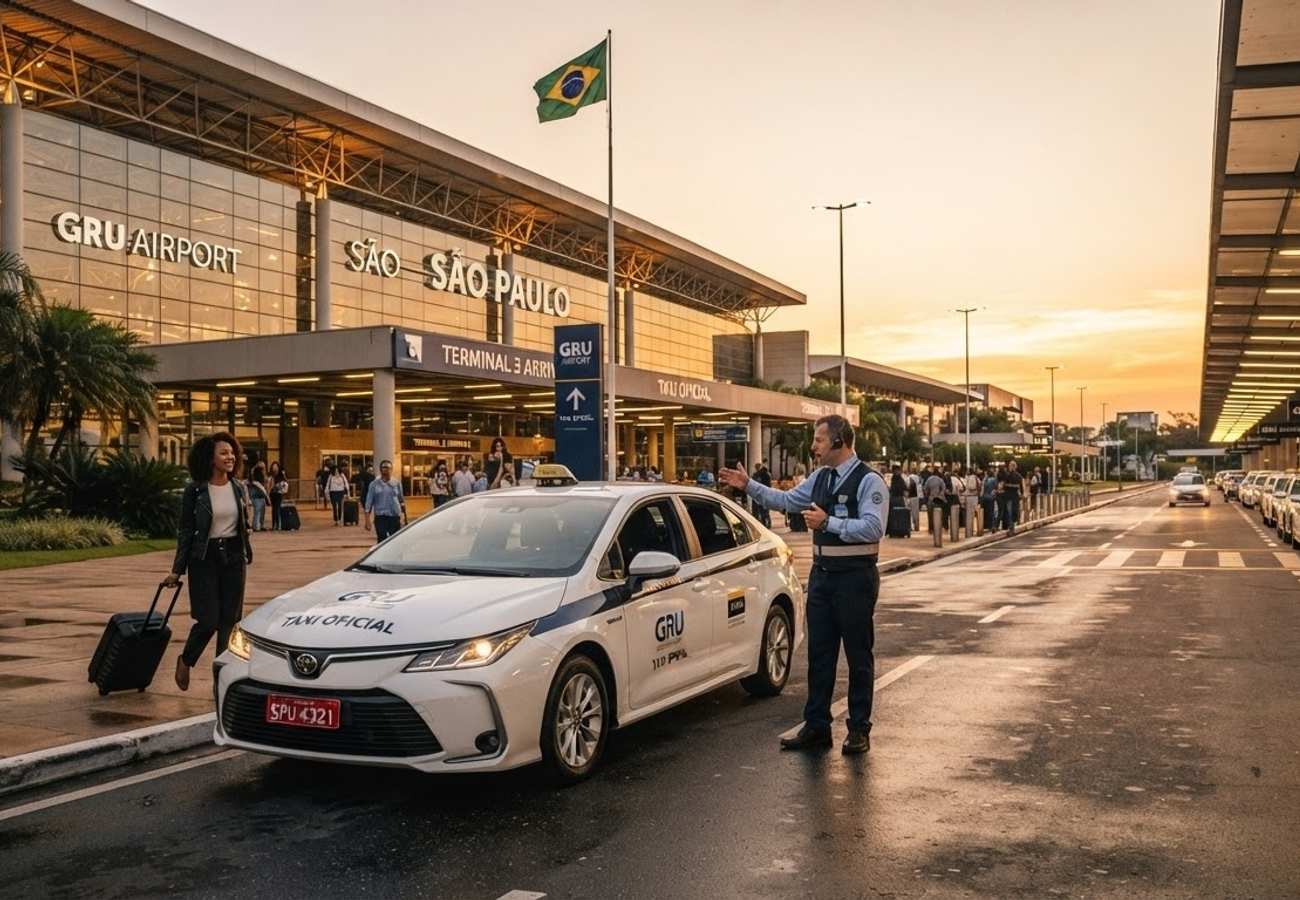
Image generated by AI
Millions of international travelers landing at São Paulo–Guarulhos International Airport (GRU) face a critical choice upon arrival: the security of official Guarucoop taxis or the risk of unlicensed operators. For those arriving in 2026, distinguishing between authorized transport and informal "pirate" drivers is the most important step in ensuring a safe transit to the city center.
The transition from a long-haul flight to the chaotic energy of São Paulo can be jarring. While ride-sharing apps are prevalent, the official taxi infrastructure at GRU provides a regulated environment that many foreign consulates and corporate travel policies recommend. By utilizing the authorized cooperative system, passengers can avoid the common pitfalls of predatory pricing and unregulated vehicles that often target exhausted tourists.
The Role of Guarucoop at São Paulo–Guarulhos International Airport
Guarucoop serves as the officially licensed taxi cooperative authorized by the city of Guarulhos to operate within the airport's boundaries. This organization holds an exclusive concession, granting it the sole right to manage the taxi ranks at the terminal exits. Operating since the 1980s, the cooperative maintains a standardized fleet of air-conditioned vehicles specifically designated for airport transfers.
For the traveler, this concession creates a designated "safe zone." When exiting Terminals 2 or 3, the presence of white taxis bearing Guarucoop branding indicates an authorized service. These vehicles are not merely random cabs; they are registered with city taxi license numbers and operated by drivers who are vetted by the cooperative.
The infrastructure is designed for high visibility. Official desks are positioned within the terminal, and staff members typically wear branded uniforms. This structured approach is intended to streamline the arrival process and provide a layer of institutional accountability that is absent when dealing with independent drivers who solicit passengers in the arrivals hall.
Analyzing Guarucoop Fare Structures and Price Benchmarks
While Guarucoop taxis utilize regulated meters, the airport operation functions similarly to a prepaid or fixed-fare system to provide passenger peace of mind. Before entering a vehicle, passengers can visit a staffed counter where an agent calculates an estimated fare based on the destination. This estimate serves as a benchmark, and while the final price is determined by the meter—accounting for traffic and route changes—it generally aligns with the initial quote.
Pricing varies based on the destination and time of day, but industry data and traveler reports provide clear benchmarks for 2026:
- Central São Paulo/Avenida Paulista: A journey to these hubs typically takes 45–60 minutes. Passengers often find that Guarucoop fares are roughly double the cost of a standard ride-share app in light traffic.
- Comparison to Local Costs: In practical terms, a one-way trip from GRU to the city center often costs approximately the same as a mid-range dinner for two in São Paulo.
- Premium for Security: While more expensive than apps, the cost includes the convenience of immediate boarding and the legal advantage of bus-lane access, which can significantly reduce travel time during peak congestion.
The importance of these official rates becomes clear when compared to the risks of informal transport. Reports indicate that unlicensed drivers often lure passengers with promises of lower rates, only to charge double the standard Guarucoop fare upon arrival. By obtaining a written or digital estimate at the official counter, travelers create a paper trail that prevents such disputes.
Locating Official Taxi Services in Terminals 2 and 3
Navigating the arrivals area at GRU requires a proactive approach to avoid solicitation. After clearing customs and retrieving luggage in Terminals 2 or 3, passengers should exclusively follow the signs marked “Táxi.”
The official process follows a specific sequence:
- The Internal Counter: Before stepping outside to the curb, locate the Guarucoop desks. These are situated within the secure, monitored area of the terminal.
- Destination Verification: Present the hotel address or destination on a mobile device. The agent will provide a fare estimate and may provide a slip of paper with the destination written in Portuguese to assist the driver.
- The Organized Queue: Follow the agent or signage to the official taxi rank. Here, a dispatcher manages the flow of vehicles.
- Vehicle Identification: Ensure the car has the Guarucoop logo and a city taxi plate before entering.
The most critical safety rule is to avoid any individual who approaches you inside the arrivals hall offering a "cheaper" or "faster" ride. These individuals are typically unlicensed operators. Walking purposefully toward the official rank minimizes the opportunity for these solicitations.
Logistical Management for Groups and Late-Night Arrivals
Arrivals during late-night hours or with large groups require additional planning. Guarucoop’s fleet is equipped to handle the demands of international travel, with drivers experienced in managing bulky luggage and sports equipment.
For standard groups, most sedans can accommodate two to three large suitcases. However, for groups of four or more, or those with oversized cargo, it is essential to request a larger vehicle at the counter. The dispatcher can then prioritize a van or a larger SUV from the queue.
From a security perspective, the "counter-to-car" pipeline is the safest route. By remaining within the monitored airport environment until the moment of boarding, travelers reduce their vulnerability. This is particularly vital for those arriving after midnight, as the official ranks remain well-lit and supervised, unlike the peripheral areas where informal drivers often congregate.
Why This Matters: The Traveler's Perspective on GRU Logistics
From a logistical and legal standpoint, the choice of transport at GRU is not just about cost—it is about risk mitigation. For the traveler, using Guarucoop means trading a small price premium for a guaranteed level of safety and regulatory oversight.
In a city as sprawling as São Paulo, the "first mile" of the journey sets the tone for the entire trip. An encounter with an unlicensed driver can lead to overcharging, route deviations, or safety concerns. Conversely, the official cooperative system provides a predictable experience: a known price range, a vetted driver, and a vehicle that is legally permitted to use priority lanes. For corporate travelers or those unfamiliar with the Portuguese language, the ability to have a destination verified by a third-party agent at a desk removes the stress of communication barriers during the ride.
Secure your transit by sticking to the official ranks and ignoring all unsolicited offers.
Related Travel Guides
Disclaimer
This article is for informational and educational purposes only. It does not constitute legal, financial, or professional advice. While we strive to provide accurate and up-to-date information, travel policies, regulations, and conditions change rapidly. Always verify information with official sources before making travel decisions. Nomad Lawyer makes no representations about the accuracy, reliability, completeness, or suitability of the information provided. Readers should consult qualified professionals for advice specific to their circumstances. The views expressed in this article are those of the author and do not necessarily reflect the views of Nomad Lawyer.
Kunal K Choudhary
Co-Founder & Contributor
A passionate traveller and tech enthusiast. Kunal contributes to the vision and growth of Nomad Lawyer, bringing fresh perspectives and driving the community forward.
Learn more about our team →