
Guatemala Elevates Mirador–Río Azul Tourism as Flores and Melchor de Mencos Open Great Maya Forest Routes

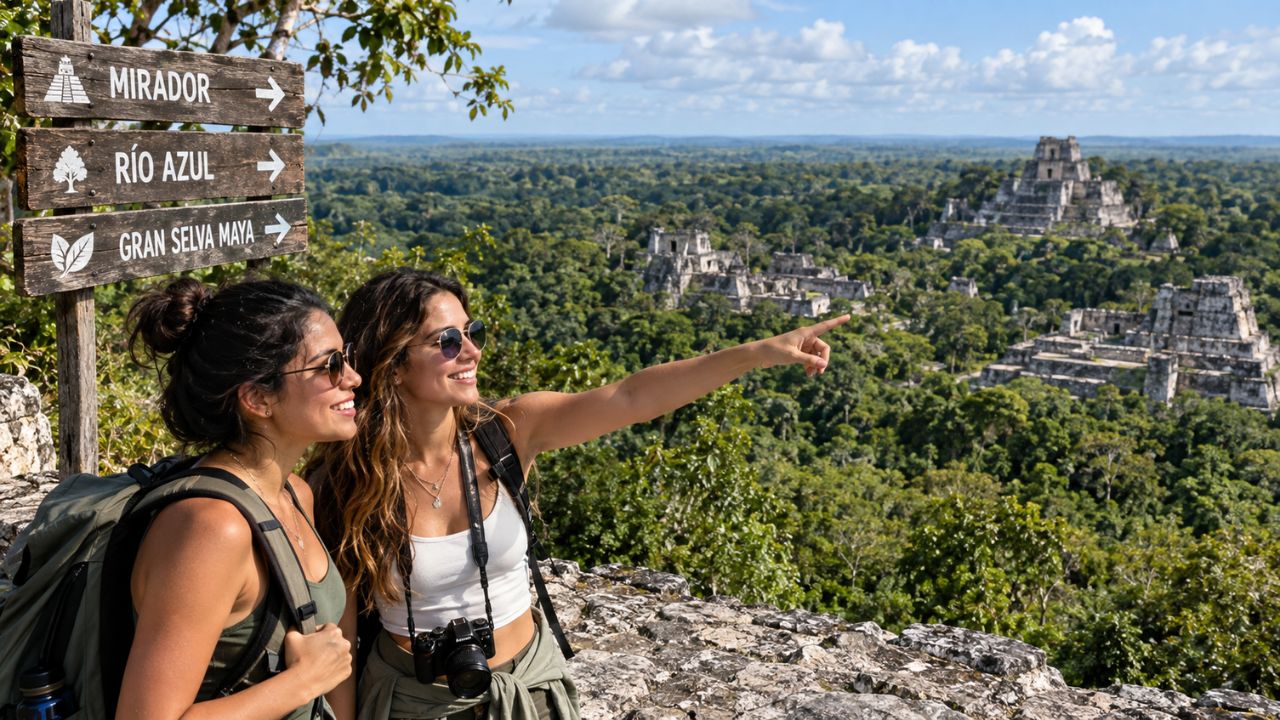
Covering 116,911 hectares within the trinational Great Maya Forest Biocultural Corridor, Guatemala's Mirador–Río Azul National Park is entering the 2026–27 dry-season planning cycle under an elevated conservation and community-led expedition framework. Accessible only via authorized local guides from Carmelita, Uaxactún, or Melchor de Mencos, the multi-day jungle journey preserves deep Maya heritage while deliberately capping visitor density.
Rather than paving highways or building mass resorts into northern Petén, the Government of Guatemala is choosing deliberate scarcity. Reaching its first anniversary in August 2026, the Great Maya Forest Biocultural Corridor unites 50 protected areas across Guatemala (27 units), Mexico (12 units), and Belize (11 units) under a unified five-year cooperation treaty. Within this cross-border wilderness, Mirador–Río Azul National Park and the neighboring Dos Lagunas Biotope serve as frontline test cases where tourism operates not as an unfettered commercial enterprise, but as an ecological protection mechanism.
The Regional Framework: Preserving 116,911 Hectares of Maya Heritage
Declared a national park in 1990, Mirador–Río Azul spans 116,911 hectares across the municipalities of San Andrés, San José, Flores, and Melchor de Mencos. The site protects monumental Preclassic Maya pyramids—including the colossal La Danta complex at El Mirador—and the painted mortuary tombs of Río Azul, submerged beneath an unbroken canopy of tropical forest.
Under the updated framework overseen by CONAP (Guatemala’s National Council for Protected Areas) and the Ministry of Environment and Natural Resources, tourist access is stringently controlled:
- Mandatory Community Accompaniment: Independent, self-guided entry is strictly prohibited. Travelers must journey with authorized tourism commissions from forest communities such as Carmelita or Uaxactún, or vetted operators holding CONAP permits.
- Controlled Operating Hours: Protected-area operating hours run strictly from 07:00 to 17:00 daily, preventing unauthorized nocturnal disruption to jaguars, tapirs, and nesting harpy eagles.
- Low-Impact Logistics: Because Río Azul sits roughly 200 kilometres from Flores, journey times take one to two days of backcountry overland trekking or mule packing before reaching the archaeological core, weeding out casual sightseers.
The Three Expedition Corridors: Flores, Carmelita, and Melchor de Mencos
On 7 August 2026, Guatemala's official tourism institute, INGUAT, updated visitor protocols, formalizing three distinct access corridors to distribute economic benefits across Petén's rural communities:
- Carmelita Corridor (Western Route): Originating in Flores and transiting through San Andrés and Carmelita, this classic route serves as the primary gateway for strenuous multi-day trekking expeditions focused on El Mirador.
- Uaxactún Corridor (Central-Eastern Route): Running from Flores through the historic chiclero village of Uaxactún, Dos Lagunas Biotope, El Cedro, and El Desierto toward Río Azul, this trail caters to wildlife researchers and archaeological specialists.
- Melchor de Mencos Corridor (Eastern Route): Diverting east through Melchor de Mencos near the Belize border, this route proceeds through El Manantial, community forestry concessions, the ruins of Kinal, Río Azul, and El Desierto. It provides a strategic alternative for expeditions prioritizing the eastern Rio Azul monuments.
Climate and Wildfire Risk Management for the 2026–27 Dry Season
While Guatemala's traditional dry season runs from November to April, shifting weather patterns demand dynamic risk planning for the 2026–27 season.
According to INSIVUMEH, Guatemala’s national meteorological institute, the probability of El Niño conditions between August 2026 and March 2027 stands at 95 to 100 per cent. Below-average rainfall during late wet-season months pairs with projected temperature anomalies of +0.5°C to +1°C in August and September, potentially rising to +1°C to +2°C in October, pushing average maximum temperatures in Petén to between 30°C and 38°C.
Emergency monitoring from CONRED adds weight to this vigilance: across Petén department, 305 fires burned 7,126 hectares during 2026 as of 25 August. In response, the trinational Great Maya Forest initiative has integrated joint satellite surveillance, community fire brigades, and trail condition reporting to protect both the biosphere and expedition groups.
Cultural Heritage and Community-Led Conservation
For the visitor, the real impact is discovering that conservation and community survival are inseparable. The guides leading expeditions are not academic outsiders; they are former chicle-gum tappers and xate-palm harvesters whose families have stewarded the Maya Biosphere Reserve for generations.
Community concessions in Carmelita and Uaxactún channel expedition fees directly into solar-powered medical clinics, village schools, and non-timber forest management. By employing local muleteers, cooks, and wilderness guides, high-end expedition tourism provides rural households with an economically viable alternative to illegal logging or cattle ranching.
Local Visitor Insider Tips: Expedition Survival and Petén Flavors
Traversing one of Central America’s most remote archaeological territories requires rigorous personal preparation:
- Hydration and Heat Defense: With temperatures frequently exceeding 35°C on shaded trails, pack electrolyte replacement tablets and a gravity-fed water filtration system. Quick-drying, long-sleeve merino wool or synthetic clothing protects against ticks, biting flies, and thorns.
- Petén Culinary Delicacies: In gateway communities like Flores and Uaxactún, savor regional gastronomy. Taste authentic tamales colorados peteneros, warm chuchitos stuffed with spiced pork, and ceremonial Mayan hot cacao prepared with chili, allspice, and wild honey.
- Sunrise from La Danta: Work with your community guide to schedule a pre-dawn climb up the massive La Danta pyramid base at El Mirador. Watching the sunrise break through mist above an ocean of primary rainforest canopy while howler monkeys roar below is one of the world's most humbling travel spectacles.
- Booking Lead Times: Because CONAP caps daily visitor quotas and authorized mule teams are limited, secure permits and book with community tourism commissions at least four to six months before dry-season departures.
Tourism Outlook: Scarcity as a Conservation Strategy
Guatemala’s management of Mirador–Río Azul models the future of regenerative adventure travel. By resisting road construction, enforcing strict guide accreditations, and honoring community forestry rights, Petén demonstrates that a destination’s true value lies not in how many visitors it can process, but in how fiercely its cultural sanctity and wild spaces are defended.
Related Travel Guides
Disclaimer
This article is for informational and educational purposes only. It does not constitute legal, financial, or professional advice. While we strive to provide accurate and up-to-date information, travel policies, regulations, and conditions change rapidly. Always verify information with official sources before making travel decisions. Nomad Lawyer makes no representations about the accuracy, reliability, completeness, or suitability of the information provided. Readers should consult qualified professionals for advice specific to their circumstances. The views expressed in this article are those of the author and do not necessarily reflect the views of Nomad Lawyer.
Raushan Kumar
Founder & Lead Developer
Full-stack developer with 11+ years of experience and a passionate traveller. Raushan built Nomad Lawyer from the ground up with a vision to create the best travel and law experience on the web.
Learn more about our team →