
Yucatan Teams Up With Oaxaca and More as Underrated Community Tourism Destinations of Mexico Enter the Global Travel Spotlight
Mexico formalizes community tourism across Maya Ka'an, Pueblos Mancomunados, and Camino del Mayab, uniting 78+ Indigenous communities across 220 km of trails.

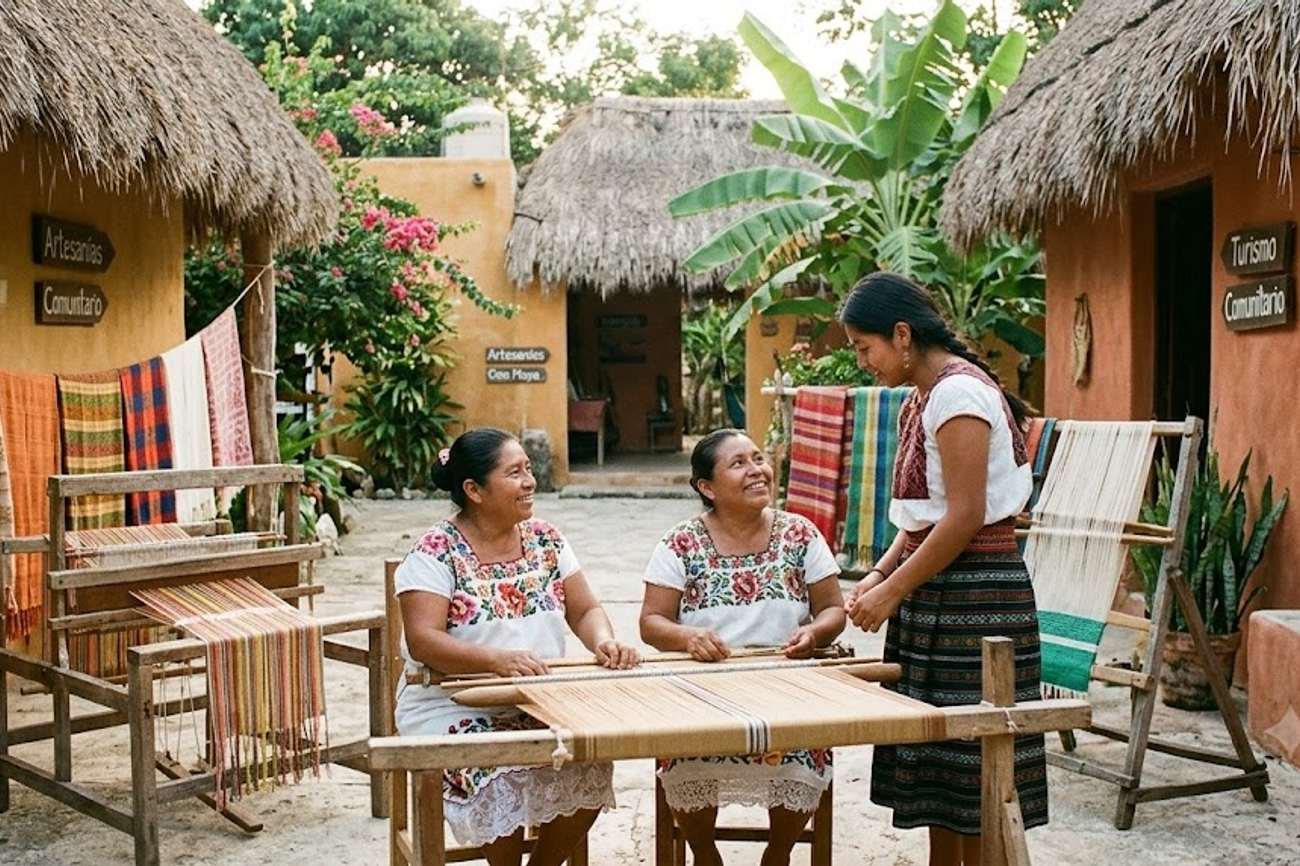
Image generated by AI
While Mexico recorded a staggering 10,132,885 international arrivals in December 2025 alone, with 5,218,693 overnight visitors flocking to crowded resort strips, less than two hours inland lies Maya Ka'an—a massive 1,553,289.17-hectare ancestral territory where September 2025 hotel occupancy stood at just 32.0%. This stark contrast between saturated coastal enclaves and empty forest trails is fueling one of the most significant travel shifts in the Americas. Rather than funneling voyagers into all-inclusive compounds, the Mexican federal government has designated Maya Ka’an, Camino del Mayab, and Pueblos Mancomunados as its first three formal Community Tourism Destinations. Encompassing more than 78 self-governing Indigenous settlements and over 220 kilometres of community-maintained trails, this network invites conscious travelers to discover deep regional traditions, forest conservation, and ancient foodways directly alongside local families.
The Community Tourism Network: Six Living Regions Redefining Travel
Mexico's emerging model is moving rural exploration from isolated village cooperatives into a structured national network. Official data reflects significant momentum: in Oaxaca, authorities confirmed an initial MXN 25 million federal infrastructure investment in 2026 for Pueblos Mancomunados, complemented by MXN 1 million in specialized equipment distributed to community ecotourism centres across San Isidro Llano Grande, San Miguel Amatlán, Benito Juárez, La Nevería, and Santa Martha Latuvi. To empower local autonomy, a partnership with Tecnológico Nacional de México reduced guide certification costs from as much as MXN 60,000 down to MXN 2,000.
Simultaneously, regional certifications are rising: Yucatan celebrated 61 Community Tourism Distinctions in March 2026, Chiapas awarded 20 distinctions during a landmark gathering in July 2026, and central Veracruz documented 63 community-led projects recognized through UNESCO World Heritage Centre cooperation.
Six primary regions anchor this transformative journey:
- Maya Ka’an (Quintana Roo): Spanning 1.553 million hectares with 61,072 inhabitants across Felipe Carrillo Puerto and José María Morelos, this territory encompasses 76 Maya settlements and 90 curated experiences. It hosts 17 women-led commercial enterprises specializing in stingless Melipona bee honey, organic textile weaving, and traditional medicine. Connected directly to the Sian Ka'an Biosphere Reserve, its seasonal accommodation demand—registering 36.7% in August 2025 and 32.0% in September 2025 (compared to 33.5% in September 2024)—offers serene access via Tulum Airport and Tren Maya stations at Tulum and Felipe Carrillo Puerto.
- Pueblos Mancomunados (Oaxaca): Perched in the cloud-draped Sierra Juárez, eight Zapotec villages—Santa María Yavesía, Santa Catarina Lachatao, San Miguel Amatlán, Latuvi, Benito Juárez, Cuajimoloyas, Llano Grande, and La Nevería—manage an interlinked network of forest cabins, canyon ziplines, and ancestral footpaths.
- Camino del Mayab (Yucatan): Formalized through an April 2026 agreement between the Government of Yucatan and Fonatur, this trail route allows hikers and gravel cyclists to journey between ancient cenotes, historic sisal haciendas, and 61 certified Maya community guesthouses.
- El Chiflón (Chiapas): Situated in Tzimol, this cooperative of 26 active members stewards 150 hectares along turquoise river cascades, culminating at the Velo de Novia waterfall. In 2026, the state officially designated more than 128 hectares here as the San Cristobalito Community Natural Reserve after 25 years of local conservation, supporting 46 visitor rooms and a 400-metre zipline.
- Cañadas del Pixquiac (Veracruz): Based in Rancho Viejo near Tlalnelhuayocan, this cloud forest reserve integrates interpretive mountain trails with organic shade-grown coffee, mountain stream trout cultivation, and wild orchid conservation.
- Las Guacamayas (Chiapas): Nestled along the Lacantún River in Marqués de Comillas, this community reserve preserves prime nesting territory for the scarlet macaw on the edge of the Selva Lacandona, operating under national Indigenous conservation programs.
What Makes Mexico's Community Tourism Unique
What distinguishes these community territories from standard ecotourism lodges is communal land ownership. In regions like Pueblos Mancomunados and Maya Ka’an, land is not owned by multinational corporations; it is managed by the comuneros under customary Indigenous law (usos y costumbres). When you stay in a stone cabin in Cuajimoloyas or walk an orchid trail in Veracruz, every guide, cook, and forest ranger is an equal co-owner of the enterprise.
This shared stewardship creates travel experiences steeped in authenticity. In Maya Ka’an, village elders share oral histories of the Caste War around hearth fires while preparing thick handmade tortillas and slow-cooked cochinita pibil spiced with wild Seville oranges and achiote. In the Sierra Juárez of Oaxaca, meals consist of wild mountain mushrooms, yellow mole stew, hand-pressed blue corn tlayudas, and fragrant poleo tea harvested from high alpine meadows. Through the official portal Visit Mexico, cultural authorities emphasize that this communal structure ensures that tourism earnings fund village clinics, water filtration systems, and bilingual schools.
Visitor Insider Tips
Experiencing community territories requires shedding hurried sightseeing schedules and adopting the thoughtful rhythm of rural hospitality.
- Pacing and Base Logistics: Never attempt day trips from distant coastal resorts. Base yourself inside the communities for three to four nights. In Quintana Roo, stay in Felipe Carrillo Puerto or Tihosuco to explore Maya Ka'an; in Oaxaca, book three nights across community cabins in Latuvi, Cuajimoloyas, and Lachatao, walking between villages with luggage transferred by local cooperatives.
- Currency and Payment Realities: Card-payment terminals are virtually nonexistent in remote mountain hamlets and forest outposts. Always carry sufficient Mexican pesos in small denominations (MXN 50, 100, and 200 notes) before departing regional transit hubs in Oaxaca City, Mérida, or Chetumal.
- Local Cultural Etiquette: Rural communities value quiet respect. Always ask permission before photographing individuals, family kitchens, or ceremonial shrines. Greet villagers with a polite "Buenos días" or "Buenas tardes", and consider purchasing handwoven textiles, raw honey, or shade-grown coffee directly from cooperative makers.
- Pack for Dramatic Microclimates: Weather shifts rapidly between low-lying jungle flats and high mountain ranges. While Maya Ka'an requires lightweight moisture-wicking shirts and non-toxic insect repellent, Oaxaca's Sierra Juárez sits above 2,800 metres, where night temperatures plunge near freezing. Pack thermal layers, wool socks, sturdy trail boots, and a waterproof shell.
- Booking Certified Local Guides: Always confirm trail excursions through official community offices rather than informal street touts. Certified guides trained through regional technical institutes offer indispensable knowledge of medicinal plants, local dialects, and trail navigation.
Cultural and Environmental Context
Community tourism in Mexico represents a frontline defense against environmental degradation and cultural erosion. In regions like the Selva Lacandona and the Sian Ka'an corridor, community-managed reserves create economic incentives that directly counteract illegal logging, slash-and-burn clearing, and wildlife poaching. The designation of the San Cristobalito Community Natural Reserve at El Chiflón after a quarter-century of local vigilance proves that Indigenous stewardship delivers superior conservation outcomes compared to top-down administrative mandates.
In addition, these initiatives provide vital economic alternatives for rural youth. By training young men and women as certified mountain guides, ecotourism managers, and wildlife photographers—evident in the 17 thriving women-led enterprises of Maya Ka'an—communities mitigate the economic desperation that fuels outward migration to northern cities. Responsible visitors act as partners in this cultural continuity, ensuring that ancestral languages, heirloom seed varieties, and sacred forest sanctuaries flourish for generations to come.
FAQ: Community Tourism in Mexico 2026
What are Mexico's official Community Tourism Destinations? The federal government has formally designated Maya Ka’an in Quintana Roo, Pueblos Mancomunados in Oaxaca, and Camino del Mayab in Yucatan as its inaugural community destinations.
How do travelers reach Maya Ka’an? Maya Ka'an is accessible via the new Tulum International Airport or passenger rail stops on the Tren Maya at Tulum and Felipe Carrillo Puerto, followed by local road transport.
What accommodation is available in Pueblos Mancomunados? The eight mountain villages operate clean, comfortable community-run cabins with wood-burning fireplaces, private bathrooms, and dining halls serving regional Oaxacan meals.
How can visitors book community-led experiences? Reserve directly through official community ecotourism offices in Oaxaca City, Mérida, or Felipe Carrillo Puerto, ensuring that payments go straight to local cooperative bank accounts.
Beyond the crowded sands of resort brochures lies the true heart of Mexico, where mountain paths and ancient forests welcome those who travel to listen.
Related Travel Guides
Disclaimer
This article is for informational and educational purposes only. It does not constitute legal, financial, or professional advice. While we strive to provide accurate and up-to-date information, travel policies, regulations, and conditions change rapidly. Always verify information with official sources before making travel decisions. Nomad Lawyer makes no representations about the accuracy, reliability, completeness, or suitability of the information provided. Readers should consult qualified professionals for advice specific to their circumstances. The views expressed in this article are those of the author and do not necessarily reflect the views of Nomad Lawyer.
Preeti Gunjan
Contributor & Community Manager
A passionate traveller and community builder. Preeti helps grow the Nomad Lawyer community, fostering engagement and bringing the reader experience to life.
Learn more about our team →