
Adirondacks Unites with Lake Placid and More US Destinations Earn Over 189 Billion USD from Tourism But Canadian Visitors are Ditching
US tourism revenue tops $189 billion across key regions as Adirondacks, California, and Florida thrive on domestic travel despite a 23.5% drop in Canadian visits.

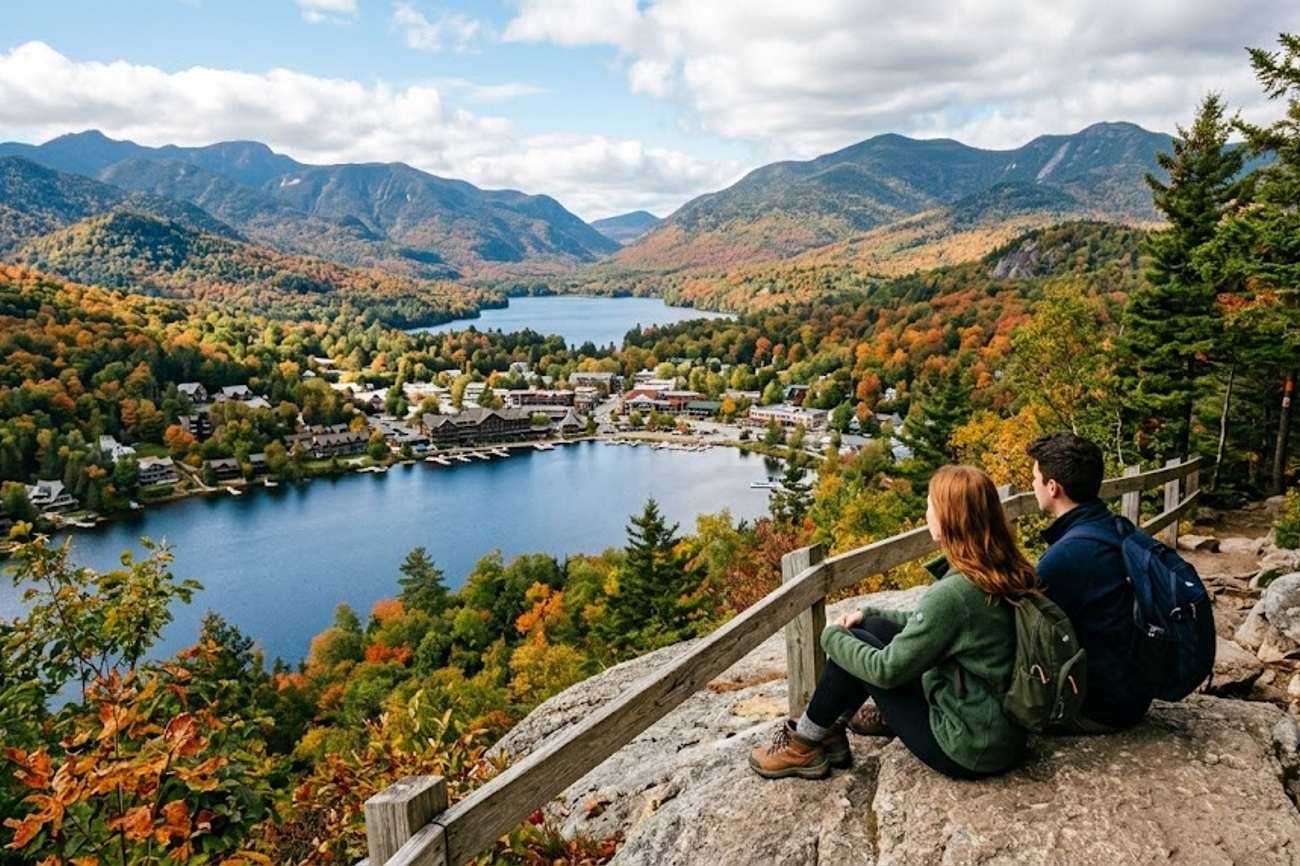
Image generated by AI
While Canadian cross-border journeys to the United States plunged by 23.5% in 2025, tumbling to 23.1 million visits and draining US$18.8 billion in spending, northern New York's Adirondacks pulled off an extraordinary economic paradox: visitor spending across its six counties climbed 2.8% to reach nearly US$2.6 billion. This counterintuitive resilience—mirrored in large-scale markets like California, where tourism spending topped US$158.9 billion, and Florida, which set a record with 143.3 million visitors—reveals a historic realignment in North American leisure travel. Driven by surging domestic road trips and diversified year-round recreation, the broader collection of reporting US destinations generated over $189 billion in tourism spending and economic impact, proving that American travelers have stepped in to fill the void left by their northern neighbors.
The Adirondack Paradox: Rising Revenues Amid a Cross-Border Exodus
For generations, the international boundary separating Quebec and Ontario from upstate New York served as a dependable tourism artery. However, official data from Statistics Canada confirms that the traditional cross-border getaway suffered a historic contraction throughout 2025, driven by trade frictions, tariffs, currency volatility, and shifting traveler sentiments. Total Canadian trips fell 23.5% to 23.1 million, while leisure travel took the sharpest blow with a 21.5% drop, cutting total Canadian expenditure across the border by 15.1% to US$18.8 billion.
Across New York State, total Canadian land entries fell by roughly 21% in 2025, accompanied by a 3% dip in overseas arrivals. Yet, within the six-county Adirondack park region, total visitor spending expanded by approximately 2.8% to nearly US$2.6 billion. In Warren County, anchored by the heritage boating and summer resorts of Lake George, visitor spending climbed 3.1% to reach US$956.6 million in 2025, generating approximately US$60.1 million in local tax revenue and US$57.1 million in state taxes.
This performance highlights how destination resilience varies across regional borders:
- Lake Placid (New York): Benefiting from a two-time Olympic legacy (1932 and 1980), Lake Placid successfully decoupled from single-season border traffic. Robust domestic summer leisure was reinforced by heavy winter snowfall, maintaining vibrant ski hills, ice-skating ovals, and bobsled runs that attracted domestic travelers from across the Mid-Atlantic.
- Lake George (Warren County): Family-owned steamboat excursions, lakeside motor courts, and outdoor island camping sustained occupancy, demonstrating that total revenue can rise even when an established international source market declines.
- California: Generating US$158.9 billion in 2025 visitor spending (a 1.7% increase over 2024), Visit California absorbed Canadian dips by drawing high-spending travelers from Mexico, Japan, Italy, and India alongside its immense domestic base.
- Florida: Welcoming an all-time record of 143.3 million visitors in 2025 (up 0.2%), Florida’s Canadian arrivals slipped 6.8% to 3.2 million, but Canadians represented only 2.2% of its market, dwarfed by 130.9 million domestic trips and a 4% rise in overseas arrivals.
- Wisconsin: Setting an economic record of approximately US$27 billion in total tourism impact in 2025 (up from US$25.8 billion in 2024), the state attracted roughly 117.9 million visits and generated over US$1.7 billion in state and local taxes.
- Vulnerable Border Communities: In stark contrast, northern Vermont suffered a 47% drop in Canadian credit card spending and a 46% decline in card transactions during 2025. While Canadians account for 5% of Vermont’s overall US$4.2 billion tourism economy, northern border towns rely on Canadians for 30% to 35% of commerce. Similarly, Maine recorded nearly 800,000 Canadian visits spending almost US$500 million in 2024, but saw land border crossings drop by 26% (166,000 fewer entries) between February and April 2025.
What Makes the Adirondacks Different
Covering six million acres, Adirondack Park is a conservation marvel: an intricate patchwork of public wilderness and private hamlets larger than Yellowstone, Yosemite, Grand Canyon, and Glacier National Parks combined. Protected by New York State’s landmark "Forever Wild" constitutional clause enacted in 1894, the region bans billboards, restricts highway expansion, and safeguards hundreds of pristine glacial lakes surrounded by dense boreal forests.
This geography creates a uniquely diversified travel experience that resists economic downturns. Rather than relying on a single commercial strip, visitors navigate between forty-six high peaks rising above 4,000 feet, tranquil paddle routes along the Raquette River, and historic great camps built with native granite and hand-peeled spruce logs. Travelers stepping onto the wooden docks of Lake Placid or boarding classic open-deck wooden launches on Lake George connect with deep sporting heritage, supported through regional preservation initiatives promoted by I LOVE NY.
When Canadian visitors stayed home, domestic travelers from New York City, Boston, Philadelphia, and Rochester rediscovered the accessibility of these mountain routes. The availability of diverse lodging—ranging from luxury lakeside lodges and boutique village inns to secluded backcountry lean-tos—provided flexible price points that insulated Adirondack merchants from border shocks.
Visitor Insider Tips
Experiencing the Adirondacks without falling into high-season crowds requires hyper-local timing, wilderness etiquette, and smart transport planning.
- Bypassing the High Peaks Trail Bottlenecks: During peak autumn foliage from mid-September to mid-October, trailheads along Route 73 near Keene Valley fill before 5:30 AM. Base yourself instead in southern or western hubs like Tupper Lake, Saranac Lake, or Old Forge. Hike lesser-known summits like Mount Arab or Ampersand Mountain for identical 360-degree canopy vistas with a fraction of the foot traffic.
- Olympic Passport Savings in Lake Placid: If visiting Lake Placid's historic sporting facilities, buy the Lake Placid Legacy Sites Passport. It bundles access to the Olympic Center museum, the 1980 Herb Brooks Arena, the ski jump gondola, and the Mt. Van Hoevenberg sliding track, saving up to 35% compared to individual site tickets.
- Lake George Boating and Island Reservations: If boating on Lake George, reserve Department of Environmental Protection island day-use docks well in advance. For a quieter water experience, rent a wooden canoe on nearby Tupper Lake or Upper Saranac Lake, where private motorboat speeds are restricted and water clarity is exceptional.
- Dining on Regional Mountain Specialties: Savor true Adirondack flavors: warm apple cider doughnuts at roadside farm stands, wild blueberry flapjacks drizzled with locally boiled Grade A dark maple syrup, and craft ales brewed with mountain spring water at microbreweries in Lake Placid and Glens Falls.
- Cold-Weather Mountain Preparation: Weather in the High Peaks changes violently. Pack microspikes and thermal underlayers even in late autumn or early spring; summit temperatures on Mount Marcy or Algonquin Peak can plunge below freezing while valley floors remain in the fifties.
Cultural and Environmental Context
The financial resilience of the Adirondacks highlights the ongoing balance between conservation and local mountain livelihoods. Under the "Forever Wild" mandate, state-owned forest preserve lands cannot be leased, sold, or logged. While this guarantees pristine watersheds that filter drinking water for millions of downstream New Yorkers, it also limits industrial growth, making sustainable tourism the primary economic lifeblood for permanent village residents.
Rising domestic spending—such as the $2.6 billion generated across the six Adirondack counties and $956.6 million in Warren County—proves that nature-based tourism can sustain rural communities through international volatility. However, increased domestic foot traffic introduces fresh environmental stewardship demands. Trail erosion, parking overflow along narrow scenic parkways, and pressure on fragile alpine tundra above the tree line require visitors to strictly practice "Leave No Trace" ethics. By supporting locally owned gear outfitters, independent roadside motels, and family-run guide services, travelers ensure that tourism revenue directly protects the largest protected wilderness area in the contiguous United States.
FAQ: Visiting the Adirondacks and US Mountain Corridors 2026
Why did Canadian visits to the United States decline so sharply in 2025? Statistics Canada reports Canadian trips dropped 23.5% due to unfavorable exchange rates, rising travel costs, cross-border trade tensions, and changing domestic leisure preferences.
How did the Adirondacks grow tourism spending despite fewer Canadian visitors? Strong domestic road-trip demand, diverse outdoor recreation, and year-round sports in Lake Placid pushed six-county regional spending to nearly $2.6 billion, up 2.8%.
What makes Lake Placid a year-round destination? Its two-time Olympic legacy provides world-class winter bobsledding, skating, and alpine skiing, which seamlessly transitions into summer hiking, lake paddling, and mountain cycling.
Which border areas suffered the most from Canadian travel declines? Northern Vermont saw Canadian credit card spend plummet 47%, while Maine recorded 166,000 fewer land border entries in early 2025, heavily impacting border-dependent shops and motels.
In the quiet majesty of the Adirondack High Peaks, the wild mountain trails endure, proving that true wilderness will always find a devoted circle of travelers.
Related Travel Guides
Disclaimer
This article is for informational and educational purposes only. It does not constitute legal, financial, or professional advice. While we strive to provide accurate and up-to-date information, travel policies, regulations, and conditions change rapidly. Always verify information with official sources before making travel decisions. Nomad Lawyer makes no representations about the accuracy, reliability, completeness, or suitability of the information provided. Readers should consult qualified professionals for advice specific to their circumstances. The views expressed in this article are those of the author and do not necessarily reflect the views of Nomad Lawyer.
Preeti Gunjan
Contributor & Community Manager
A passionate traveller and community builder. Preeti helps grow the Nomad Lawyer community, fostering engagement and bringing the reader experience to life.
Learn more about our team →