
Oman's Khareef Miracle: SalamAir Carries Record 180,000 Passengers to Monsoon-Cloaked Salalah in 2026
Carrying 180,000 passengers across 1,042 flights during the 2026 Khareef season, SalamAir drives a 20% tourism surge to Dhofar's emerald mountains, waterfalls, and ancient frankincense valleys.

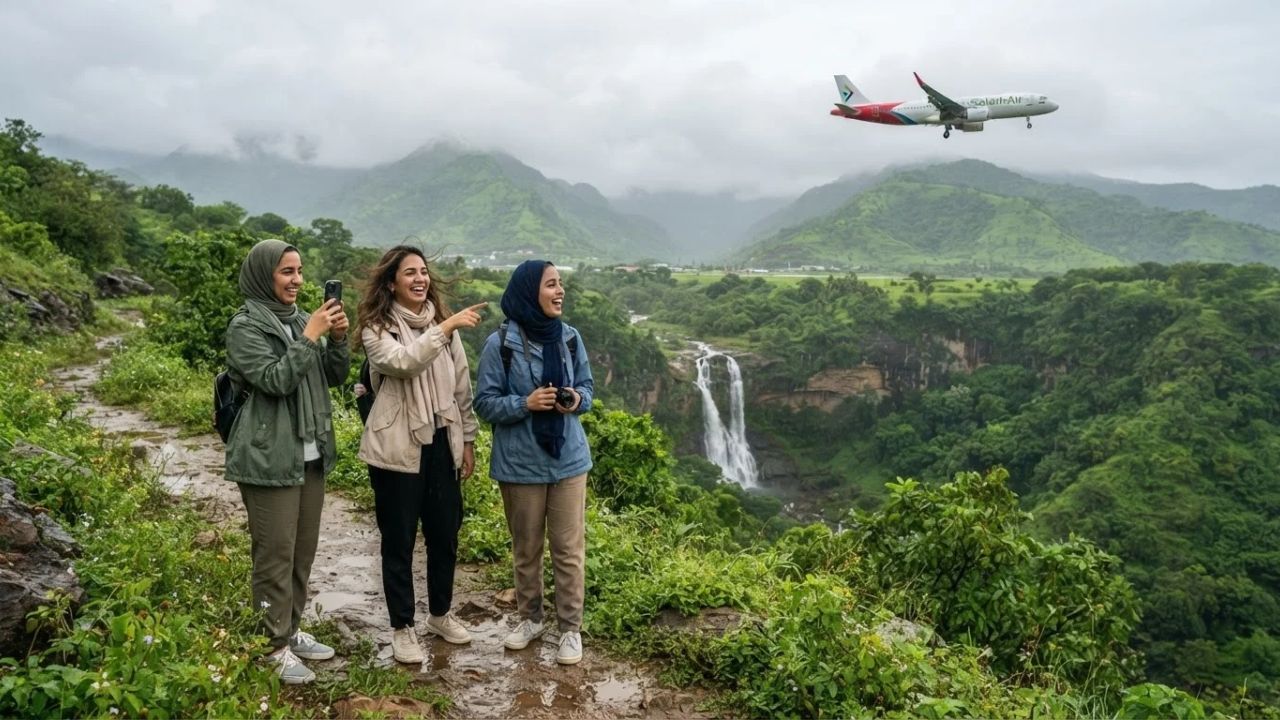
Image generated by AI
While summer temperatures across the Arabian Peninsula routinely exceed a blistering 45°C, the southern Omani governorate of Dhofar undergoes a miraculous meteorological transformation, cloaked in cool 25°C monsoon drizzle and blanketed in emerald green mountain pastures—a phenomenon that saw SalamAir carry an unprecedented 180,000 passengers to and from Salalah during the 2026 Khareef season. Marking a remarkable 20% passenger uplift compared to the previous year, the Omani carrier operated 1,042 flights during the three-month monsoon window, reflecting a 19% operational expansion. Supported by domestic corridors from Sohar and direct regional flights from Dammam and Baghdad, this seasonal influx is turning the ancient capital of the frankincense trade into the Middle East's premier summer eco-sanctuary.
The Monsoon Airlift: How SalamAir Unlocked Dhofar's Peak Season
The extraordinary passenger growth recorded during the 2026 Khareef season illustrates how strategic regional air connectivity can unlock remote seasonal destinations. The Khareef—the local Arabic term for the southwest Indian Ocean monsoon that grazes the southern rim of Arabia from late June through early September—transforms the arid limestone ridges of Dhofar into a verdant wilderness of flowing springs, temporary cascades, and blanket cloud cover.
To accommodate this surging travel interest, SalamAir expanded its fleet deployment and frequencies, providing travelers with unprecedented scheduling flexibility. Domestic links within the Sultanate played a pivotal role: the airline operated 96 scheduled flights between the northern industrial port of Sohar and Salalah, transporting more than 14,000 passengers who bypassed a grueling ten-hour highway drive across the central desert.
Simultaneously, international visitor access was augmented through targeted direct services from the wider Gulf and Middle East. SalamAir operated 40 direct flights originating in Dammam, Saudi Arabia, and Baghdad, Iraq, supplying more than 7,000 seats directly into Salalah International Airport. By providing point-to-point flights that avoided congested transfers in Muscat, the airline enabled regional families and international travelers to escape desert heat in favor of Dhofar’s misty highlands. This targeted airlift directly advances the goals of Oman’s Vision 2040, which identifies sustainable tourism and regional economic diversification as vital drivers of long-term national prosperity.
What Makes Salalah Different: Emerald Peaks, Frankincense Valleys, and Coastal Springs
What sets Salalah apart from anywhere else in the Arabian Peninsula is its singular sub-tropical microclimate and profound antiquity. Hemmed between the turquoise waters of the Arabian Sea and the soaring arcs of the Dhofar Mountains (Jebel Samhan, Jebel Qara, and Jebel Qamar), the coastal plain traps moisture-laden summer clouds. Within days of the first monsoon rains, bare limestone valleys erupt into tropical foliage, and seasonal waterfalls thunder down the cliffs of Ayn Khor, Ayn Athum, and Wadi Darbat into emerald freshwater pools where wild camels graze on hillside terraces.
Yet the region’s natural beauty is matched by its historic prestige as the cradle of the ancient frankincense trade. Scattered throughout the rocky wadis of the interior grow wild groves of Boswellia sacra, the sacred frankincense tree whose fragrant resin once traded at values exceeding gold in ancient Rome, Egypt, and Persia. Inscribed on the UNESCO World Heritage Centre register as the Land of Frankincense, archaeological sites such as the ancient fortified port of Sumhuram (Khor Rori) and the coastal city of Al Baleed showcase stone warehouses where maritime caravans loaded aromatic treasures bound for the Silk Road.
Unlike the high-rise concrete sprawl of many Gulf metropolises, Salalah retains an unhurried, coastal charm. Along Sultan Qaboos Street and Haffa Beach, lush agricultural plantations of coconut palms, dwarf bananas, and papayas border the ocean, where open-air fruit stalls serve chilled fresh coconut water cut open with machetes before your eyes.
Visitor Insider Tips: Navigating the Khareef Like a Local Resident
To experience Salalah’s seasonal splendor while avoiding tourist gridlock and respect the region's cultural rhythms, plan your journey with local precision:
- Vehicle Rental and Mountain Driving: While passenger sedans suffice for city driving, a four-wheel-drive (4WD) vehicle is indispensable for exploring the Dhofar mountain wadis. Khareef drizzle turns unpaved mountain roads into slick mud, and dense fog frequently reduces visibility on the hairpin turns of the plateau to under ten meters. Ensure your vehicle has functional fog lamps and check tire treads before ascending Jebel Ittin or Jebel Qara.
- Time Your Waterfall Visits for Serenity: Famous natural attractions like Wadi Darbat and the blowholes of Mughsail Beach draw immense family crowds between 14:00 and 18:00. Arrive instead at 07:30 or 08:00 in the morning. You will encounter tranquil mist rising off the freshwater lakes, hear native bird calls echoing through fig trees, and watch local herders guiding camels across empty green plateaus.
- Frankincense Shopping Etiquette: When purchasing frankincense resin at the historic Al Haffa Souk, ask for Hojari frankincense, the highest ceremonial grade harvested from the dry interior desert wadis of Nejd. True Hojari features a pale translucent green or silvery hue with an intoxicating citrus-pine aroma. Politely negotiate prices, and purchase a traditional painted clay burner (majmar) and natural charcoal to enjoy authentic scents at home.
- Local Cultural Etiquette and Modesty: Dhofar is deeply traditional, religious, and conservative. While locals are exceptionally welcoming, modest attire covering shoulders, upper arms, and knees is strictly expected in public spaces, grocery markets, and natural wadis. Always ask permission before taking photographs of local residents, especially Jebbali camel herders and women.
- Savor Hyper-Local Dhofari Specialties: Skip generic international restaurants to experience authentic Dhofari gastronomy. Order muthbe—fresh camel meat or chicken seasoned with salt and spices, cooked slowly over smooth, fire-heated white river stones until sizzling and tender, served over fragrant basmati rice with spicy tomato-garlic salsa. Wash it down with fresh karak tea spiced with cardamom and saffron from roadside stalls along the mountain passes.
Cultural and Environmental Context: Pasture Conservation, Camel Herding, and Vision 2040
The surging popularity of the Khareef season introduces sensitive ecological and community responsibilities. Dhofar’s seasonal green mantle is extremely delicate: the soil is shallow, and heavy off-road vehicle traffic can permanently tear up alpine turf, causing severe soil erosion that prevents native grasses from regenerating.
To mitigate this impact, environmental authorities and initiatives promoted by Experience Oman have designated vehicle-free zones across sensitive mountain meadows and constructed elevated wooden boardwalks around vulnerable waterfall rims at Wadi Darbat and Ayn Sahalnoot. These measures protect fragile root systems while keeping natural springs unpolluted.
Simultaneously, seasonal tourism directly supports the indigenous Jebbali communities whose ancestral livelihoods revolve around camel and cattle husbandry. Visitors who patronize locally operated mountain farm stays, purchase honey harvested from wild acacia blossoms, and hire native Dhofari guides circulate tourism revenue directly into rural villages. By aligning seasonal aviation growth with low-impact travel habits, Oman demonstrates how cultural authenticity and environmental conservation can thrive alongside ambitious national tourism development.
FAQ: Visiting Salalah during Khareef 2026
When does the Khareef season take place in Salalah?
The Khareef monsoon season runs annually from late June through early September, with peak rainfall, lush green pastures, and cascading waterfalls typically occurring throughout July and August.
Do international visitors require a visa to enter Oman?
Citizens of more than 100 countries, including the EU, the UK, the US, Canada, Australia, and New Zealand, can enter Oman visa-free for tourist stays up to 14 days, or obtain an eVisa online for longer visits.
Is a four-wheel-drive vehicle required to explore Salalah during Khareef?
While city roads are well-paved, a 4WD vehicle is strongly recommended for navigating slippery mountain ascents, wadi tracks, and fog-shrouded viewpoints safely during rainy conditions.
Is Salalah safe for solo and independent travelers?
Oman is internationally renowned as one of the safest and most hospitable countries in the world, featuring exceptionally low crime rates and warm, respectful local hospitality.
When cool monsoon clouds descend over the frankincense wadis of Dhofar, Salalah reveals an ancient Arabian miracle where the desert yields to water, mist, and enduring peace.
Related Travel Guides
Disclaimer
This article is for informational and educational purposes only. It does not constitute legal, financial, or professional advice. While we strive to provide accurate and up-to-date information, travel policies, regulations, and conditions change rapidly. Always verify information with official sources before making travel decisions. Nomad Lawyer makes no representations about the accuracy, reliability, completeness, or suitability of the information provided. Readers should consult qualified professionals for advice specific to their circumstances. The views expressed in this article are those of the author and do not necessarily reflect the views of Nomad Lawyer.
Raushan Kumar
Founder & Lead Developer
Full-stack developer with 11+ years of experience and a passionate traveller. Raushan built Nomad Lawyer from the ground up with a vision to create the best travel and law experience on the web.
Learn more about our team →