
Thailand Steps Up AI Tourism: How Smart Tech, TAT-AI, and Regenerative Travel Are Reshaping the Kingdom
Generating 782.6 billion baht from 16.2 million visitors in six months, Thailand pivots from volume to value, deploying TAT-AI, cross-border digital payments, and regenerative travel across Chiang Mai and Krabi.

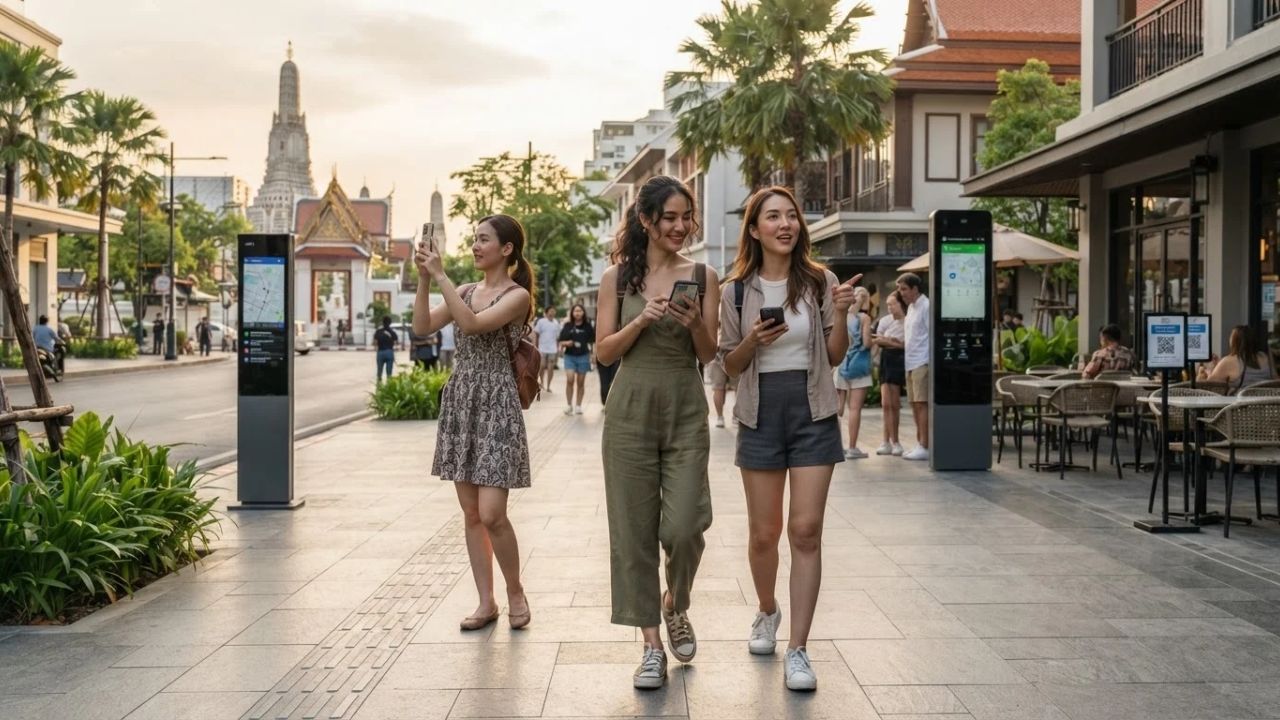
Image generated by AI
Between January and early July 2026, Thailand generated a remarkable 782.6 billion baht in tourism revenue from more than 16.2 million international arrivals—yet instead of chasing unbridled visitor numbers, the kingdom has embarked on an ambitious artificial intelligence revolution to direct travelers away from congested coastal hotspots and into authentic secondary provinces. Moving decisively away from a historical "volume over value" mindset, destination planners are championing a "value over volume" framework. By combining predictive machine learning through the Tourism Intelligence Powered by AI (TAT-AI) platform with interactive tools like the Amazing Thailand Travel Guide GPTs, the country is reimagining destination management to alleviate overcrowding, extend lengths of stay, and distribute tourist spending directly into rural communities.
The AI Tourism Revolution: How TAT-AI Pivots From Volume to Value
The core of Thailand’s digital modernization centers on breaking traditional data silos to understand real-time traveler behavior. The newly deployed TAT-AI platform unifies data streams from immigration arrival patterns, commercial airline capacities, hotel reservation trends, and digital transactions into a single predictive system. Rather than measuring success purely through border arrival tallies, the platform prioritizes key qualitative indicators: average visitor expenditure, length of stay, repeat visitation frequencies, and how evenly tourist revenue flows into regional economies.
A centerpiece of this traveler-facing transformation is the Amazing Thailand Travel Guide GPTs ecosystem. Designed as an intelligent personal concierge, the system helps independent travelers discover authentic regional guesthouses, neighborhood night markets, sacred Buddhist festivals, and community-based eco-tours. By identifying seasonal bottlenecks, the AI encourages visitors to adjust their travel windows and explore emerging provinces such as Nan, Sukhothai, Phetchaburi, and Loei rather than concentrating solely in Bangkok or Phuket.
This technological pivot is part of an international smart tourism movement. Destinations including South Korea, Indonesia, Qatar, Italy, Spain, and France are aggressively investing in AI visitor solutions. While South Korea focuses heavily on hyper-personalized urban travel assistants, Thailand’s model directly connects technology with conservation and regional development. Concurrently, the nationwide Pay Like a Local initiative allows international visitors from participating partner countries to make cross-border digital payments using their home banking apps and digital wallets. Backed by the Thailand Digital Arrival Card (TDAC)—which eliminates outdated paper immigration slips—and the kingdom’s forward-looking 2035 Vision for unified digital borders, the Tourism Authority of Thailand is constructing a seamless transit ecosystem that empowers independent explorers.
What Makes Exploring Thailand Different: Beyond the Island Circuit
While international package brochures often reduce Thailand to neon-lit beaches and crowded island boat tours, the country’s true soul reveals itself when one steps beyond the standard circuit. Supported by smart transit data, travelers are discovering that Thailand’s cultural topography shifts dramatically across regions. Just an hour north of the capital, the Historic City of Ayutthaya, inscribed on the UNESCO World Heritage Centre register, preserves monumental brick prangs, tranquil monastery ruins, and headless Buddha statues nestled in ancient banyan roots along the Chao Phraya River.
In the mountainous north, Chiang Mai serves as the epicenter of Lanna cultural heritage and regenerative travel. Rather than visiting commercialized wildlife shows, conscientious travelers hike through mist-shrouded Doi Inthanon foothill forests with ethnic Karen guides, exploring shade-grown Arabica coffee plantations that actively regenerate native tree canopies. In the southern province of Krabi, towering limestone karsts rise dramatically out of the Andaman Sea, where local fishermen manage community mangrove restoration reserves using traditional wooden longtail boats retrofitted with quiet electric motors.
Intercity travel has similarly evolved. Modern express services operated by the State Railway of Thailand depart from Bangkok's Krung Thep Aphiwat Central Terminal, offering comfortable, scenic rail journeys through the central plains up to Chiang Mai, or south along the Gulf of Thailand, providing a low-carbon alternative to domestic flights.
Visitor Insider Tips: Navigating Smart and Cultural Thailand Like an Expert
To experience Thailand with genuine depth while utilizing modern digital tools, travelers should incorporate these practical local strategies:
- Pre-Register for Smooth Border Entry: Complete the mandatory Thailand Digital Arrival Card (TDAC) online between 48 and 72 hours before boarding your flight to Suvarnabhumi Airport (BKK) or Don Mueang (DMK). This digital pre-clearance links directly to automated biometric passport gates, allowing you to bypass manual passport control queues during peak arrival waves.
- Embrace Cross-Border QR Payments: Take full advantage of the "Pay Like a Local" digital payment system. If you hold a bank account or digital wallet from participating Asian countries (such as Singapore, Malaysia, Indonesia, or South Korea), you can scan Thai PromptPay QR codes directly at fruit carts, night markets, and local cafes without carrying heavy cash or paying credit card foreign transaction fees.
- Time Your Temple Visits for Peace: Beat midday tropical heat and tour bus crowds by visiting iconic temples like Wat Pho in Bangkok or Wat Umong in Chiang Mai at 08:00 when gates open. You will witness morning monk almsgiving (tak bat) and hear soft temple bells ringing in absolute serenity.
- Observe Buddhist Temple Etiquette: Dress respectfully when entering sacred spaces by keeping shoulders and knees covered; avoid sheer fabrics or sleeveless vests. Always remove shoes before stepping onto temple teak floors or entering private residences. Never point the soles of your feet toward Buddha images, monks, or local elders, as feet are culturally regarded as the lowest, unholiest part of the body.
- Explore Distinct Regional Cuisines: Move beyond standard red and green curries to explore authentic regional culinary profiles. In Chiang Mai, start your day with a steaming bowl of khao soi—crisp and soft egg noodles immersed in an aromatic coconut curry broth, garnished with pickled mustard greens and fresh shallots. In the northeastern Isan region, savor larb ped (spicy minced duck salad tossed with roasted ground rice and fresh herbs) paired with hand-rolled sticky rice.
Cultural and Environmental Context: Community-Based Tourism and Regenerative Stewardship
Thailand’s pivot from volume to value is an urgent environmental and cultural necessity. Decades of unmanaged mass tourism placed severe strain on sensitive marine national parks, coral reefs, and urban water resources. In response, the integration of AI demand forecasting enables park authorities to set dynamic carrying-capacity limits, closing fragile marine sanctuaries periodically to allow marine ecosystems to recover.
In Krabi, regenerative tourism initiatives actively restore coastal mangrove forests that act as vital carbon sinks and natural buffers against coastal erosion. By steering traveler spending toward community-based tourism (CBT) cooperatives, local villagers earn sustainable incomes guiding kayak eco-tours, sharing traditional batik dyeing techniques, and preparing meals from locally harvested organic ingredients.
Similarly, in Chiang Mai’s highland valleys, community-managed agroforestry projects protect ancient watersheds from commercial deforestation. When visitors stay in family-run bamboo homestays and purchase handicrafts directly from village weavers, the economic benefits of international travel bypass multinational tour syndicates and flow directly to the custodians of regional heritage. By combining intelligent technology with deep cultural respect, travelers participate in a regenerative tourism model that protects Thailand’s sacred environments and living traditions for generations to come.
FAQ: Visiting Thailand in 2026
What is the Thailand Digital Arrival Card (TDAC)?
The TDAC is a digital pre-arrival platform that replaces traditional paper immigration forms. International visitors should submit their travel and lodging details online prior to arrival for faster, biometric border processing.
Can international travelers make cashless QR payments in Thailand?
Yes. Through the Pay Like a Local initiative, travelers with digital wallets and banking apps from partner nations can scan PromptPay QR codes across night markets, restaurants, and shops nationwide.
What is the best time of year to visit Thailand for cultural exploration?
November through February offers cool, dry weather with comfortable daytime temperatures across northern and central Thailand, ideal for walking historical temple grounds and exploring mountain villages.
How does AI improve the travel experience across Thailand?
AI platforms like TAT-AI and the Amazing Thailand Travel Guide GPTs provide personalized destination routes, help travelers avoid congested tourist sites, and highlight authentic community-based experiences in secondary provinces.
By allowing smart technology to guide you beyond the well-trodden tourist trail, Thailand reveals its greatest treasure: an enduring kingdom where ancient hospitality and mindful innovation walk hand in hand.
Related Travel Guides
Disclaimer
This article is for informational and educational purposes only. It does not constitute legal, financial, or professional advice. While we strive to provide accurate and up-to-date information, travel policies, regulations, and conditions change rapidly. Always verify information with official sources before making travel decisions. Nomad Lawyer makes no representations about the accuracy, reliability, completeness, or suitability of the information provided. Readers should consult qualified professionals for advice specific to their circumstances. The views expressed in this article are those of the author and do not necessarily reflect the views of Nomad Lawyer.
Raushan Kumar
Founder & Lead Developer
Full-stack developer with 11+ years of experience and a passionate traveller. Raushan built Nomad Lawyer from the ground up with a vision to create the best travel and law experience on the web.
Learn more about our team →