
Australian Travel Warning Issued After Deadly Nepal and Tibet Floods Leave Tourists Missing in 2026
Australian travelers are urged to reassess plans following catastrophic flash floods in Nepal and Tibet that have killed over 150 people and left several Australians missing.
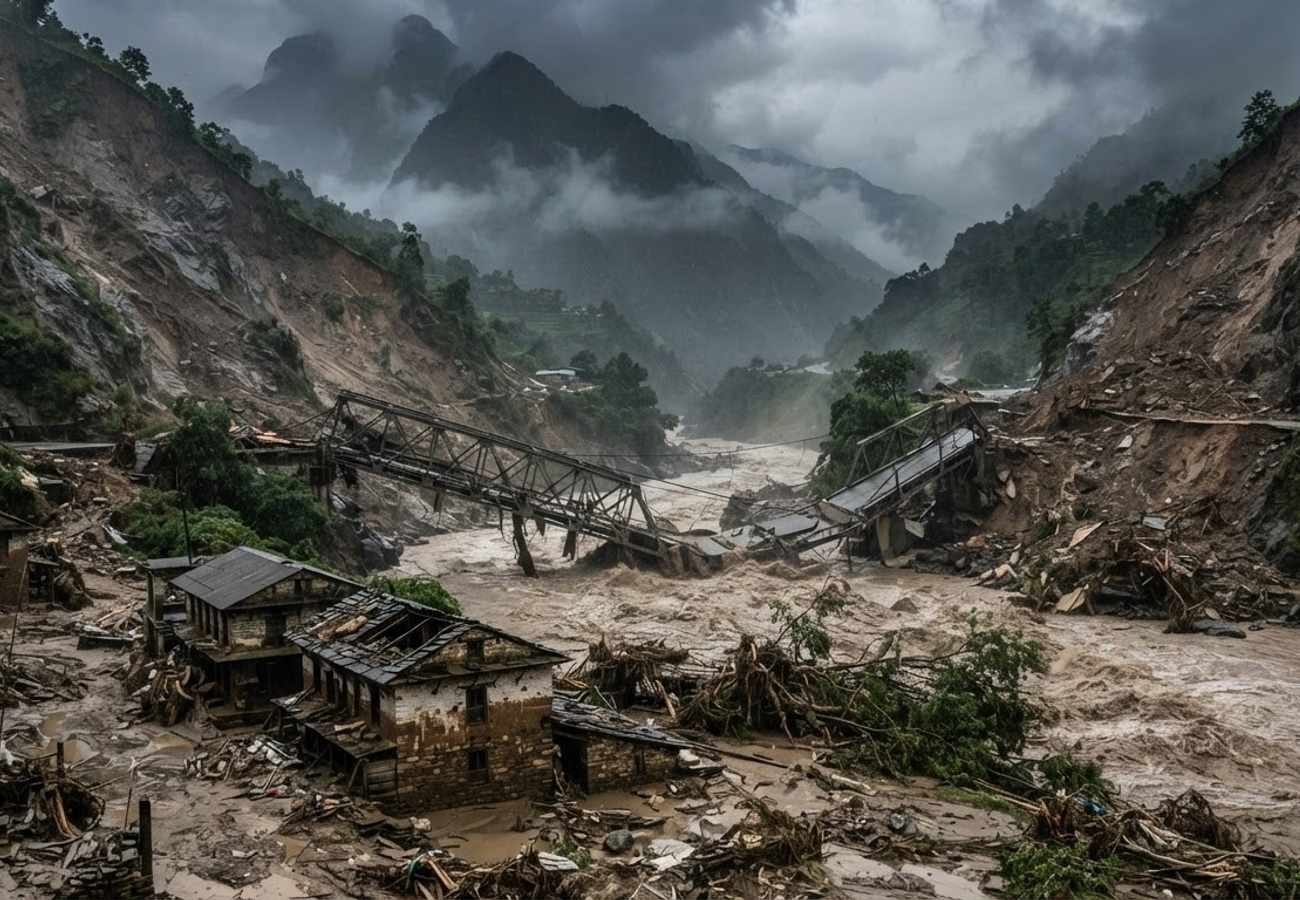
Image generated by AI
Australians are being urged to immediately review travel itineraries to Nepal following catastrophic flash floods across the border regions of Nepal and Tibet. The disaster has resulted in over 150 deaths and left hundreds of people, including Australian nationals, missing.
The crisis was triggered by an ice avalanche that released a massive surge of water and debris into the Rasuwa and Nuwakot districts of Nepal. This wall of water decimated riverside settlements and destroyed critical infrastructure, including bridges and sections of major highways, effectively isolating remote mountain communities and stranding foreign tourists.
Search and rescue operations are currently underway in steep river valleys, though efforts are hampered by the scale of the destruction and the rugged terrain.
Critical Impact on Infrastructure and Tourism
The flooding has paralyzed several primary transport arteries essential for international tourism. Our analysis of the regional reports indicates that the damage is concentrated around the Bhote Koshi and Trishuli river systems.
The following key routes are currently facing severe disruptions:
- Prithvi Highway: The primary link between Kathmandu and Pokhara is suffering from landslides and flood damage.
- Galchhi-Nuwakot-Rasuwa-Syabrubesi Road: A vital corridor for those accessing the Langtang region and the Tibet border.
- Muglin-Narayangadh Road: A critical regional hub link currently experiencing restrictions.
While not every trekking circuit is physically underwater, the diversion of local resources toward emergency response and the instability of access roads mean that itineraries for the Annapurna Circuit, Langtang, and Manaslu regions are likely to be impacted.
Official Safety Guidance for Australians
The Australian government's Smartraveller platform, last reviewed in late July 2026 and current as of 26 August 2026, maintains a recommendation that citizens exercise a high degree of caution in Nepal.
Key safety mandates for travelers include:
- Insurance Verification: Ensure policies explicitly cover high-altitude trekking, adventure activities, and emergency medical evacuation.
- Medical Logistics: Be aware that facilities outside Kathmandu and Pokhara are basic; evacuations from remote zones are logistically complex and expensive.
- Communication: Travelers currently in-country should maintain regular contact with family in Australia and monitor local authorities.
Infrastructure Damage Summary
| Affected Route/Area | Impact Level | Primary Issue |
|---|---|---|
| Prithvi Highway | Severe | Landslides & Flood Damage |
| Rasuwa & Nuwakot Districts | Critical | Total Inundation / Missing Persons |
| Bhote Koshi & Trishuli Rivers | Severe | Bridge & Bank Collapse |
| Galchhi-Syabrubesi Road | Severe | Road Closures / Tibet Border Access |
Why This Matters: Industry Analysis
From a logistical perspective, this event highlights a growing volatility in Himalayan tourism. For travelers on these routes, the real impact is not just the immediate danger of flooding, but the "cascading failure" of infrastructure. When a primary bridge on the Prithvi Highway fails, it creates a bottleneck that affects everything from food supply chains to emergency medical evacuations for trekkers hundreds of miles away.
Furthermore, this disaster underscores a critical insurance gap. Many standard travel policies exclude "acts of God" or specific high-altitude risks. For the Australian market, this serves as a warning that "comprehensive" insurance is often insufficient unless it specifically names glacial lake outburst floods (GLOFs) or ice avalanches.
Our analysis of the timing suggests a dangerous trend. These floods occurred during the tail end of the South Asian monsoon. As global temperatures rise, the frequency of ice-avalanche-triggered floods is increasing, meaning the "safe" window for trekking is narrowing.
Forward Outlook
Travelers should expect prolonged closures of the roads leading to the Tibet border. Those with imminent departures must contact tour operators to verify if their routes transit through the Rasuwa or Nuwakot districts.
In the coming weeks, we expect a surge in itinerary cancellations as operators reassess the stability of slopes in the Langtang and Manaslu regions. Travelers are advised to prioritize flexibility and be prepared to postpone non-essential trips until the monsoon season fully concludes and infrastructure is formally certified as safe.
Safety must take precedence over the itinerary in the volatile Himalayan corridor.
Related Travel Guides
Disclaimer
This article is for informational and educational purposes only. It does not constitute legal, financial, or professional advice. While we strive to provide accurate and up-to-date information, travel policies, regulations, and conditions change rapidly. Always verify information with official sources before making travel decisions. Nomad Lawyer makes no representations about the accuracy, reliability, completeness, or suitability of the information provided. Readers should consult qualified professionals for advice specific to their circumstances. The views expressed in this article are those of the author and do not necessarily reflect the views of Nomad Lawyer.