
United Teams Up With American and More As Airlines Cut Flights And Prepare Travellers For Higher Holiday Airfares
United Airlines, American Airlines, and Southwest adjust flight schedules and trim seat capacity ahead of the 2026 holiday season, driving airfares higher amid fuel cost pressures.

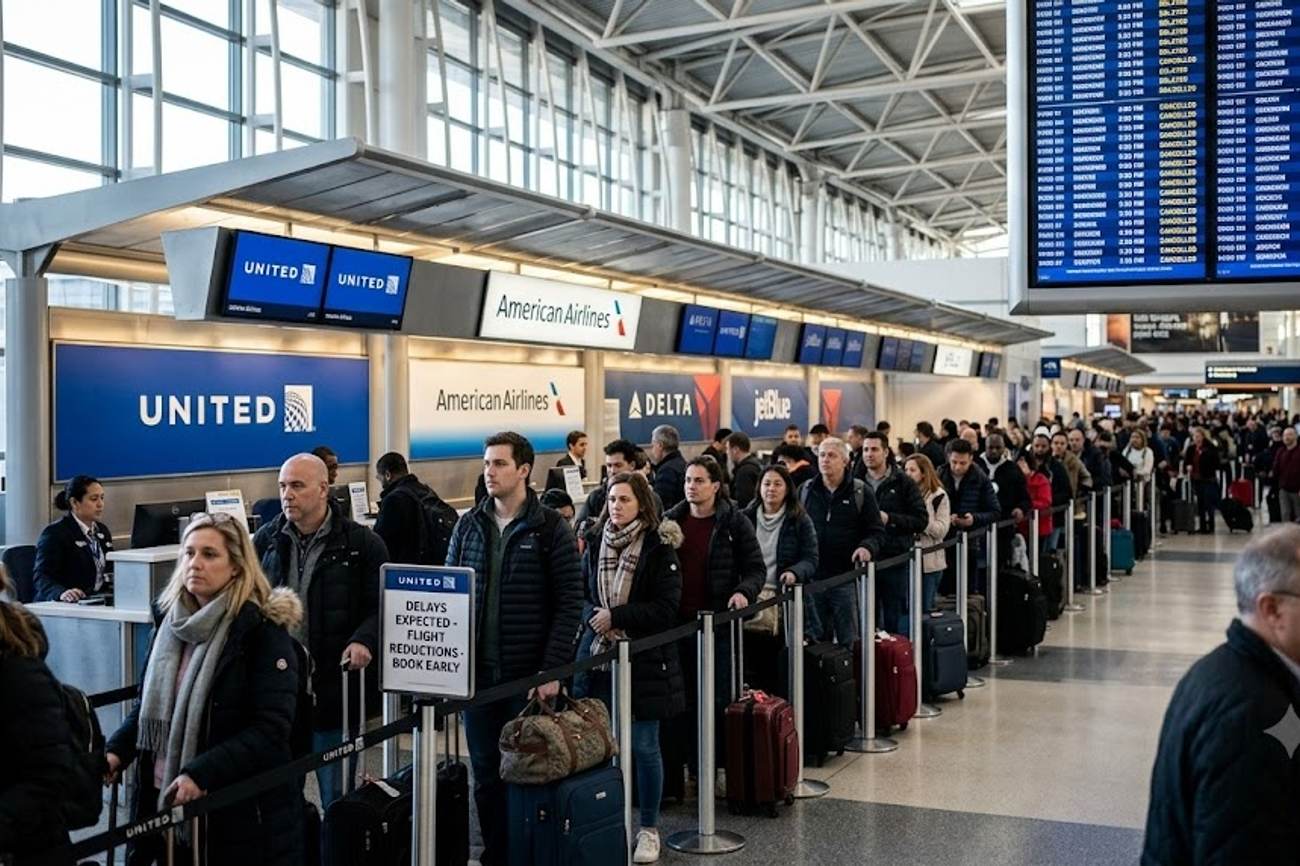
Image generated by AI
With aviation fuel expenditures consuming between 25% and 35% of total airline operating costs, United Airlines, American Airlines, and Southwest Airlines are enacting disciplined schedule trimming, reducing seat capacity ahead of the peak 2026 holiday travel season. This coordinated operational realignment comes as major North American commercial carriers confront stubborn jet fuel price volatility and heightened labor expenses, forcing network planning executives to prune marginal, low-yield flight frequencies. By concentrating available aircraft on high-density routes and eliminating underperforming departures, the industry is deliberately constraining the supply of available seats, setting the stage for significant upward fare pressure during the Thanksgiving, Christmas, and New Year travel periods.
This strategic pivot signals an end to unbridled post-pandemic capacity expansion across American skies. Faced with tightening operating margins, airline corporate leadership is prioritizing unit revenues and profitability over broad network market share. Travelers preparing for year-end family gatherings or winter vacations will encounter fewer daily departure options, fuller cabins, and compressed inventory in standard economy fare buckets, making strategic booking timing an indispensable component of holiday travel planning.
Jet Fuel Price Volatility and the Return of Capacity Discipline
The fundamental catalyst compelling major carriers to recalibrate their flight operations is the unpredictability of aviation kerosene pricing. As documented by energy market monitoring from the U.S. Energy Information Administration (EIA), jet fuel represents the single largest variable expenditure in commercial aviation, alongside labor. When fuel spot prices fluctuate upward, the operating economics of secondary routes—particularly those sustained by thin passenger margins or low load factors—rapidly deteriorate into financial losses.
Rather than absorbing these cost penalties across expansive winter schedules, network planners at United Airlines and American Airlines are deploying precision-guided capacity management. This discipline involves conducting rigorous line-item audits of route profitability, assessing aircraft turn-around expenses, and removing mid-week or off-peak frequencies that fail to generate premium seat yields. Official performance statistics published by the Bureau of Transportation Statistics (BTS) demonstrate that domestic air carriers have systematically thinned schedules on secondary corridors, reassigning long-range fuel-efficient aircraft to high-yield business and premier leisure destinations.
Carrier Strategic Responses: Managing Fleet Schedules for Peak Season
The operational response across major carriers reflects a shared commitment to capacity control, though individual execution varies across fleet structures and network footprints.
| Carrier | Capacity Management Approach | Fleet & Route Realignment | Protected Customer Segments | Primary Passenger Impact |
|---|---|---|---|---|
| United Airlines | Pruning marginal frequencies; trimming off-peak regional departures | Prioritizing high-gauge Boeing 787, 777, and 737 MAX aircraft on core hubs | United Polaris business suites, United Club lounges, long-haul transpacific routes | Fewer daily departure windows; higher seat occupancy; climbing walk-up fares |
| American Airlines | Surgical route cuts; consolidating regional jet flights into mainline banks | Retiring less efficient regional runs; optimizing Dallas/Fort Worth and Charlotte hubs | Flagship Suite business cabins, Admirals Club network, premium transcontinental flights | Reduced flight schedule flexibility; climbing holiday peak ticket prices |
| Southwest Airlines | Reassessing rapid growth targets; thinning off-peak schedule frequencies | Optimizing Boeing 737 operations; scaling back unprofitable point-to-point links | Rapid Rewards frequent flyers, high-frequency corporate commuter corridors | Rapid depletion of lowest Wanna Get Away fare tiers; higher holiday base prices |
Across all three carriers, schedule adjustments have avoided widespread terminal closures in favor of surgical frequency reductions. An origin-destination pair previously served by five daily regional flights may see frequencies trimmed to three mainline departures, maintaining network connectivity while significantly lowering overall fuel burn. For airline balance sheets, this approach eliminates the financial drag of half-empty regional flights during shoulder periods. For passengers, however, the consolidation produces elevated load factors, with peak holiday flights expected to exceed 90% seat occupancy nationwide.
Expert Analysis: Pricing Dynamics, Ancillary Yields, and Premium Bifurcation
From an airline revenue management standpoint, the direct relationship between restricted capacity and climbing ticket pricing illustrates classic supply-and-demand mechanics. Because commercial airlines employ dynamic algorithmic revenue management platforms, ticket prices escalate automatically as cabin inventories dwindle.
For travelers booking this route, the direct consequence is the rapid evaporation of entry-level economy fare buckets well before peak travel dates arrive. When carriers cut one or two daily frequencies from a competitive corridor, the remaining flights experience unprecedented booking pressure. Travelers who delay booking until November or December will find basic economy inventory exhausted, leaving only fully refundable coach fares or premium economy seats priced at steep premiums. In addition, during irregular operations caused by winter weather, fewer scheduled flights mean that stranded passengers face prolonged waits for available empty seats on subsequent departures.
The pricing pressure this creates means that airlines can effectively transfer energy cost inflation directly onto holiday travelers without suffering a collapse in overall booking volumes. While economy passengers bear the brunt of higher base fares, stricter baggage policies, and expensive seat selection fees, commercial carriers are aggressively insulating and expanding their high-margin premium cabins. Premium leisure and corporate travelers flying in business-class suites or utilizing airport lounges generate substantial revenue per available seat mile (RASM), subsidizing operational costs and providing carriers with durable profit buffers. In accordance with airline operating frameworks monitored by the International Air Transport Association (IATA), this revenue bifurcation allows network legacy carriers to maintain healthy balance sheets even in an era of elevated jet fuel costs.
Key Takeaways
- United Airlines, American Airlines, and Southwest Airlines are trimming flight capacity ahead of the 2026 holiday travel season to offset high jet fuel costs.
- Airlines are implementing surgical route cuts on weaker-performing regional flights while prioritizing high-gauge aircraft on profitable core routes.
- Peak holiday travel periods will see seat occupancy surpass 90%, causing entry-level economy ticket categories to sell out months earlier than usual.
- High operating overhead is being countered through premium cabin prioritization, with business-class amenities and airport lounges shielded from cost cuts.
- Travelers must adopt proactive booking strategies, including targeting secondary airports and maintaining departure date flexibility of two to three days.
FAQ: Holiday Flight Reductions and Airfare Surge 2026
Why are major airlines cutting flights before the busy holiday travel season? Airlines are trimming schedules to counter elevated jet fuel prices and rising operating overhead. Cutting marginal, less-profitable flights allows carriers to protect profit margins and focus fuel-efficient aircraft on high-demand routes.
How will these airline schedule cuts affect holiday ticket prices? Fewer available flights reduce overall seat supply while passenger demand remains strong. Under airline dynamic pricing algorithms, this supply restriction causes entry-level economy fares to sell out faster, pushing holiday airfares significantly higher.
Are airlines completely canceling routes to smaller cities? Most changes are surgical frequency reductions rather than full route cancellations. For example, an airline might decrease service from four daily flights to two, preserving basic connectivity while cutting unprofitable capacity.
What strategies can travelers use to avoid extreme holiday airfare hikes? Book flights several months in advance, consider flying out of alternative regional airports, and maintain flexibility by departing on off-peak days like Thanksgiving Day or mid-week flights rather than busy weekends.
As airlines lean into capacity discipline to counteract fuel volatility, holiday travelers who book early and remain flexible will navigate the high-fare environment with confidence.
Related Travel Guides
- Delta Air Lines LAX and Atlanta Hub Strategy: Long-Haul Fleet Deployments and Premium Lounge Realignment
- American and United Airlines Holiday Flight Reductions: Managing Fuel Price Volatility and Winter Airfares
- US Aviation Industry Enters a New Growth Era as Passenger Demand and Airline Innovation Reshape Air Travel
Disclaimer
This article is for informational and educational purposes only. It does not constitute legal, financial, or professional advice. While we strive to provide accurate and up-to-date information, travel policies, regulations, and conditions change rapidly. Always verify information with official sources before making travel decisions. Nomad Lawyer makes no representations about the accuracy, reliability, completeness, or suitability of the information provided. Readers should consult qualified professionals for advice specific to their circumstances. The views expressed in this article are those of the author and do not necessarily reflect the views of Nomad Lawyer.
Kunal K Choudhary
Co-Founder & Contributor
A passionate traveller and tech enthusiast. Kunal contributes to the vision and growth of Nomad Lawyer, bringing fresh perspectives and driving the community forward.
Learn more about our team →