
El Valle de Antón Follows Santa Fe and More as Hidden Panama Adventures Beckon Travellers Worldwide
El Valle de Antón Follows Santa Fe and More as Hidden Panama Adventures Beckon Travellers Worldwide

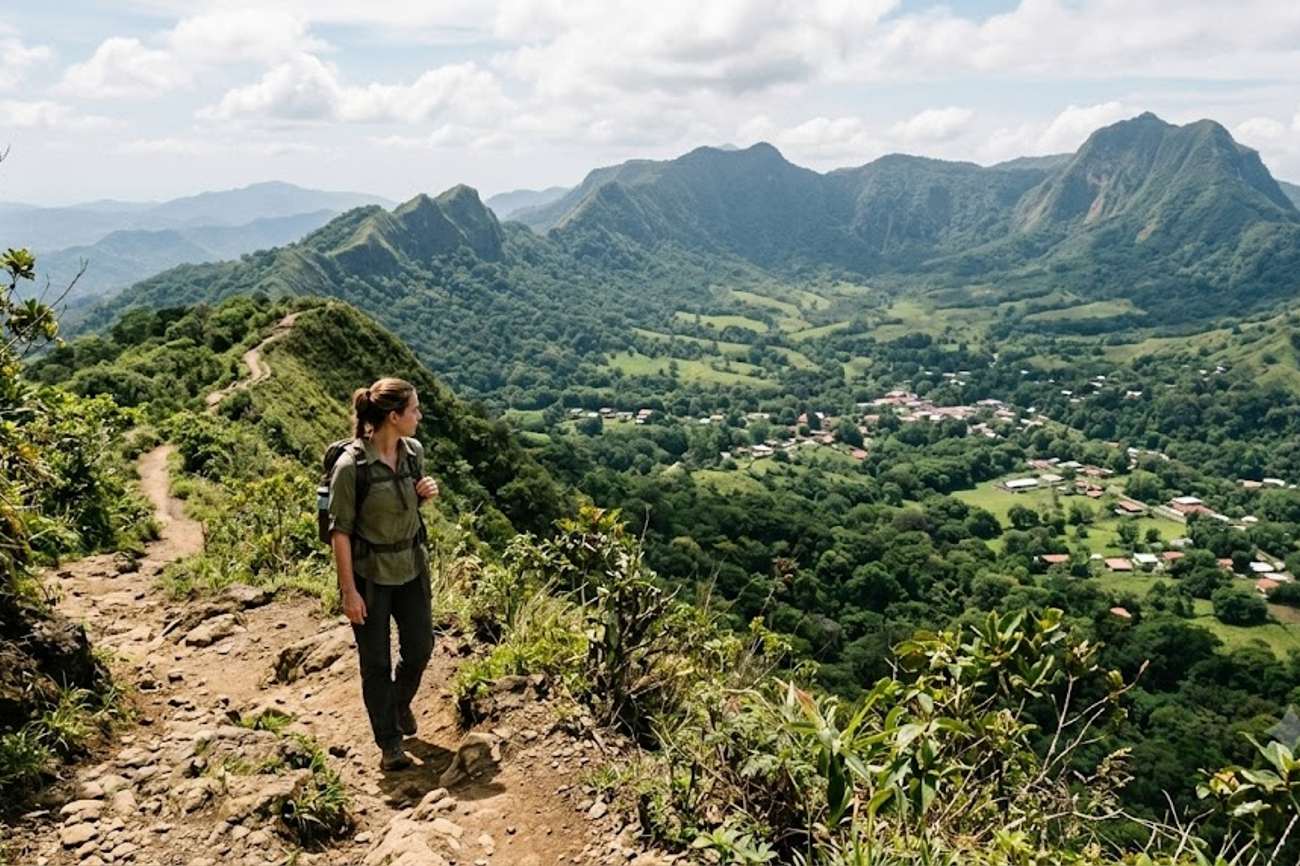
Image generated by AI
3,004,266 international visitors arrived in Panama in 2025, marking a pivotal shift in the nation's tourism trajectory as it moves beyond the gravitational pull of the Panama Canal. This 8.2% increase over 2024 figures signals more than just a post-pandemic recovery; it represents a strategic pivot toward geographic diversification. As the country enters 2026, the data suggests a deliberate effort to decentralize visitor traffic, pushing travelers away from the urban density of Panama City and into the rural highlands and coastal fringes of the interior.
The Shift Toward Decentralized Tourism
The current surge in arrivals is not merely a result of increased flight capacity but a calculated effort by the Autoridad de Turismo de Panamá (ATP) to broaden the national travel narrative. For decades, the Panamanian tourism product was synonymous with the Canal and the skyline of the capital. However, the 2025 Empreturismo program has fundamentally altered this by providing institutional support to "hidden" destinations.
By focusing on locations such as Santa Catalina, Pedasí, Portobelo, and El Valle de Antón, the government is attempting to mitigate the "over-tourism" risks associated with primary hubs while distributing foreign-exchange income more equitably across various provinces. This strategy is reflected in the financial data: tourism income reached B/.6,583.0 million in 2025, excluding international transportation costs. The objective is to ensure that this capital penetrates rural economies through agrotourism and community-led initiatives rather than remaining concentrated in luxury hotel chains within the city center.
2025-2026 Performance Metrics
The acceleration of growth is most evident in the first half of 2026. Between January and June 2026, Panama recorded 1,755,998 international visitors, which represents a sharp 17.4% increase compared to the same period in 2025. This spike suggests that the diversification strategy is gaining traction with a new demographic of "curious" travelers who prioritize authenticity over conventional luxury.
The following data provides a comprehensive breakdown of the current tourism ecosystem:
| Indicator | Value | Period | Strategic Significance |
|---|---|---|---|
| Total International Visitors | 3,004,266 | Full Year 2025 | Milestone crossing of 3 million arrivals |
| Year-on-Year Growth | 8.2% | 2025 | Sustained upward trajectory |
| Overnight Tourists | 2,330,677 | 2025 | High ratio of long-stay vs. transit visitors |
| Total Tourism Income | B/.6,583.0 million | 2025 | Strong foreign exchange contribution |
| Tocumen Airport Arrivals | 2,244,078 | 2025 | Primary air gateway dominance |
| Cruise Passenger Volume | 344,408 | 2025 | Significant maritime sector influence |
| Paso Canoas Arrivals | 106,006 | 2025 | Vital overland link for regional travel |
| H1 2026 Visitors | 1,755,998 | Jan-Jun 2026 | 17.4% increase over H1 2025 |
| H1 2026 Revenue | B/.3,791.6 million | Jan-Jun 2026 | Rapid revenue accumulation |
| June Hotel Occupancy | 59.3% | June 2026 | Baseline for accommodation demand |
| International Events | 74 | Jan-Jun 2026 | MICE sector driving business travel |
| Event Participants | 113,937+ | Jan-Jun 2026 | High-yield professional visitor segment |
| Event Room Nights | 47,854 | Jan-Jun 2026 | Direct impact on hotel capacity |
| Event Economic Impact | B/.91.55 million | Jan-Jun 2026 | Specialized revenue stream |
Expert Analysis: The Agrotourism Pivot in Santa Fe
The emergence of Santa Fe in the Veraguas province is the most telling example of Panama's new tourism philosophy. Unlike the curated experiences of the capital, Santa Fe is being positioned as a "slow exploration" hub. For the traveler, the direct consequence of this shift is a move away from international dining and standardized hotels toward "farm-to-table" logistics.
The institutionalization of properties like Finca El Salto and María y Chon—which focus on organic vegetables, cacao processing, and orchid observation—indicates a move toward high-value, low-impact tourism. By integrating the highlands of Santa Fe with the coastal access of Calovébora (the gateway to Isla Escudo de Veraguas), the Panamanian government is creating multi-dimensional itineraries that force visitors to spend more nights in-country.
From a market perspective, the absence of specific visitor numbers for Santa Fe is not a sign of failure, but a sign of its "emerging" status. The pricing pressure here will likely shift from hotel room rates to "experience rates"—where the value is placed on the exclusivity of the agrotourism encounter. Travelers booking these routes should expect a lack of traditional infrastructure, which is precisely what the ATP is marketing as "authenticity." The risk for the traveler is a lack of standardized service, but the reward is access to a landscape that has not yet been homogenized by mass tourism.
Visitors exploring the highlands of El Valle de Antón and Santa Fe can find comprehensive guides and sustainable travel tips through the Visit Panama official tourism portal. These regions offer a strategic escape from the city, blending volcanic landscapes with eco-tourism opportunities.
Key Takeaways
- Rapid Growth Velocity: Panama's visitor arrivals grew by 17.4% in the first half of 2026 compared to 2025, indicating a massive surge in demand.
- Economic Diversification: Total tourism income for 2025 hit B/.6,583.0 million, with a strategic push to move this spending from the capital to rural provinces.
- The MICE Influence: International events (74 in H1 2026) contributed B/.91.55 million to the economy, proving that business travel is a primary engine for hotel occupancy.
- New Geographic Focus: Santa Fe is now a primary target for agrotourism, offering a blend of highland coffee culture and coastal access via Calovébora.
- Infrastructure Shift: The 59.3% hotel occupancy rate in June 2026 suggests there is still significant capacity for growth, particularly in the emerging interior regions.
FAQ: Panama Travel 2026
Is it safe to travel to rural areas like Santa Fe in 2026? Yes, these areas are officially recognized and supported by the Autoridad de Turismo de Panamá (ATP). Travelers are encouraged to use registered agrotourism properties and local guides to navigate the highland and coastal regions safely.
How do I get to the emerging destinations beyond Panama City? While Tocumen Airport handles the bulk of arrivals (2,244,078 in 2025), reaching places like Santa Fe requires overland travel. Many visitors utilize a combination of domestic flights and registered rural transport providers.
What should I expect regarding accommodation in the interior? Expect "rural lodging" rather than luxury resorts. Properties like María y Chon provide authentic farm-stays focusing on nature and local culture, which differs significantly from the high-rise hotels found in the capital.
When is the best time to visit Panama's highlands? While the data shows steady growth, travelers should coordinate their visits to Santa Fe and El Valle de Antón with local weather patterns to ensure that waterfalls and hiking trails are accessible.
The era of the "Canal-only" trip is over; Panama is now a map of fragmented, rural discoveries.
Related Travel Guides
- China’s Global Travel Comeback Propels Europe Forward With Rising Demand for Premium Holiday Experiences: All You Need to Know
- Singapore Airlines Beats Qatar, Cathay Pacific In 2026 Airline Awards As Service Quality Drives Global Victory
- Washington DC Travel Rise: Supreme Court Story Highlights America’s Political Tourism
Disclaimer
This article is for informational and educational purposes only. It does not constitute legal, financial, or professional advice. While we strive to provide accurate and up-to-date information, travel policies, regulations, and conditions change rapidly. Always verify information with official sources before making travel decisions. Nomad Lawyer makes no representations about the accuracy, reliability, completeness, or suitability of the information provided. Readers should consult qualified professionals for advice specific to their circumstances. The views expressed in this article are those of the author and do not necessarily reflect the views of Nomad Lawyer.
Naina Thakur
Contributor & Travel Specialist
Travel enthusiast and legal writer covering visa regulations, responsible tourism, and cultural journeys across global destinations.
Learn more about our team →