
Thailand Leads Other Countries in Tightening Travel Rules as Asia Expands Digital Border Checks and Nomad Audits
There is a major structural shift underway in all Asian transportation channels due to the erection of digital perimeter cont

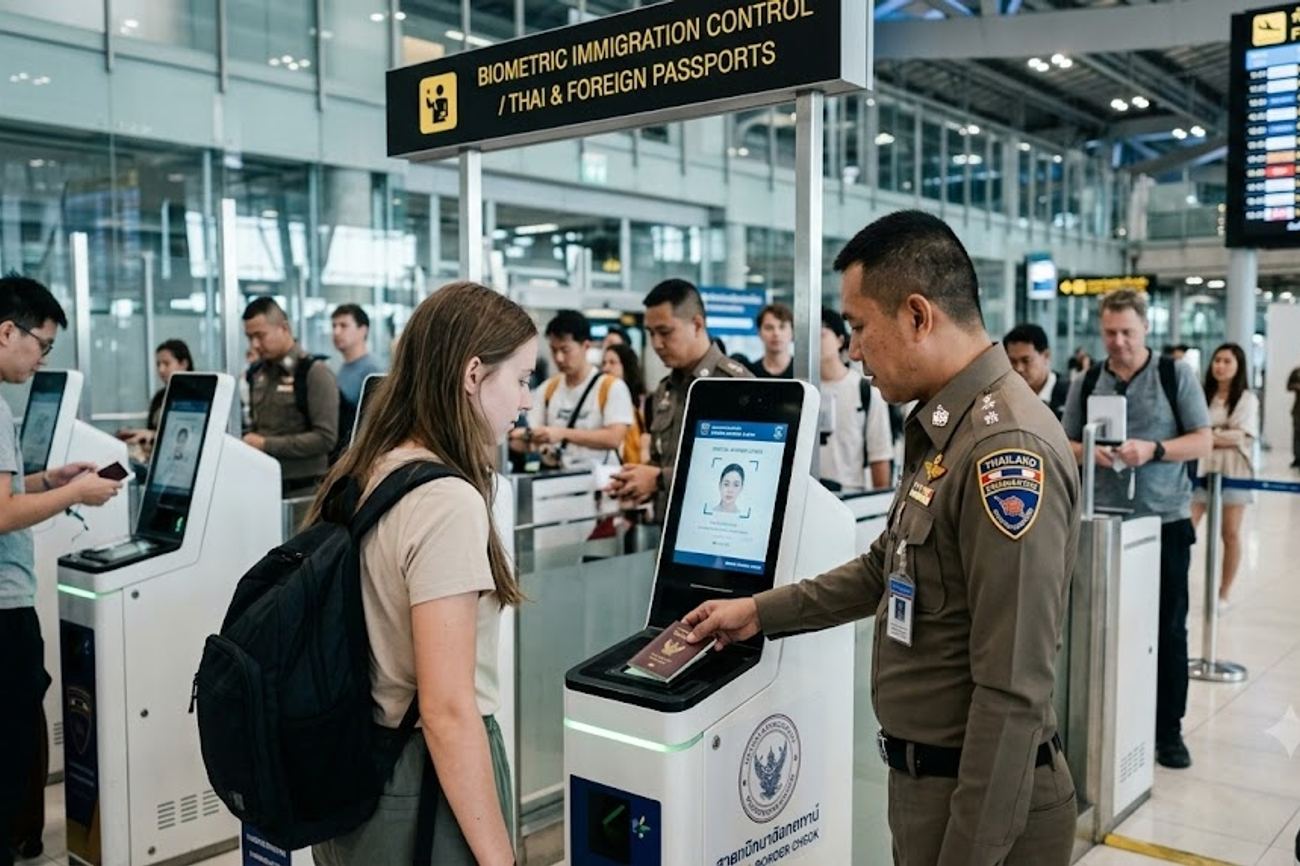
Image generated by AI
There is a major structural shift underway in all Asian transportation channels due to the erection of digital perimeter controls prior to any boarding gates by government authorities well before any passengers arrive at the gates. The liberal age of easy passage through regions has been consigned to history and is now replaced by compulsory electronic declarations, strict overstay audits, and punitive remote worker taxation. Instantaneous tension is caused by the new tightness in the system for commercial airlines, transport companies, and long-term residents in the region. It is imperative to comprehend this regulatory change in order to cope with the shift from post-arrival stamping in cross-border Asian travel to an extensively controlled system upstream.
The Upstream Border Shift: Digital Declarations and Carrier Liability
Historically, international passenger transport across the Asia-Pacific region was operated on a downstream clearance framework. Under this traditional paradigm, primary document authentication, admissibility interviews, and visa verification were conducted at physical immigration counters inside destination terminals. Over recent years, this model has been systematically dismantled by national border management authorities. Border controls have been moved upstream into departure concourses, check-in kiosks, and mobile carrier verification systems situated thousands of kilometres away. The administrative burden of sovereign immigration enforcement is directly transferred onto international airlines and ground handling agencies through this operational restructuring.
The architectural backbone of this upstream movement is formed by mandatory pre-arrival digital declarations. In Thailand, the physical paper TM6 immigration form was permanently replaced across all commercial air, sea, and land checkpoints following the official deployment of the Thailand Digital Arrival Card (TDAC) on 1 May 2025 across the central portal. The earlier Electronic Travel Authorisation (ETA) proposal was absorbed by the TDAC, through which passport biodata, accommodation records, and health declarations were consolidated into a single mandatory digital filing.
Simultaneously, sweeping visa reforms were implemented by the Ministry of Foreign Affairs, taking effect on 15 September 2026: the standard visa exemption stay was reduced from 60 days to 30 days for 60 eligible countries, while 21 nationalities were removed from the visa-exemption list entirely, prior electronic visa (e-Visa) procurement through diplomatic portals being required before travel.
In East Asia, immigration entry records and customs declarations were integrated within the Visit Japan Web service into a single unified QR code by Japan’s Digital Agency and the Immigration Services Agency of Japan. While clearance is accelerated at primary hubs such as Tokyo Haneda (HND), Tokyo Narita (NRT), and Kansai International (KIX) through this digital consolidation, electronic filings are required to be completed by all foreign nationals before boarding.
Thailand has introduced stricter travel rules, including enhanced digital border checks, to ensure compliance with immigration regulations. As part of this effort, the Thai Government's Ministry of Foreign Affairs has implemented a more rigorous screening process for incoming passengers. This move is expected to impact tourist arrivals, particularly for digital nomads and long-stay visitors.
Similarly, the electronic submission of the Singapore Arrival Card (SGAC) with health declarations within three days prior to arrival is mandated by the Immigration and Checkpoints Authority (ICA) of Singapore for all incoming foreign visitors. When combined with the China Digital Arrival Card (CDAC) and India’s pre-departure passenger documentation portals, pre-clearance screening has effectively been institutionalised by regional transit hubs.
Under national immigration statutes and international civil aviation conventions, severe carrier liability penalties, mandatory return repatriation costs, and administrative processing fees are faced by commercial carriers that transport undocumented or non-compliant travellers. Consequently, ground crews at Tier-1 hubs such as Seoul Incheon (ICN), Bangkok Suvarnabhumi (BKK), Singapore Changi (SIN), and Kuala Lumpur International (KUL) are required to act as auxiliary immigration officers. Digital QR validations must be manually examined, visa confirmations cross-referenced against machine-readable passport zones, and entry approvals verified by airline agents before boarding access is granted.
Low-Cost Carrier Logistics: Turnaround Erosion and Ground Transit Friction
For low-cost carriers (LCCs) operating regional networks—such as AirAsia, IndiGo, Cebu Pacific, Jeju Air, and Zipair—upstream border compliance conflicts directly with the low-cost operational model. The profitability of budget aviation depends on rapid aircraft turnaround times, typically targeted between 25 and 35 minutes, so that daily airframe utilisation may be maximised and gate occupancy charges minimised. These automated ground operations are disrupted by pre-departure document verification.
The new regulations will require passengers to provide additional documentation and undergo more thorough inspections upon arrival. For the most up-to-date information on travel requirements, passengers can visit the Airports of Thailand website, which provides detailed guidance on immigration procedures and airport facilities. By staying informed, travelers can minimize delays and ensure a smooth arrival process.
When digital arrival cards fail to be completed by travellers, passport-scanning errors are encountered, or transmission lag is experienced on pre-clearance servers, check-in attempts are rejected by automated check-in kiosks. These passengers are diverted to physical customer service counters, causing long queues to be generated in departure halls.
At departure gates, digital QR records must be verified by ground staff under tight boarding windows. When gates are reached by passengers bearing incomplete TDAC submissions or corrupted QR confirmations, records are forced to be manually verified or boarding denied by gate agents, resulting in departure slot losses, pushback delays, and contentious gate denials.
To evaluate and benchmark the ground delays generated by digital pre-clearance requirements across regional aviation hubs, empirical transit delay indices are employed in civil aviation operations. These assessments account for the mean boarding check duration per passenger under mandatory digital pre-clearance regimes relative to baseline processing durations, the percentage of passengers rejected at automated kiosks and diverted to manual check-in desks due to electronic validation errors, carrier liability financial penalties incurred per 10,000 boarded passengers for documentation non-compliance, and airport-specific operational weighting coefficients reflecting ground crew capacity and gate turnaround constraints. Acute ground handling friction, boarding queue congestion, and elevated exposure to carrier liability sanctions are indicated by elevated index scores.
The expansion of digital border checks and nomad audits is not unique to Thailand, as other Asian countries are also adopting similar measures to monitor and manage tourist flows. For insights into the latest tourism trends and travel policies, visitors can consult the Singapore Tourism Board website, which offers valuable information on regional developments and industry initiatives. By understanding these trends, travelers and tourism operators can better navigate the evolving landscape of Asian travel regulations.
Overland Transit Audits: Border Crackdowns on Non-Compliant Stays
The systematic enforcement of regional border control is extended well beyond major international airports. Rigorous transit border audits aimed at curbing unauthorized residency and undocumented employment are being conducted across Southeast Asia’s overland transport corridors, international rail routes, and vehicular checkpoints.
For decades, periodic “visa runs”—brief same-day overland excursions to neighbouring territories to renew tourist permission stamps—were relied upon by foreign expatriates, regional nomads, and long-stay tourists. Today, integrated biometric tracking systems are shared, strict annual entry limits are enforced, and targeted checkpoint audits are deployed by immigration authorities, by which perpetual visa runs have been rendered obsolete.
The Sadao and Padang Besar Frontier: Strict Enforcement on the Southern Border
Along the border linking Hat Yai in southern Thailand to Penang in northern Malaysia, high volumes of road and rail passengers are handled by the land checkpoints at Sadao (Songkhla Province) and Padang Besar. Under updated operational guidelines enforced by the Thai Immigration Bureau, a strict limitation is faced by foreign nationals entering Thailand under visa exemption schemes: visa-exempt stamps may be received at land border checkpoints no more than two times per calendar year (1 January to 31 December)
FAQ: Thailand Leads Other Countries in Tightening Travel Rules 2026
What are Thailand's new travel rules? Stricter visa requirements and digital border checks.
How do digital border checks affect travelers? Enhanced security and faster processing times.
What is a nomad audit? A review of digital nomads' tax and visa compliance.
How can travelers prepare for nomad audits? Maintain accurate records of income and stay.
Related Travel Guides
- Morocco Follows Rwanda and Others as Africa Embraces Slow Travel and Better Distributed Tourism
- Curaçao Aligns With Jamaica And More Countries To Propel Aruba Tourism GDP Over 24% Through Global Demand, Cruise Growth And Aviation Links
- Dominica Tourism Campaign Hits Times Square With a Powerful New Pitch for Nature-Led Caribbean Travel
Disclaimer
This article is for informational and educational purposes only. It does not constitute legal, financial, or professional advice. While we strive to provide accurate and up-to-date information, travel policies, regulations, and conditions change rapidly. Always verify information with official sources before making travel decisions. Nomad Lawyer makes no representations about the accuracy, reliability, completeness, or suitability of the information provided. Readers should consult qualified professionals for advice specific to their circumstances. The views expressed in this article are those of the author and do not necessarily reflect the views of Nomad Lawyer.
Naina Thakur
Contributor & Travel Specialist
Travel enthusiast and legal writer covering visa regulations, responsible tourism, and cultural journeys across global destinations.
Learn more about our team →