
Thailand's 72.8 Billion Baht Den Chai–Chiang Rai–Chiang Khong Railway to Launch by 2028
Thailand is transforming northern connectivity with the 323-km Den Chai–Chiang Rai–Chiang Khong double-track railway, designed to slash travel times and boost regional trade by 2028.

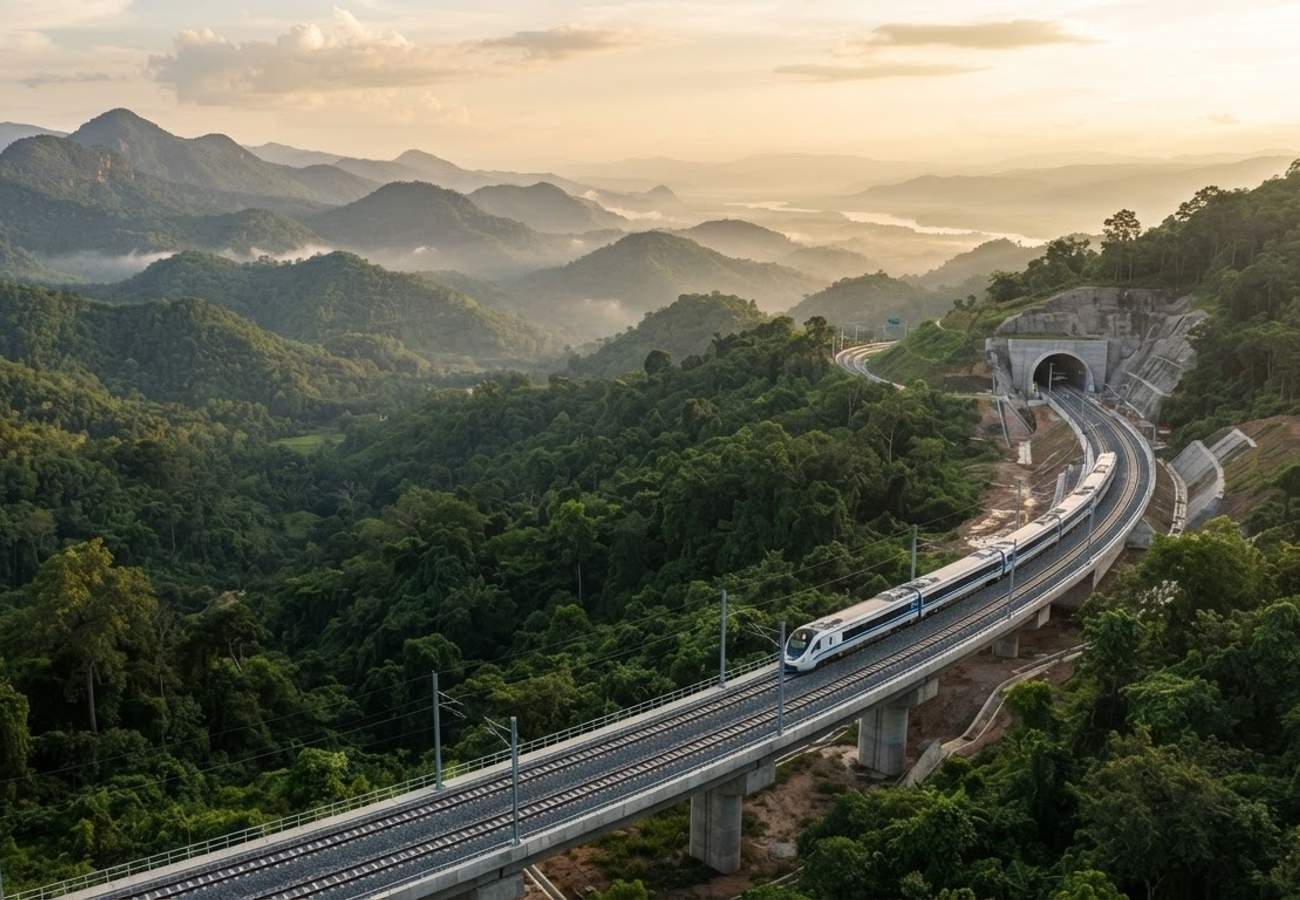
Image generated by AI
Thailand is investing over 72.8 billion baht to bridge the gap between Bangkok and its remote northern frontier. The upcoming Den Chai–Chiang Rai–Chiang Khong double-track railway will fundamentally alter logistics and tourism in the region by 2028.
The Thai government is executing a strategic overhaul of its northern transport corridor to reduce the current over-reliance on air and road travel. By establishing a high-capacity rail gateway, Thailand aims to integrate the northern provinces more deeply into the national economy and strengthen its position as a primary logistics hub for mainland Southeast Asia.
The project is not merely a domestic upgrade but a geopolitical tool. By extending the line toward Chiang Khong—situated near the Mekong River border—Thailand is positioning itself to streamline trade flows between the central plains and the markets of Laos and China.
Engineering the Northern Corridor
Constructing a modern railway through the rugged terrain of Northern Thailand has required significant engineering breakthroughs. The 323-kilometre project necessitates the navigation of steep mountains and dense forests, leading to the construction of four major tunnels to maintain operational speeds and safety.
The centerpiece of this engineering effort is the Ngao Tunnel in Lampang province. At approximately 6.2 kilometres, it is set to become the longest railway tunnel in Thailand. Other critical structures include the Doi Luang Tunnel in Chiang Rai and the Mae Ka Tunnel in Phayao, which collectively minimize the impact of the region's challenging topography on transit times.
Strategic Route and Regional Impact
The new line begins at the existing northern rail network, passing through Den Chai in Phrae province before extending further north. This expansion introduces rail access to regions that were previously underserved by the national network.
The route spans four key provinces and includes 26 strategically placed stations to serve both urban centers and rural communities:
- Phrae: Serving as the initial gateway via Den Chai.
- Lampang: Home to the record-breaking Ngao Tunnel.
- Phayao: Connecting inland communities to the main artery.
- Chiang Rai: The primary destination and link toward the border.
Economic and Tourism Transformation
Beyond the movement of passengers, the railway is designed as a heavy-duty freight corridor. By lowering logistics costs and increasing the efficiency of goods movement, the government expects to attract new industrial investment into the northern provinces.
For the tourism sector, the railway introduces a "slow travel" alternative to the typical flight-and-bus circuit. The route offers a scenic transit through Thailand's mountains and valleys, potentially diversifying tourism revenue by directing visitors toward lesser-known cultural sites in Phayao and Phrae rather than concentrating them solely in major hubs.
Project Specifications and Timeline
The following data outlines the scale and scope of the Den Chai–Chiang Rai–Chiang Khong development:
| Feature | Specification |
|---|---|
| Total Project Budget | 72.8+ Billion Baht |
| Total Route Length | 323 Kilometres |
| Expected Operational Date | 2028 |
| Number of Stations | 26 |
| Longest Tunnel | Ngao Tunnel (approx. 6.2 km) |
| Provinces Covered | Phrae, Lampang, Phayao, Chiang Rai |
| Primary Border Link | Chiang Khong (Mekong River/Laos Border) |
Key Takeaways
- Infrastructure Leap: The 323-km double-track line removes the bottleneck of road-only travel to Chiang Rai.
- Trade Catalyst: The Chiang Khong terminus creates a direct rail link toward Laos and China, enhancing regional trade.
- Engineering Milestone: The 6.2 km Ngao Tunnel represents a new peak in Thai railway engineering.
- Economic Dispersion: 26 new stations will distribute tourism and commercial growth across four northern provinces.
FAQ
When will the Chiang Rai railway be open to the public? The Den Chai–Chiang Rai–Chiang Khong railway is expected to begin operations in 2028.
Which tunnel is the longest in the project? The Ngao Tunnel in Lampang province is the longest, measuring approximately 6.2 kilometres.
How does this project affect trade with other countries? By reaching Chiang Khong near the Mekong River, the railway strengthens Thailand's logistics connections with Laos and China.
A new era of connectivity is arriving in Northern Thailand, turning remote provinces into accessible economic hubs.
Related Travel Guides
Disclaimer
This article is for informational and educational purposes only. It does not constitute legal, financial, or professional advice. While we strive to provide accurate and up-to-date information, travel policies, regulations, and conditions change rapidly. Always verify information with official sources before making travel decisions. Nomad Lawyer makes no representations about the accuracy, reliability, completeness, or suitability of the information provided. Readers should consult qualified professionals for advice specific to their circumstances. The views expressed in this article are those of the author and do not necessarily reflect the views of Nomad Lawyer.
Raushan Kumar
Founder & Lead Developer
Full-stack developer with 11+ years of experience and a passionate traveller. Raushan built Nomad Lawyer from the ground up with a vision to create the best travel and law experience on the web.
Learn more about our team →