
Iran and Russia Finalize 162km Rasht–Astara Railway Agreement to Link Caspian Region in 2026
Russia and Iran are finalizing an executive agreement for the 162km Rasht–Astara Railway, a critical missing link in the International North–South Transport Corridor designed to integrate Eurasia and the Persian Gulf.

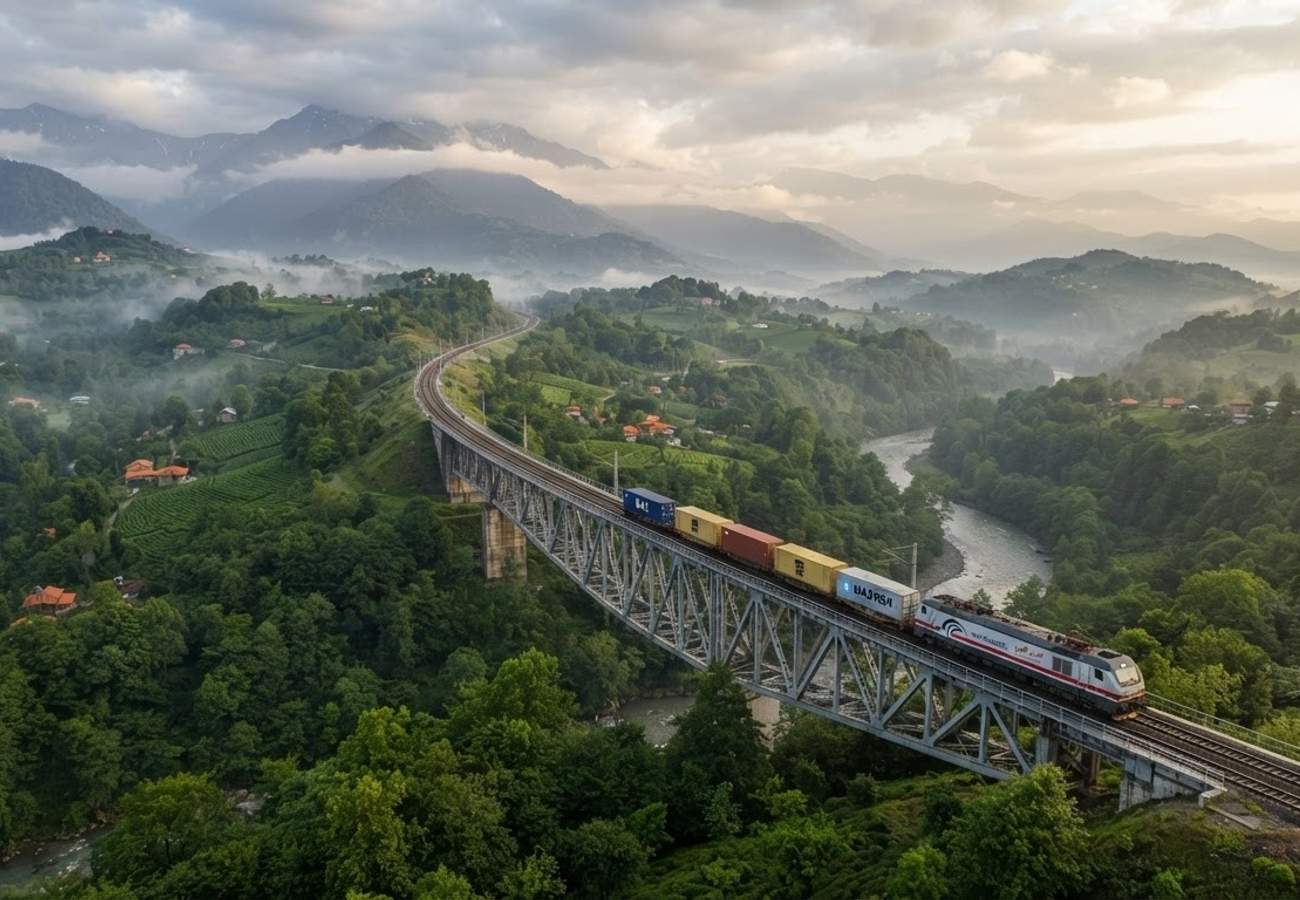
Image generated by AI
Russia and Iran are finalizing an executive construction agreement for the 162km Rasht–Astara railway in northern Iran. This project closes a critical infrastructure gap in the International North–South Transport Corridor (INSTC), potentially altering freight and business travel dynamics across the Caspian region.
The proposed railway addresses a long-standing physical disconnect between Iran and Azerbaijan. While rail networks exist on either side of the proposed route, the lack of a continuous line between Rasht and Astara currently forces freight to transfer between transport modes. This inefficiency increases operational costs, transit times, and logistical complexity for cargo moving between northern Eurasia and the Persian Gulf.
Political momentum for the project accelerated in May 2023 with an intergovernmental agreement on financing and construction. By June 2026, Russia’s Foreign Ministry confirmed that engineering surveys had resumed. Current efforts are focused on design work, technical settlement, and land acquisition within Iran’s environmentally sensitive Gilan Province.
Project Specifications and Current Status
The project is primarily a trade and freight initiative. While the infrastructure provides a foundation for future movement, official passenger services for international tourists have not been announced.
Key Project Data:
- Total Length: Approximately 162 kilometres.
- Primary Objective: Closing the gap in the western branch of the International North–South Transport Corridor.
- Core Participants: Iran and Russia, with the route traversing Azerbaijan.
- Current Phase: Executive contract finalization, surveying, and land acquisition.
- Passenger Status: Not officially confirmed; no published opening date for tourist travel.
Regional Infrastructure Breakdown
| Project Element | Officially Reported Position | Travel Relevance |
|---|---|---|
| Railway Length | Approximately 162 kilometres | Closes physical gap between Rasht and Astara |
| Main Countries | Iran and Russia (via Azerbaijan) | Strengthens regional transport cooperation |
| Wider Network | International North–South Transport Corridor | Connects Russia, Caucasus, Iran, and southern ports |
| Primary Purpose | Freight and international trade | Business travel likely to benefit first |
| Current Work | Design, surveying, and land acquisition | No tourist railway opening announced |
| Passenger Service | Not officially confirmed | Tourism benefits remain conditional |
| Completion Date | No dependable date published | Travellers cannot yet plan journeys |
The Impact on Regional Hubs
Rasht: A Culinary and Cultural Gateway As the capital of Gilan Province, Rasht is a UNESCO Creative City of Gastronomy. The city's food culture, driven by the Sefid-Rud delta, offers significant potential for future tourism. If passenger services are eventually implemented, the railway could increase visibility for Rasht’s local heritage, forests, and wetlands. However, realizing this requires the development of bookable timetables and streamlined border procedures.
Astara: The Strategic Border Point Located on the Iranian frontier with Azerbaijan, Astara is the project's most critical gateway. In the short term, the city will see increased economic activity from engineers, government delegations, and logistics specialists. Long-term, it could serve as the primary entry point for visitors moving between northern Iran and Azerbaijan’s Lankaran region, provided customs and security facilities are upgraded.
Azerbaijan’s Market Growth The project coincides with a surge in Azerbaijani tourism. The State Tourism Agency reported 2,626,838 arrivals in 2024, a 26 per cent annual increase. While these figures do not guarantee rail passengers, they indicate a growing international appetite for the region. Azerbaijan currently serves as the central land bridge on this route; continuous rail would further solidify this role.
Why This Matters: Industry Analysis
From a logistical perspective, the Rasht–Astara link is less about leisure and more about the "hard" infrastructure of Eurasian trade. For the travel industry, the real impact will be felt in the corporate sector long before the first tourist ticket is sold.
Our analysis of the corridor suggests that business travel—specifically for engineers, investors, and logistics executives—will drive initial demand for hospitality in Gilan Province. Hotels and transport operators in Rasht and Astara should prepare for a shift toward corporate bookings and longer-stay administrative delegations.
For the broader aviation and travel market, this represents a strategic shift toward overland alternatives for freight. While it doesn't immediately threaten air cargo, it creates a more resilient supply chain between the Indian Ocean and Northern Eurasia.
Forward Outlook
The transition from a political agreement to an executive construction contract is a significant step, but it is not the start of construction. Market trends suggest that the project will face delays due to the complex geography of the Gilan region.
Expect the following milestones over the next 24 months:
- Finalization of land acquisition in northern Iran.
- Formal signing of the executive construction contract.
- Increased corporate travel to Astara for project management.
Until a formal passenger timetable is released, the project remains a commercial freight venture. Any claims of an immediate "tourism boom" are premature.
The Caspian corridor is shifting from a political vision to a physical reality.
Related Travel Guides
Disclaimer
This article is for informational and educational purposes only. It does not constitute legal, financial, or professional advice. While we strive to provide accurate and up-to-date information, travel policies, regulations, and conditions change rapidly. Always verify information with official sources before making travel decisions. Nomad Lawyer makes no representations about the accuracy, reliability, completeness, or suitability of the information provided. Readers should consult qualified professionals for advice specific to their circumstances. The views expressed in this article are those of the author and do not necessarily reflect the views of Nomad Lawyer.
Naina Thakur
Contributor & Travel Specialist
Travel enthusiast and legal writer covering visa regulations, responsible tourism, and cultural journeys across global destinations.
Learn more about our team →