
Thailand Leads Southeast Asian Slow-Travel Surge via Pan-Asian Railway Expansion 2026
Thailand is spearheading a regional shift toward rail-based 'slow travel' as the Pan-Asian Railway connects Thailand, Laos, Cambodia, and Vietnam, offering a sustainable alternative to regional flights.

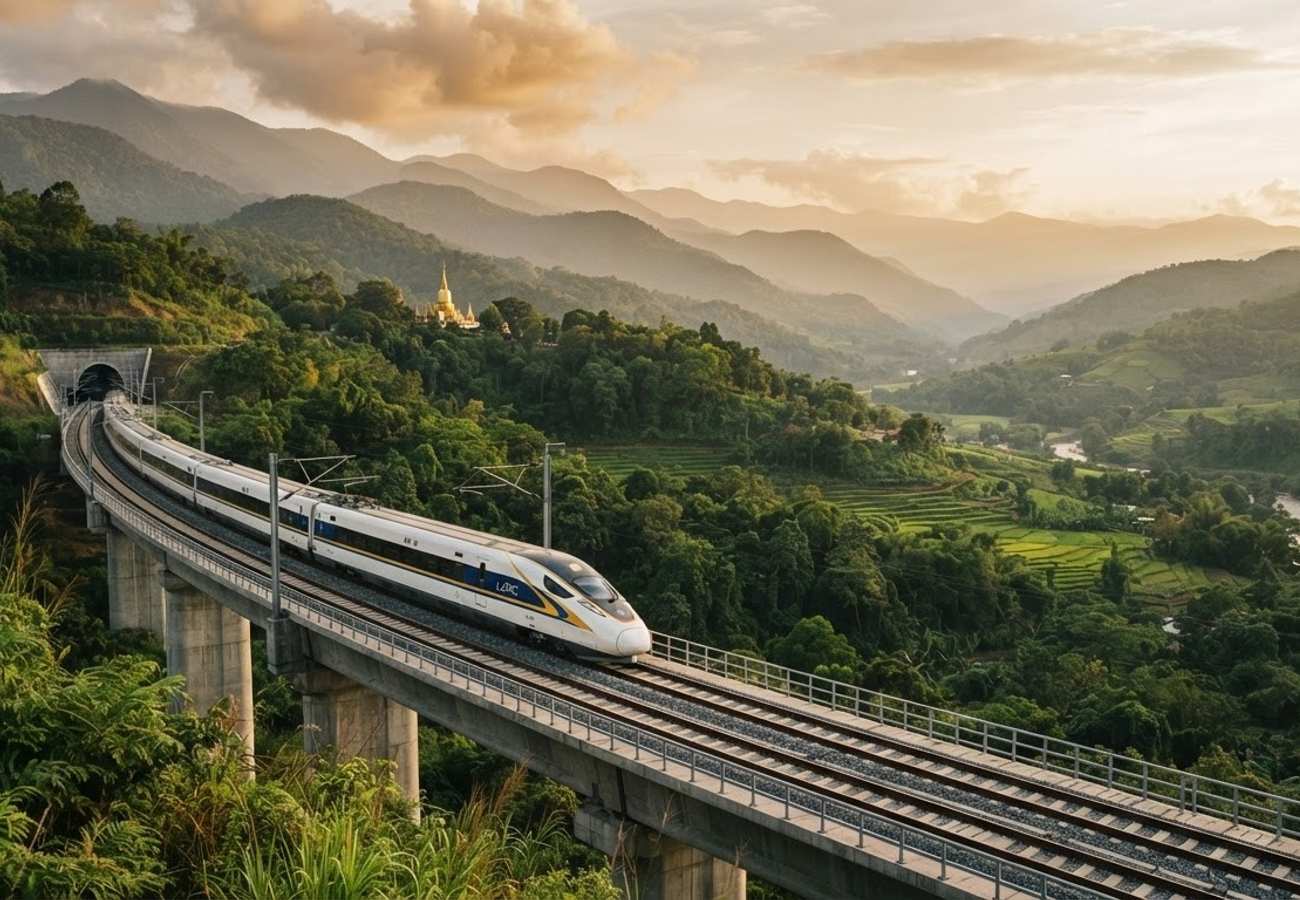
Image generated by AI
Thailand is driving a regional transformation in overland transit, utilizing the Pan-Asian Railway to replace short-haul domestic flights with high-speed, eco-friendly rail corridors. This shift is enabling a "slow travel" boom across Thailand, Laos, Cambodia, and Vietnam.
The expansion of the Southeastern Trans-ASEAN Route has evolved from basic backpacking trails into a sophisticated, integrated rail network. By leveraging modern double-track lines and high-speed infrastructure, the region is now facilitating seamless movement between historical capitals and remote cultural sites.
The Boten–Vientiane Corridor: A Strategic Pivot
The Boten–Vientiane railway in Laos serves as the central pillar of this network. By connecting directly to the Chinese rail grid at the northern Boten border, this electrified line has fundamentally altered transit times through the mountainous Laotian interior.
Our analysis of the current infrastructure shows the following impacts:
- Transit Efficiency: Multi-day bus journeys through mountainous terrain have been reduced to a few hours.
- Key Hubs: Modern trains now provide direct access between Vientiane, the adventure hub of Vang Vieng, and the UNESCO World Heritage site of Luang Prabang.
- Environmental Impact: The shift to electrified rail provides a low-carbon alternative to regional aviation.
Thailand-Laos Cross-Border Integration
Connectivity between Thailand and Laos has been streamlined through direct services operating between Bangkok’s Krung Thep Aphiwat Central Terminal and Vientiane’s Khamsavath Station.
The integration focuses on two primary upgrades:
- Border Efficiency: Passport control is now centralized at designated terminals, removing the need for complex bus transfers and reducing immigration queues.
- Standard-Gauge Expansion: Thailand is finalizing high-speed connections toward Nong Khai. Once complete, standard-gauge rail will link the Gulf of Thailand directly through Laos into southwest China.
Regional Expansion: Cambodia and Vietnam
The surge in overland travel extends eastward into Cambodia and Vietnam, where rail is being used to unlock cultural immersion that rapid flights typically bypass.
- Cambodia: Rail corridors now better link the temples of Angkor Wat in Siem Reap with the riverfront of Phnom Penh.
- Vietnam: The Reunification Express remains a primary artery, specifically the scenic coastal route via the Hai Van Pass between Da Nang and Hanoi.
Passenger Rights & Advisory: Navigating Cross-Border Rail
For the affected passenger, transitioning from air to rail in Southeast Asia requires a different understanding of consumer rights. Unlike aviation, where EU261 or DOT guidelines provide rigid compensation for delays, rail rights in the ASEAN region are often governed by national carrier policies.
Our analysis of regional transit suggests the following for travelers:
- Ticketing & Refunds: When booking cross-border tickets (e.g., Bangkok to Vientiane), ensure you have a digital copy of the manifest. Refund policies for "slow travel" routes are often less flexible than airline tickets; always verify if the ticket is "refundable" or "exchangeable" at the point of purchase.
- Border Formalities: While the Pan-Asian Railway streamlines immigration, passengers are still responsible for securing visas for Laos, Cambodia, and Vietnam. A delay in visa processing at a border terminal does not typically constitute a "carrier delay" for compensation purposes.
- Delay Compensation: In the event of significant rail delays, passengers should request a "Delay Certificate" from the station master. While monetary compensation is less standardized than in the EU, this document is essential for claiming travel insurance payouts.
- Rebooking Rights: If a cross-border connection is missed due to a primary train delay, the carrier is generally obligated to place you on the next available service, though hotel vouchers are not guaranteed unless specified in a "Premium" or "First Class" ticket tier.
Industry Analyst View
The transition toward the Southeastern Trans-ASEAN Route represents a strategic move toward ecological sustainability and economic decentralization. By moving tourists away from a few major airport hubs and distributing them across secondary towns and regional markets, these four nations are diversifying their tourism revenue.
The integration of standard-gauge rail is the most critical technical milestone. It removes the "break-of-gauge" friction—where passengers previously had to switch trains due to different track widths—thereby making rail competitive with aviation for the first time in the region's history.
The era of the regional flight is yielding to the era of the scenic corridor.
Related Travel Guides
Disclaimer
This article is for informational and educational purposes only. It does not constitute legal, financial, or professional advice. While we strive to provide accurate and up-to-date information, travel policies, regulations, and conditions change rapidly. Always verify information with official sources before making travel decisions. Nomad Lawyer makes no representations about the accuracy, reliability, completeness, or suitability of the information provided. Readers should consult qualified professionals for advice specific to their circumstances. The views expressed in this article are those of the author and do not necessarily reflect the views of Nomad Lawyer.
Raushan Kumar
Founder & Lead Developer
Full-stack developer with 11+ years of experience and a passionate traveller. Raushan built Nomad Lawyer from the ground up with a vision to create the best travel and law experience on the web.
Learn more about our team →