
South Korea Joins Forces With Japan And More As Haeundae Beach Drives New Urban Travel Experiences
South Korea Joins Forces With Japan And More As Haeundae Beach Drives New Urban Travel Experiences

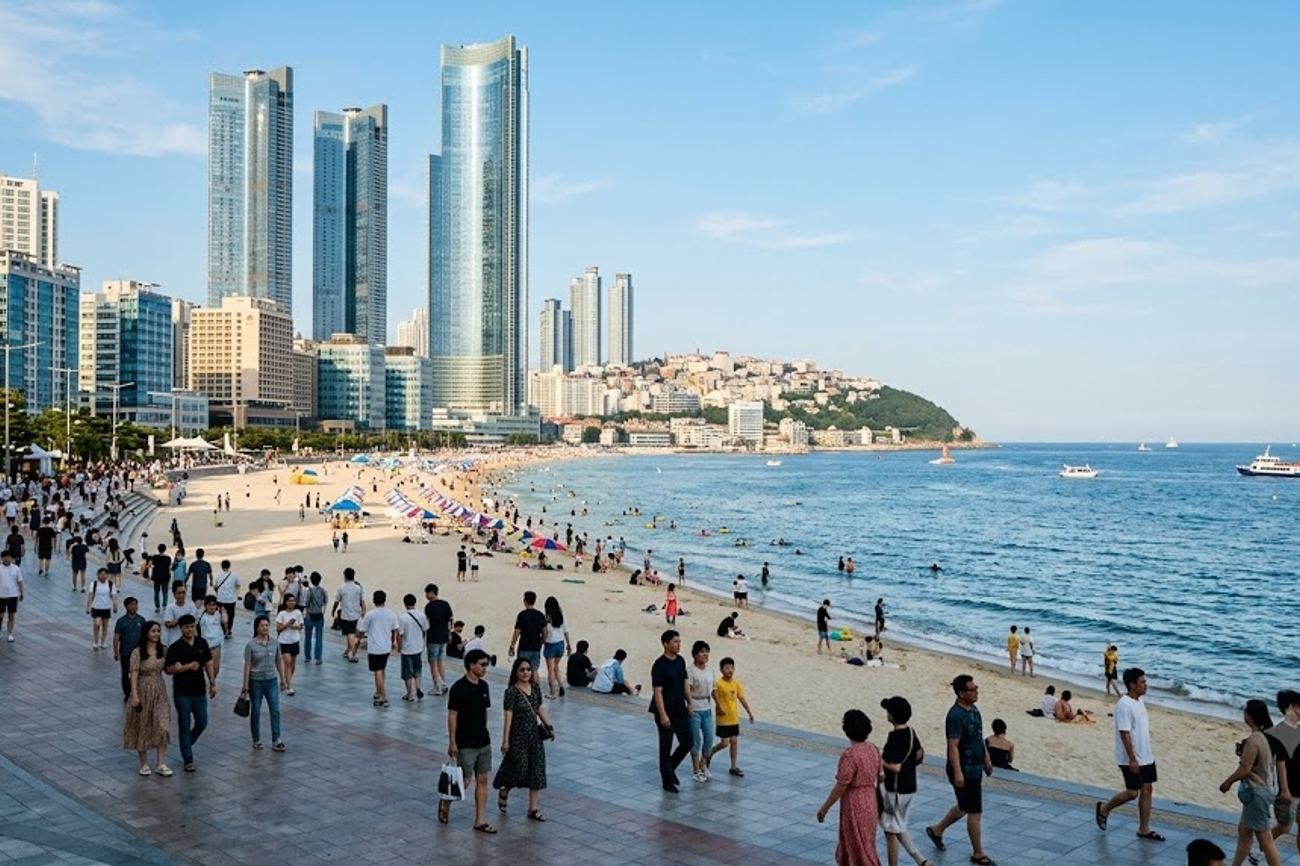
Image generated by AI
Summer visitor volume at Haeundae Beach now reaches approximately 10 million people, a figure that underscores Busan's position as a primary hub for South Korea's coastal tourism. This concentration of traffic within a 1.5-kilometre stretch of shoreline represents one of the highest densities of seasonal tourism in East Asia, signaling a shift toward "urban-coastal" hybrid destinations where travelers no longer choose between metropolitan infrastructure and nature.
The Urban-Coastal Convergence in Numbers
The data surrounding Haeundae Beach reveals a highly efficient tourism ecosystem. The beach spans approximately 1.5 kilometres, yet it supports a massive influx of 10 million visitors during the peak summer window. This creates a staggering visitor-to-land-area ratio, necessitating the high-rise hotel and commercial infrastructure that now defines the district's skyline.
The economic engine of this area is not merely the sand, but the integration of diverse revenue streams. The presence of the Haeundae Market and the Dongbaekseom coastal area ensures that visitor spending is distributed across food, beverage, and leisure sectors. Furthermore, the seasonal diversification—specifically the Haeundae Sand Festival held in May and June—prevents the "ghost town" effect often seen in traditional beach resorts during the off-season. By transforming the beach into an outdoor art gallery, Busan successfully extends its high-traffic window beyond the traditional swimming months.
From an activity standpoint, the data shows a transition from passive tourism (sunbathing) to active tourism. The surge in surf schools and the popularity of stand-up paddleboarding, kayaking, and jet skiing indicate a market shift toward "experience-based" travel. According to global trends tracked by the World Tourism Organization (UNWTO), there is a rising demand for destinations that offer multi-modal experiences—combining urban sightseeing with outdoor adventure—which Haeundae fulfills precisely.
Comparative Market Context: Busan vs. Regional Benchmarks
When comparing Haeundae to other coastal destinations in the Asia-Pacific region, a clear pattern emerges: the "City-Beach" model is outperforming the "Remote-Resort" model in terms of accessibility and repeat visitation. While remote islands require significant transit time and dedicated logistics, Haeundae leverages Busan's existing urban grid.
The following table illustrates the operational differences between the Urban-Coastal model (represented by Haeundae) and the Traditional Remote Beach model.
| Metric | Urban-Coastal Model (Haeundae) | Traditional Remote Beach Model |
|---|---|---|
| Peak Visitor Volume | ~10 Million (Summer) | Variable (Limited by Bed Capacity) |
| Infrastructure Access | High-rise hotels/Urban Grid | Boutique Resorts/Limited Services |
| Seasonality | Multi-seasonal (Sand Festival/Summer) | Strictly Seasonal (Weather Dependent) |
| Activity Diversity | High (Market, Surf, Urban Dining) | Medium (Swimming, Diving) |
| Transit Efficiency | Integrated City Transport | Shuttle/Private Transfer Required |
This shift is mirrored in broader regional data. As reported by Statista, South Korean domestic travel has seen a marked increase in "short-break" trips—where travelers spend 48-72 hours in a destination. Haeundae is the ideal prototype for this trend because it eliminates the "travel friction" associated with remote destinations. A visitor can move from a luxury high-rise hotel to a surf lesson and then to a traditional street food market within a 2-kilometre radius.
Practical Traveler Advisory and Strategic Insights
The data suggests that Haeundae is no longer a "hidden gem" but a high-capacity tourism engine. For those planning a visit, the following actionable advice is grounded in the current traffic patterns:
1. Timing the Visit: To avoid the 10-million-person peak, target the May-June window. The Haeundae Sand Festival provides the cultural draw of the summer season without the extreme congestion of July and August.
2. Booking Strategy: Given the density of high-rise hotels lining the 1.5-kilometre beach, demand for "ocean view" rooms spikes aggressively. Booking 12-16 weeks in advance is recommended for summer dates to avoid the premium pricing that occurs as occupancy hits 90%+.
3. Activity Planning: For those seeking water sports, the window from June to October is the optimal data-backed period for surfing. However, because surf schools are concentrated in a small area, morning sessions (before 10:00 AM) are essential to secure equipment and avoid the mid-day crowds.
4. Navigating the District: Utilize the promenade for transit. The integration of walking and cycling paths means that vehicles are often a liability during peak hours. The most efficient way to move between the beach and Dongbaekseom is on foot, bypassing the urban traffic congestion of the Haeundae District.
Forward Projection: The Evolution of the Busan Waterfront
Based on current growth trajectories, Haeundae is likely to move toward "smart tourism" integration. We can expect the 1.5-kilometre stretch to implement more data-driven crowd management systems to handle the 10-million-visitor load.
Furthermore, the success of the "Urban-Coastal" hybrid will likely lead to further expansion of the waterfront's commercial utility. We are seeing a trend where "night-time economy" metrics—specifically the growth of illuminated skylines and late-night dining in the Haeundae Market—are becoming as important as daytime beach metrics. As Busan continues to position itself as a global city, Haeundae will likely evolve from a seasonal destination into a year-round urban hub, with the Sand Festival serving as a blueprint for other off-season events.
The integration of high-density urban living with high-value natural assets is a model that other coastal cities are now attempting to replicate. By analyzing the International Air Transport Association (IATA) data on arrivals into Gimhae International Airport, it is evident that Busan is attracting a more diverse international demographic that values efficiency and variety over secluded luxury.
FAQ: Haeundae Beach Trends 2024-2025
Is Haeundae Beach too crowded for international tourists? While 10 million visitors attend in summer, the infrastructure is designed for high volume. To avoid crowds, visit during the May/June Sand Festival or stick to the Dongbaekseom area for a quieter experience.
When is the best time to learn surfing in Busan? The data indicates that June through October provides the most consistent conditions. Beginners should book lessons via local surf schools early in the morning to avoid peak beach traffic.
Are hotels in the Haeundae district expensive? Prices fluctuate based on the 1.5-km beachfront proximity. High-rise hotels command a premium during summer; booking 3-4 months in advance is the best way to secure competitive rates.
What is the best way to experience the local food scene? Haeundae Market is the primary data point for culinary tourism. It offers a concentrated experience of Korean street food and is most vibrant during the evening hours after sunset.
The era of the isolated beach resort is fading; the future belongs to the urban-coastal hybrid.
Tags: Busan-Tourism-Growth-2024, Haeundae-Visitor-Metrics, South-Korea-Coastal-Trends, Urban-Beach-Hybrid-Model, Busan-Hospitality-Demand
Related Travel Guides
- Austria Unveils Burgenland’s Hidden Water Adventure With Family Fun And Affordable Tickets
- Italy Beats Spain and More as 18 European Venues Put Nightlife Tourism in Focus for City Travellers
- Shanghai, Seoul and Tokyo Keep Pace With Leading Asian Destinations as Mega-Event Tourism Drives Longer Stays
Disclaimer
This article is for informational and educational purposes only. It does not constitute legal, financial, or professional advice. While we strive to provide accurate and up-to-date information, travel policies, regulations, and conditions change rapidly. Always verify information with official sources before making travel decisions. Nomad Lawyer makes no representations about the accuracy, reliability, completeness, or suitability of the information provided. Readers should consult qualified professionals for advice specific to their circumstances. The views expressed in this article are those of the author and do not necessarily reflect the views of Nomad Lawyer.
Raushan Kumar
Founder & Lead Developer
Full-stack developer with 11+ years of experience and a passionate traveller. Raushan built Nomad Lawyer from the ground up with a vision to create the best travel and law experience on the web.
Learn more about our team →