
Shanghai, Seoul and Tokyo Keep Pace With Leading Asian Destinations as Mega-Event Tourism Drives Longer Stays
Shanghai, Seoul and Tokyo Keep Pace With Leading Asian Destinations as Mega-Event Tourism Drives Longer Stays

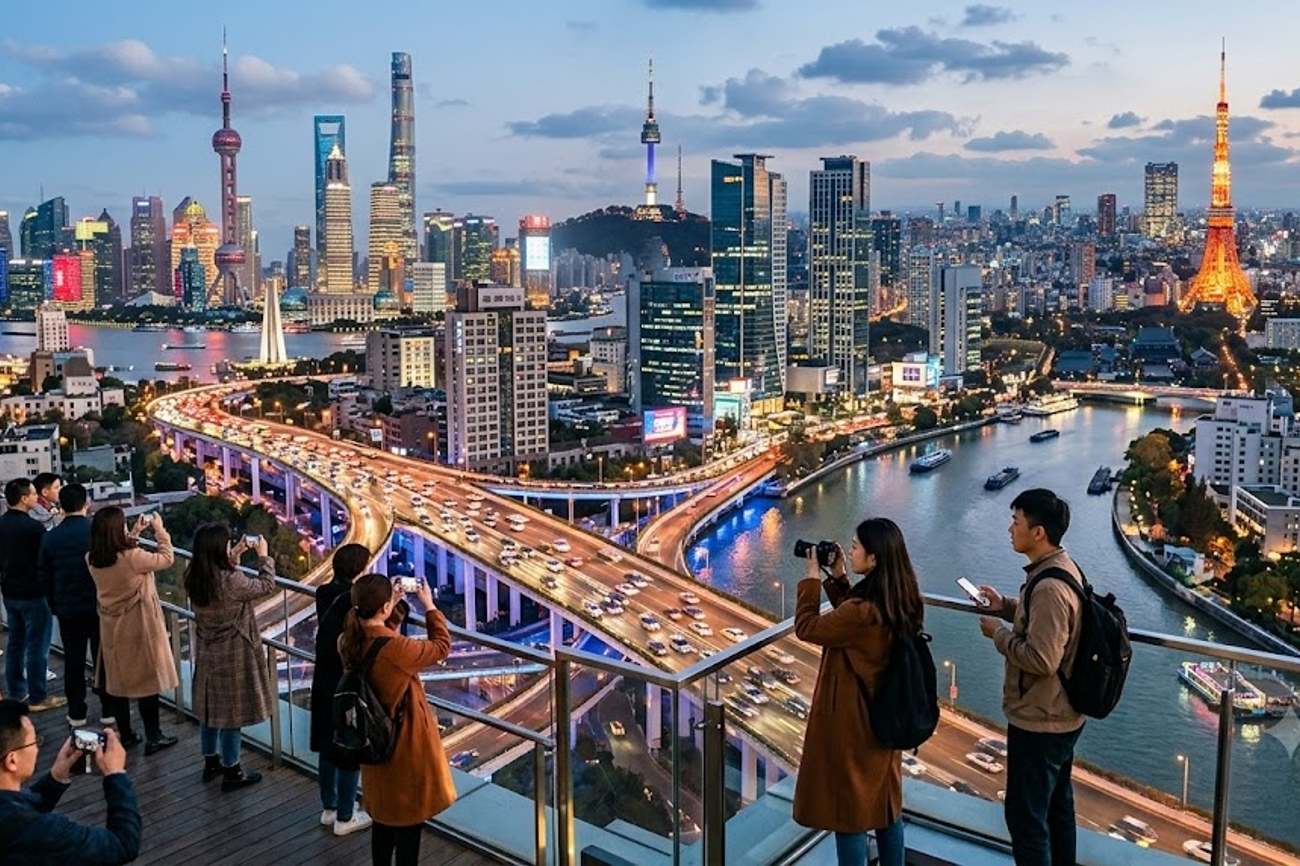
Image generated by AI
49.9 million visitor arrivals in Hong Kong during 2025 underscore a systemic pivot in East Asian urban planning, where "mega-events" are no longer treated as isolated attractions but as primary infrastructure for tourism growth. This shift represents a transition from passive destination management to an aggressive, event-led economic model. By weaving concerts, sporting fixtures, and MICE (Meetings, Incentives, Conferences, and Exhibitions) events into the very fabric of city logistics, hubs like Tokyo, Seoul, Shanghai, and Hong Kong are attempting to engineer specific traveler behaviors: extending the length of stay and increasing the average spend per capita.
The Engineering of Demand: From Attractions to Infrastructure
The traditional tourism model relied on "anchor attractions"—museums, monuments, or natural landmarks—to draw visitors. The emerging model in East Asia treats the event calendar as the anchor. This is a strategic response to the volatility of global travel; while a monument is static, a curated calendar of high-demand events creates artificial urgency, forcing travelers to book specific dates and commit to higher spending patterns.
This evolution is not merely about filling stadiums; it is about the "spillover effect." When a city integrates a mega-event into its broader strategy, it coordinates accommodation, retail, and transport to capture value beyond the ticket price. The objective is to move the traveler from "shifted demand" (merely changing the date of a planned trip) to "new demand" (traveling specifically for the event).
For the legal and logistical framework of these cities, this requires a high degree of coordination between municipal governments and private operators. In Hong Kong, this is evidenced by the 2026 policy shift toward a structured "Mega Events + Tourism" approach. By categorizing the year into an International Arts Season, a Chinese Arts Season, and a Festive Mega Events Season, the city is essentially treating its tourism calendar like a product roadmap, designed to eliminate "dead zones" in visitor arrivals.
Data Breakdown: The Economic Footprint of Event-Led Hubs
The scale of this strategy is visible in the raw numbers across the four primary laboratories. Hong Kong’s 2025 figures show a 12% increase in arrivals over 2024, with a heavy reliance on the mainland Chinese market (37.8 million) complemented by 12.1 million arrivals from other global markets.
Shanghai, Seoul, and Tokyo are experiencing a surge in tourism, driven by mega-events such as conferences, festivals, and sports tournaments. According to the International Air Transport Association (IATA), these events are attracting large numbers of visitors, resulting in longer stays and increased economic benefits for the cities. As a result, airlines are increasing their capacity to accommodate the growing demand for travel to these destinations.
The economic density of these visitors varies wildly depending on the event type. MICE tourism, in particular, offers a higher return on investment per visitor than general leisure travel. In 2025, Hong Kong's 2.51 million MICE visitors—a 7% annual increase—generated HK$10.7 billion in spending, with 1.43 million of those being overnight guests.
| City/Event Metric | Data Point | Timeframe | Impact/Volume |
|---|---|---|---|
| Hong Kong Total Arrivals | 49.9 Million | 2025 | 12% YoY Increase |
| Hong Kong MICE Spending | HK$10.7 Billion | 2025 | 2.51 Million Visitors |
| Shanghai Performances | 31,674 Events | H1 2026 | 12.8 Million Spectators |
| Shanghai Concert Revenue | RMB 1.11 Billion* | H1 2026 | 50.3% of total box office |
| Tokyo Foreign Visitors | 28.65 Million | (Record) | Peak Arrival Volume |
| Seoul (General) Stay | 6.1 Days | Benchmark | KRW 2.45m Average Spend |
| Seoul (BTS Gwanghwamun) | 8.7 Days | Event-Specific | KRW 3.53m Average Spend |
*Calculated based on 50.3% of the total RMB 2.232 billion box-office revenue reported for H1 2026.
In Shanghai, the disparity between the number of events and the revenue they generate is stark. While concerts accounted for only 452 of the 31,674 total performances in the first half of 2026, they generated over half of the total box-office revenue (50.3%). This confirms that "mega-events" possess a disproportionate gravity, pulling in higher-spending demographics and creating acute pressure on the city's 579,000 hotel and guesthouse rooms.
Expert Analysis: The "Event Halo" and the Pricing Trap
The most critical insight for the modern traveler is the "Event Halo" effect, most clearly documented in Seoul. When the South Korean Ministry of Culture, Sports and Tourism analyzed BTS concert attendees, the data revealed a massive uplift in both duration and expenditure. A visitor attending the Gwanghwamun concert stayed an average of 8.7 days—2.6 days longer than the average international tourist—and spent an additional KRW 1.08 million.
Passenger logistics are being streamlined to handle the influx of tourists, with airports such as Shanghai Pudong International Airport and Seoul Incheon International Airport investing in new facilities and technologies. For example, the Incheon International Airport Corporation has introduced automated check-in and baggage handling systems to reduce wait times and improve the overall travel experience. This has contributed to a significant increase in passenger satisfaction and a reduction in travel stress.
For travelers booking these routes, the direct consequence is a shift in the pricing equilibrium. When a city successfully creates an event halo, the "event premium" is not just applied to the ticket, but is baked into the surrounding ecosystem. Hotels in districts like Yongsan or Myeongdong, or near the National Museum of Modern and Contemporary Art, experience surge pricing that correlates with the event calendar rather than seasonal trends.
The pricing pressure this creates means that the "venue-adjacent" hotel is often the worst value proposition. Because event-led tourism creates concentrated demand, travelers who analyze the wider urban itinerary—as the BTS fans did by visiting Dongdaemun Design Plaza—can often find better value by staying in secondary districts and utilizing the city's transport infrastructure.
Furthermore, the reliance on mega-events introduces a new risk: "displacement." As noted in a 2026 Tourism Management study, the actual long-term legacy of these events is often moderate. There is a danger that these cities are cannibalizing their own organic growth by incentivizing travelers to move their trips to event dates rather than creating entirely new journeys. For the business traveler or the digital nomad, this means that "off-peak" travel is becoming harder to define, as the calendar is now punctuated by high-cost "event seasons."
Tourism insights from the Japan National Tourism Organization suggest that visitors to Tokyo are staying longer and exploring more of the city's hidden gems, rather than just visiting traditional tourist attractions. This shift in behavior is being driven by the availability of more detailed travel information and the rise of social media, which is inspiring visitors to venture off the beaten path and experience the local culture. As a result, the city is seeing a more dispersed pattern of tourism, with benefits accruing to a wider range of local businesses and communities.
Key Takeaways
- Spending Disparity: Event-specific travelers in Seoul spent up to KRW 1.08 million more than the average tourist, proving that niche entertainment events drive higher per-capita revenue than general sightseeing.
- Revenue Concentration: In Shanghai, a tiny fraction of performances (concerts) generated 50.3% of all commercial performance revenue in H1 2026, indicating that a few "mega-events" dictate the economic weather of the city.
- MICE Value: Hong Kong's MICE sector demonstrates that smaller cohorts (2.51 million visitors) can generate massive economic footprints (HK$10.7 billion) due to higher requirements for luxury accommodation and business services.
- Strategic Scheduling: Hong Kong is moving toward a "seasonal" event model for 2026, which will likely lead to predictable surges in hotel pricing across the International, Chinese, and Festive arts seasons.
FAQ: East Asian Event Tourism 2026
Why are hotel prices so high during concerts in Shanghai or Seoul? Cities are experiencing "concentrated demand." Because mega-events attract millions—such as the 12.8 million spectators in Shanghai's H1 2026 performances—hotel inventory in specific districts reaches capacity quickly, triggering surge pricing regardless of the city's overall occupancy rate.
Does attending a mega-event in Hong Kong actually cost more than a standard trip? Yes. Data from Seoul suggests an "event halo" where visitors stay longer (up to 2.6 additional days) and spend significantly more on ancillary activities, dining, and shopping than the average tourist.
How can I avoid the "event premium" when visiting these cities? Avoid booking hotels in the immediate vicinity of the venue. As seen in Seoul, event-goers often visit multiple districts (e.g., Myeongdong, Yongsan). Staying in a secondary neighborhood and using public transport can reduce costs while maintaining access.
What is MICE tourism and why does it affect my travel? MICE stands for Meetings, Incentives, Conferences, and Exhibitions. These visitors, like the 2.51 million who visited Hong Kong in 2025, book high-end hotels and transport in bulk, which can reduce availability for leisure travelers.
The era of the static destination is over; the city is now a curated stage, and the traveler is paying for the ticket.
Tags: #HongKongTourism2025 #SeoulBTSEconomy #ShanghaiEntertainmentMarket #MICEHongKong #EastAsiaTravelTrends2026 #TokyoVisitorRecords
Related Travel Guides
- China’s Heritage Revival Turns Xi’an and Xiamen Into Rising Cultural Cities Shaping Future Travel Trends
- Spain Beats Luxembourg and More as Strong European Passports Boost Visa-Free Travel in 2026
- US Joins Other Leading Countries As Kenya Strengthens Tourism With Hapa Ni Wapi Campaign Driving Domestic Travel Growth
Disclaimer
This article is for informational and educational purposes only. It does not constitute legal, financial, or professional advice. While we strive to provide accurate and up-to-date information, travel policies, regulations, and conditions change rapidly. Always verify information with official sources before making travel decisions. Nomad Lawyer makes no representations about the accuracy, reliability, completeness, or suitability of the information provided. Readers should consult qualified professionals for advice specific to their circumstances. The views expressed in this article are those of the author and do not necessarily reflect the views of Nomad Lawyer.
Kunal K Choudhary
Co-Founder & Contributor
A passionate traveller and tech enthusiast. Kunal contributes to the vision and growth of Nomad Lawyer, bringing fresh perspectives and driving the community forward.
Learn more about our team →