
Explore Playa Pelada: Costa Rica’s Revolutionary Accessible Beach and Circular Economy Hub
Explore Playa Pelada: Costa Rica’s Revolutionary Accessible Beach and Circular Economy Hub
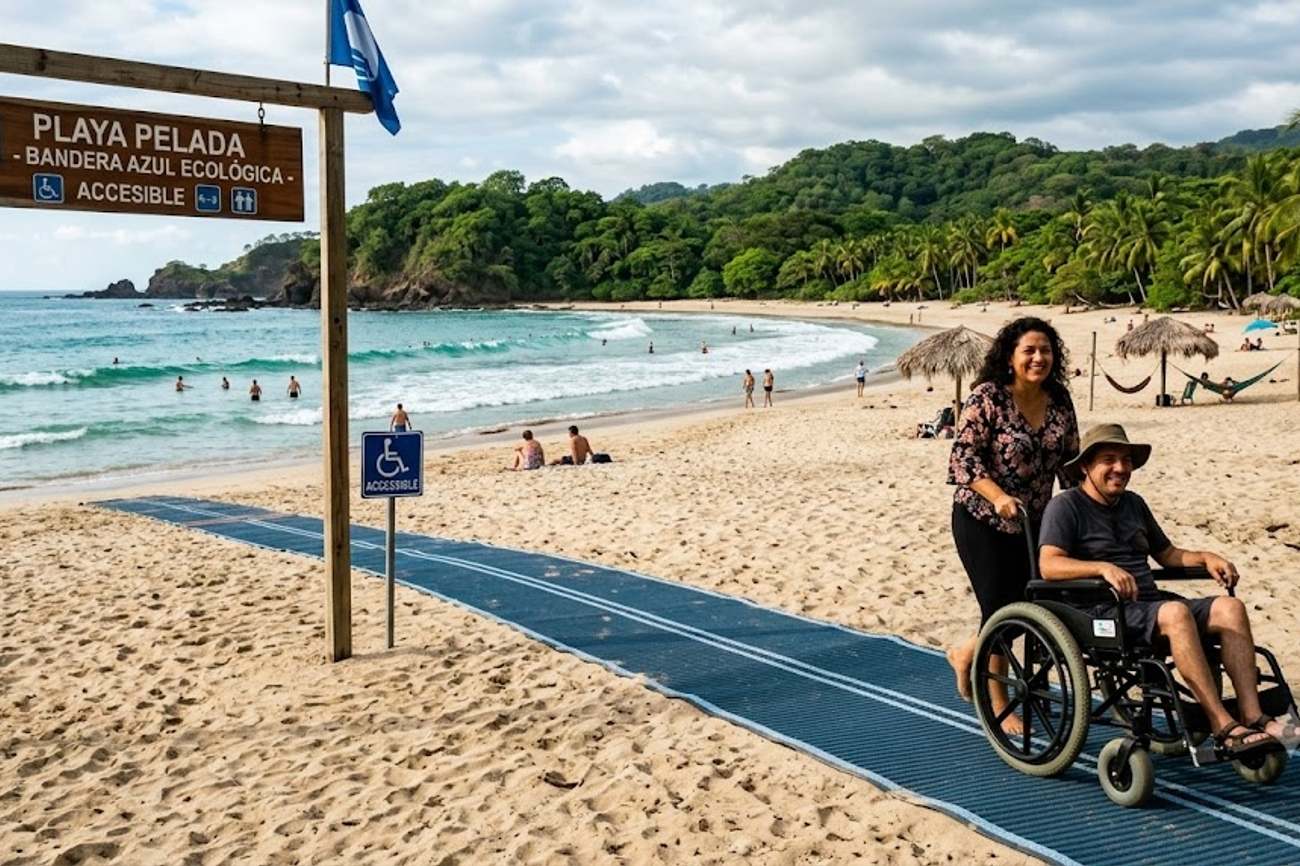
Image generated by AI
[Nosara, October 2023] — Playa Pelada in Guiones has officially opened as a pioneering accessible beach point, integrating circular economy infrastructure to eliminate mobility barriers on Costa Rica's Pacific coast. The inauguration marks a strategic shift in coastal management, transforming a previously inaccessible shoreline into a universal-access destination.
The project, located on the Nicoya Peninsula, utilizes heavy-duty composite decking and specialized mobility equipment to provide autonomy for wheelchair users, seniors, and families with strollers. By combining social inclusion with environmental sustainability, the initiative establishes a new operational benchmark for the Costa Rican Tourism Board (ICT) and other regional authorities aiming to modernize sustainable travel.
The Integration of Circular Economy Infrastructure
The immediate catalyst for this development was the need to reconcile ecological preservation with human rights. Traditionally, the rugged terrain of the Nicoya Peninsula acted as a physical blockade for travelers with reduced mobility. To solve this without damaging the fragile ecosystem, local governance and community organizations implemented a closed-loop manufacturing system.
The infrastructure at Playa Pelada is not constructed from traditional timber or concrete, which can be invasive or prone to rapid decay in saline environments. Instead, the project employs a circular economy framework where recycled plastics and industrial waste are collected via regional clean-up campaigns. These polymers are processed locally and re-manufactured into weather-resistant composite decking, walkways, and seating.
This approach serves two critical functions: it removes plastic pollution from the surrounding environment and creates durable pathways that protect the shoreline from the erosion typically caused by heavy foot traffic. By utilizing these recycled materials, the municipality ensures that the physical expansion of tourism does not come at the cost of the region's biodiversity.
Markets and Demographics Impacted
The opening of the accessible beach point expands the reachable market for the Guiones and Nosara regions. The following groups are directly impacted by these infrastructure upgrades:
- Wheelchair Users and Individuals with Limited Mobility: Access is now provided via universally designed ramps and durable rollout boardwalks that bridge the gap between parking areas and the shoreline.
- Seniors and Elderly Travelers: The installation of designated shaded rest areas and tactile paving reduces physical strain and navigation anxiety.
- Families with Young Children: The removal of rugged terrain barriers allows for the seamless use of strollers from the transport drop-off point to the water's edge.
- Visually Impaired Visitors: The integration of tactile paving and clear, standardized signage enhances independent navigation of the beach zone.
- Local Hospitality Providers: Hotels and transport operators in Nosara are now under increased pressure to align their facilities with these new international accessibility standards to accommodate a broader visitor demographic.
Practical Traveler Advisory and Strategic Insights
For the average traveler, this development transforms the logistics of visiting the Nicoya Peninsula. Previously, a trip to the Pacific coast for a person with a disability required extensive planning and often relied on the availability of private assistants. Now, the infrastructure provides a level of autonomy that was previously non-existent in this region.
Practical Passenger Impact: If you are booking a trip to Nosara, you can now expect a "barrier-free" experience at Playa Pelada. This means you no longer need to worry about the transition from the pavement to the sand. The availability of amphibious chairs—specialized floating chairs with large, flotation-balloon tires—allows users to move across soft sand and enter the ocean safely.
Furthermore, the presence of trained personnel and lifeguards specifically briefed on accessibility protocols means that safety is integrated into the experience. Travelers should check with their lodging providers to ensure that the "last mile" of their journey—the transport from the hotel to the beach point—is as accessible as the beach itself.
Playa Pelada, a revolutionary accessible beach in Costa Rica, has been making waves in the tourism industry with its commitment to circular economy and sustainability. For the most up-to-date information on traveling to Costa Rica, visitors can check the official government website of the Costa Rican Tourism Board for insights on accessible destinations and eco-friendly activities. This initiative has positioned Playa Pelada as a model for accessible tourism, attracting visitors from around the world.
Scaling the Model Across Costa Rica
The success of the Playa Pelada project is viewed by national tourism institutes as a scalable blueprint. There is currently an active assessment underway to determine the viability of duplicating this circular-economy accessibility model across other high-traffic zones on both the Pacific and Caribbean coasts.
The strategic vision is to move universal accessibility from an "optional amenity" to a "fundamental requirement" for all Costa Rican destinations. This shift is expected to drive higher rates of repeat visitation and increase the average length of stay, as inclusive destinations typically attract multi-generational family groups who stay longer than solo travelers.
As the Ministry of Environment and Energy (MINAE) continues to oversee coastal preservation, the integration of recycled polymers into public works is likely to become the standard for all new beachfront developments. This ensures that as Costa Rica expands its tourism footprint, it does so through a lens of equity and environmental stewardship.
FAQ: Nosara Accessible Travel 2023
What specific equipment is available for beach users at Playa Pelada? The beach provides amphibious chairs featuring flotation-balloon tires, which allow users to navigate soft sand and enter the water. Additionally, the site features durable rollout boardwalks and universally designed ramps for wheelchair access.
How does the "circular economy" aspect affect the traveler? Travelers will notice that the walkways and seating are made from recycled industrial plastics. This means the infrastructure is more durable and weather-resistant than wood, providing a smoother, safer surface for mobility aids.
Is there staff available to help with mobility equipment? Yes. The operation includes trained personnel and lifeguards who are specifically integrated into the daily operations to assist visitors with the amphibious chairs and ensure safe entry into the coastal waters.
Are other beaches in Nosara similarly accessible? Currently, Playa Pelada is the pioneering accessible point. While there are plans to scale this model to other Pacific and Caribbean beaches, travelers should verify the specific accessibility status of other locations with local authorities.
Paradise is now open to everyone.
Related Travel Guides
- World Tourism Day 2026 Boosts Global Tourism Projects Through New Funding Opportunities :All You Need to Know
- Kanpur And Delhi Travel Gets Easier As Indian Railways Starts New Overnight Daily Train Service
- Brazil, India and More Fuel Global Marathon Tourism Boom as Chicago and New York Races Drive Travel Demand
Disclaimer
This article is for informational and educational purposes only. It does not constitute legal, financial, or professional advice. While we strive to provide accurate and up-to-date information, travel policies, regulations, and conditions change rapidly. Always verify information with official sources before making travel decisions. Nomad Lawyer makes no representations about the accuracy, reliability, completeness, or suitability of the information provided. Readers should consult qualified professionals for advice specific to their circumstances. The views expressed in this article are those of the author and do not necessarily reflect the views of Nomad Lawyer.
Naina Thakur
Contributor & Travel Specialist
Travel enthusiast and legal writer covering visa regulations, responsible tourism, and cultural journeys across global destinations.
Learn more about our team →