
Singapore Airlines Pulled Into April 2026 Asian Aviation Crisis
Singapore Airlines loses regional immunity as April's jet fuel crisis forces capacity cuts and fare hikes across Asia. Even the strongest carrier faces margin pressure with fuel premiums 100% above 2026 baselines.

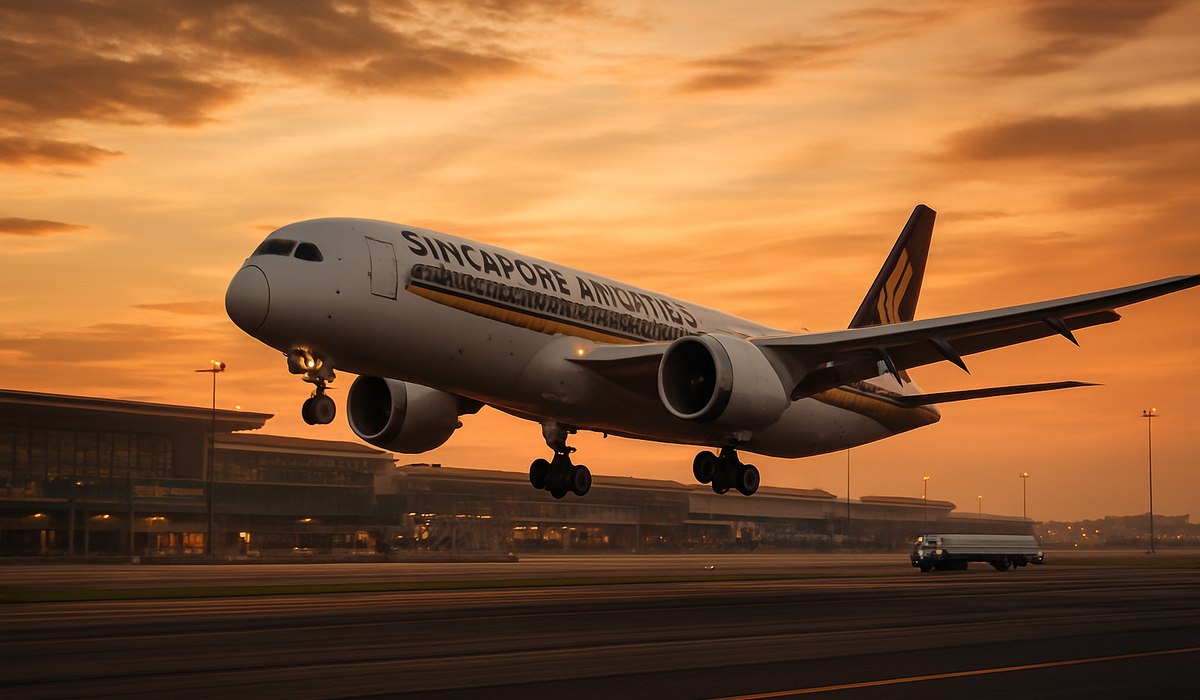
Image generated by AI
Singapore Airlines Pulled Into April's Regional Jet Fuel Emergency
Singapore Airlines, historically Asia's most resilient carrier, faces unprecedented margin pressure as jet fuel prices spike 100 percent above early 2026 baselines. The flag carrier has joined regional competitors in cutting routes, hiking surcharges, and reducing capacity through April and May. Middle East supply disruptions, constrained Southeast Asian refinery output, and softening demand have transformed Singapore Airlines pulled from regional immunity into active crisis response—signaling broader turmoil ahead for northern summer travel.
Jet Fuel Shock Spreads Across Asia
A severe spike in regional jet fuel benchmarks has reshaped airline economics across the continent. Energy consultancies and aviation trade publications report jet fuel premiums in Asia now exceed 100 percent compared with 2026 averages, driven by multiple converging factors.
Constrained refinery capacity in Southeast Asia, altered shipping routes around conflict zones, and elevated risk premiums on fuel transport through sensitive corridors have all contributed. For carriers operating thin margins on regional routes, fuel jumped from a manageable expense to the defining cost pressure of the year.
Both low-cost and full-service airlines are responding uniformly: cutting marginal routes, introducing fuel surcharges, and raising peak-season fares. Industry observers cite these measures as unavoidable to prevent deeper losses during the northern summer booking surge. Coverage in regional business media underscores that even well-capitalized carriers like Singapore Airlines cannot sidestep the shock. Learn more about aviation supply chain impacts on FlightAware's industry tracking.
Singapore Airlines' Hedging Strategy Under Pressure
Singapore Airlines built its reputation on superior fuel cost management through disciplined hedging practices. Recent financial disclosures reveal that even this advantage erodes under extreme price volatility.
The airline reported quarterly net profit fell more than 50 percent compared with the same period in 2025. Passenger load factors remained healthy through February, yet surging jet fuel costs and weaker pricing power on long-haul and regional routes gutted margins. Management signaled that operating conditions from April through June will remain challenging—contradicting earlier 2026 financial projections.
Equity markets reacted sharply. Singapore Airlines' share price came under pressure following results release, as investors reassessed 2026 earnings forecasts. Analyst commentary suggests concerns about further deterioration if fuel prices stabilize slowly or regional demand weakens. The airline still holds relative strength versus peers, but the profit decline underscores how pervasive the fuel shock has become across Asia's aviation sector.
Industry-Wide Response: Cuts, Surcharges, and Fare Hikes
Singapore Airlines pulled capacity from April and May schedules through selective route adjustments. Published schedule updates detail ad hoc cancellations on certain long-haul and regional flights, with frequency reductions concentrated on routes experiencing softened demand or highest fuel-cost exposure.
Flights transiting Middle East airspace face suspension or rerouting. The Singapore Airlines Group has curtailed some operations to Gulf hubs like Dubai, mirroring moves by European and Asian competitors responding to elevated risk premiums and supply-chain constraints. These operational changes extend beyond fuel economics into geopolitical risk management.
Alongside capacity cuts, Singapore Airlines joined competitors in implementing fuel surcharges and raising fares on peak-demand segments. While unpopular with travelers, these measures help preserve network connectivity on core trunk routes to major Asian, European, and North American gateways. Regional carriers unable to implement similar pricing power face steeper margin erosion and potential service cuts.
Capacity and Route Rebalancing Details
The following table summarizes key operational and financial impacts across the April 2026 crisis period:
| Metric | Impact | Data Point |
|---|---|---|
| Jet Fuel Premium (Asia) | Price spike | 100%+ vs. early 2026 baselines |
| Singapore Airlines Net Profit | YoY decline | Down 50%+ Q1 2026 vs. Q1 2025 |
| Passenger Load Factor | Operational health | Remained strong through February |
| Affected Route Types | Capacity cuts | Long-haul, regional marginal routes |
| Fuel Surcharge Status | Pricing action | Introduced/raised across network |
| Middle East Operations | Geopolitical impact | Select suspensions, rerouting to Dubai alternatives |
| Regional Refinery Output | Supply constraint | Constrained Southeast Asia capacity |
Outlook for Northern Summer Season
Industry forecasts for the northern summer season (May–August) remain cautious despite historical strength in travel demand. Airlines have signaled that elevated fuel costs will persist through Q2 and into Q3 unless Middle East supply chains normalize rapidly.
Singapore Airlines pulled into this environment with reduced capacity and higher fares, positioning itself to preserve profitability rather than pursue aggressive growth. Competitors face similar constraints. The combination of constrained supply and higher pricing could suppress leisure bookings on price-sensitive regional routes while business travel remains resilient.
Analysts expect that by late May or early June, clearer signals about fuel price stabilization and Middle East risk reduction will emerge. Until then, travelers should anticipate further schedule adjustments, higher ticket costs, and tighter cabin configurations. Booking flexibility and early commitment to fixed itineraries will become more valuable. For real-time flight status, consult FlightAware and your airline's official channels.
What This Means for Travelers
April 2026's aviation crisis creates friction and cost increases for anyone flying Asia-based routes. Here are actionable steps to protect your travel plans:
-
Check Airline Schedules Immediately: Verify that your booked flight remains on the schedule. Singapore Airlines and competitors have made ad hoc changes; your route may face cuts or frequency reductions.
-
Lock in Refundable Fares Early: If rebooking, prioritize refundable tickets. Higher fuel surcharges mean future fares will likely rise further; securing current pricing protects against escalation.
-
Monitor Fuel Surcharge Changes: Airlines add surcharges in real time as fuel prices move. Watch your booking confirmation for updates; some carriers allow modification before payment finalization.
-
Explore Route Alternatives: If your primary route faces cuts, identify secondary airports and connecting options before disruption forces last-minute rebooking at premium prices.
-
Document Cancellations for Compensation Claims: If Singapore Airlines cancels your flight, preserve all communications. Under US DOT rules and international conventions, you may qualify for meals, hotels, or rebooking on competitor flights.
-
Register for Airline Alerts: Enable push notifications from Singapore Airlines and competitors for schedule changes affecting your itinerary.
-
Review Travel Insurance Exclusions: Standard policies may not cover fuel-related cancellations as "extraordinary circumstances." Confirm coverage details before departure.
FAQ: Jet Fuel Crisis and Singapore Airlines
Q: Will Singapore Airlines cancel more flights in May and June? A: Airline guidance signals continued capacity constraints through Q2 2026. Subscribe to FlightAware tracking for your specific flights to detect changes within 72 hours of departure.
Q: Am I entitled to compensation if Singapore Airlines cancels my flight? A: Under EU261 rules (if departing EU) and US DOT regulations, cancellations may trigger cash compensation, rebooking, or accommodation. Non-EU/US passengers should verify rights under the airline's operating country regulations.
Q: Will fuel surcharges decrease if Middle East disruptions end? A: Historically, surcharges decline 4-8 weeks after underlying costs stabilize. Given uncertainty, expect surcharges to remain through June 2026 and potentially into July depending on regional refinery recovery.
Disclaimer
This article is for informational and educational purposes only. It does not constitute legal, financial, or professional advice. While we strive to provide accurate and up-to-date information, travel policies, regulations, and conditions change rapidly. Always verify information with official sources before making travel decisions. Nomad Lawyer makes no representations about the accuracy, reliability, completeness, or suitability of the information provided. Readers should consult qualified professionals for advice specific to their circumstances. The views expressed in this article are those of the author and do not necessarily reflect the views of Nomad Lawyer.
Raushan Kumar
Founder & Lead Developer
Full-stack developer with 11+ years of experience and a passionate traveller. Raushan built Nomad Lawyer from the ground up with a vision to create the best travel and law experience on the web.
Learn more about our team →