
Singapore Airlines Swept Into Widening Asia Flight Chaos This April
Singapore Airlines swept into escalating Asia flight disruptions as thousands of delays and hundreds of cancellations ripple through regional hubs on April 12, 2026. Weather, capacity constraints, and operational bottlenecks trigger cascading travel chaos.

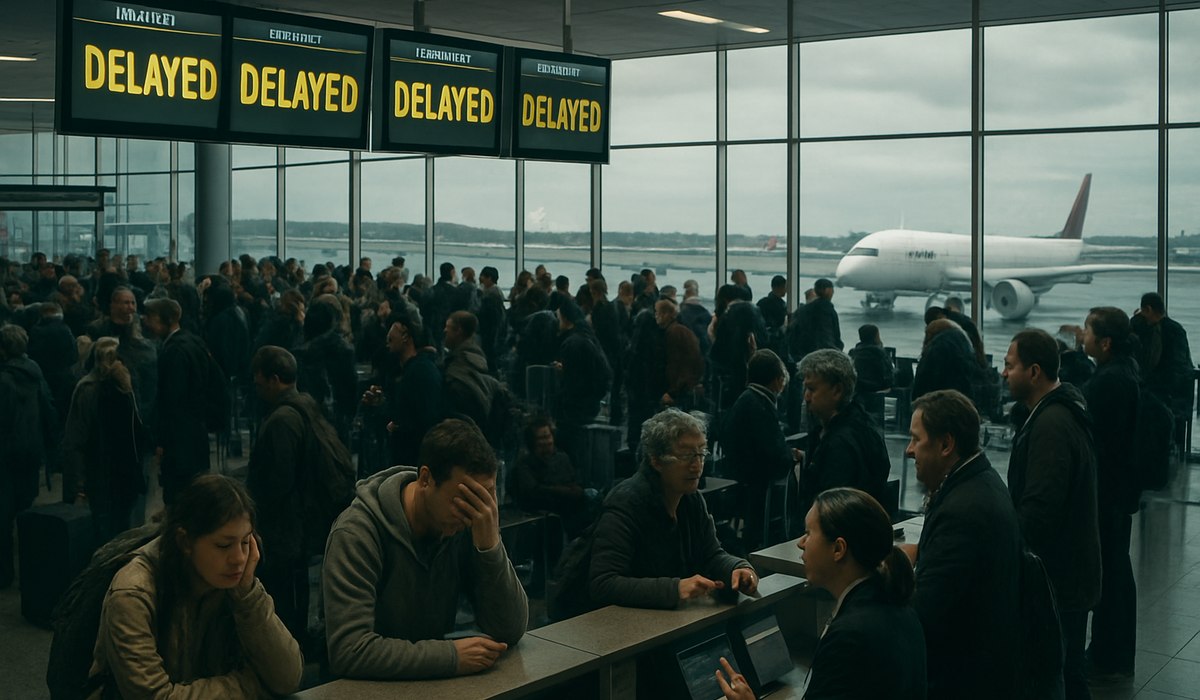
Image generated by AI
Singapore Airlines Swept Into Asia's Growing Flight Disruption Wave
Singapore Airlines has been pulled into an escalating wave of flight delays and cancellations sweeping across Asia-Pacific, as operational bottlenecks, severe weather patterns, and capacity constraints create cascading disruptions at major regional hubs. On April 12, 2026, thousands of delayed flights and hundreds of cancellations across Singapore, Bangkok, Beijing, Tokyo, and other key airports have left passengers stranded and networks strained. The crisis affects not only Singapore's flagship carrier but also Emirates, Qatar Airways, Cathay Pacific, China Eastern, IndiGo, Batik Air, and Etihad Airways, signaling a broader regional stress test.
Regional Turbulence Spreads Across Asia's Skies
Asia's aviation networks are experiencing unprecedented daily disruption levels. Data compiled on April 12 reveals more than 4,000 same-day delays and close to 200 cancellations concentrated across major hubs including Beijing, Shanghai, Guangzhou, Shenzhen, Chengdu, Jakarta, Hong Kong, Singapore, Kuala Lumpur, Bangkok, and Phuket.
The widening disruption reflects how interconnected modern air travel has become. When one airport experiences delays, the knock-on effects ripple instantly through connecting networks. Aircraft arriving late into Singapore's Changi Airport from disrupted hubs in China, Japan, or the Middle East trigger cascading delays on subsequent departures. For a network carrier like Singapore Airlines that depends on coordinated waves of arrivals feeding long-haul connections, this creates exponential scheduling complexity.
The scale of the crisis demonstrates how fragile capacity has become in Asia's busiest travel corridors. Recent coverage from FlightAware tracking systems confirms that airports across China, Indonesia, Thailand, Malaysia, and Singapore face the most acute pressure. Once small operational mismatches cascade, they quickly transform into widespread network failures affecting thousands of passengers daily.
Operational Bottlenecks and Weather Create Cascading Disruptions
The current spike in Asia flight chaos stems from multiple converging factors rather than a single incident. Seasonal storms and adverse weather patterns across East and Southeast Asia have forced temporary airspace restrictions, holding patterns, and traffic flow reductions that reverberate through airline schedules.
Singapore Airlines swept along with competitors also faces structural capacity constraints. Post-pandemic demand has returned unevenly across Asia's airports and carriers. Many hubs now operate close to maximum capacity during peak travel periods, leaving minimal flexibility when technical issues, crew availability problems, or aircraft routing changes occur.
Geopolitical tensions and airspace restrictions compound the crisis. Reduced or suspended services on certain Middle East routes, combined with elevated fuel costs on alternative pathways, have tightened capacity on connecting services through Singapore and other regional hubs. These decisions made thousands of miles away still create ripple effects through the region's most critical junction airports.
Additionally, many carriers remain lean following pandemic recovery phases. Limited spare aircraft, reduced staffing levels, and air traffic control capacity that hasn't kept pace with Asia's rapid traffic rebound all constrain recovery options when disruptions extend across multiple days.
Immediate Impact on Travellers and Network Operations
Passengers traveling through affected Asia-Pacific hubs face immediate, tangible consequences. Longer check-in and security queues, extended aircraft holding times both on ground and in air, missed connections, and overwhelmed customer service desks have become routine experiences on April 12, 2026.
For Singapore Airlines passengers specifically, the strain manifests across the entire network. Flights originating from or connecting through Changi Airport experience compressed turnaround windows. Even modest proportions of disrupted services create crowding around departure gates and rebooking desks, amplifying passenger frustration.
The cumulative effect produces cascading delays that extend itineraries by hours or days. Travelers relying on tight connections through Singapore increasingly miss their onward flights. Rebooking alternatives remain severely limited given that competitors face similar capacity constraints and disruption patterns across the region.
Network carriers face the most complex recovery scenarios because their business model depends on precision timing. A single delayed aircraft can affect dozens of subsequent flights and thousands of connecting passengers. The widening disruption across Asia means recovery windows shrink rapidly, leaving limited options for restoring normal operations.
Which Airports and Carriers Are Most Affected
The April 2026 disruption concentrates heaviest impact at specific Asia-Pacific hubs and carriers:
| Airport/Hub | Primary Disruption Type | Estimated Daily Impact | Regional Significance |
|---|---|---|---|
| Singapore Changi | Delays and bottlenecks | 200+ delays daily | Critical long-haul hub |
| Bangkok Suvarnabhumi | Weather-related delays | 150+ delays daily | Southeast Asia gateway |
| Beijing Capital | Severe congestion | 300+ delays daily | China's primary hub |
| Shanghai Pudong | Airspace restrictions | 250+ delays daily | East China major hub |
| Hong Kong | Capacity constraints | 180+ delays daily | Asia-Pacific connector |
| Jakarta Soekarno-Hatta | Weather disruptions | 120+ delays daily | Indonesia regional focus |
| Kuala Lumpur | Operational bottlenecks | 100+ delays daily | Malaysia primary airport |
Most Affected Carriers: Singapore Airlines, Emirates, Qatar Airways, Cathay Pacific, China Eastern, IndiGo, Batik Air, and Etihad Airways all report elevated disruption levels. Singapore Airlines particularly feels the strain as Changi Airport serves as its primary hub and connecting point for long-haul services.
The concentration at major hubs indicates that regional connectivity—not just individual routes—faces systematic stress. When Singapore, Bangkok, Hong Kong, and Beijing all experience disruptions simultaneously, the entire Asia-Pacific aviation network becomes constrained.
Live Flight Tracking and Real-Time Updates
Passengers can monitor current disruptions and real-time flight status through established aviation tracking platforms. FlightAware provides live tracking of all commercial flights across Asia, displaying current delays, cancellations, and airport congestion levels with minute-by-minute updates.
The [Federal Aviation Administration (FAA)](https://www.faa.gov) maintains coordination protocols with international aviation authorities, though primary real-time data flows through regional air navigation service providers. For Asia-Pacific operations specifically, ICAO coordination channels disseminate official disruption notices and airspace advisories.
Passengers should consult their airline's official website or mobile application before arriving at airports. Singapore Airlines maintains dedicated disruption pages with current flight status, rebooking options, and passenger assistance information. Email and SMS notifications typically alert affected passengers to significant changes.
What This Means for Travelers
Immediate Action Checklist for Affected Passengers
-
Check current flight status immediately through your airline's website or FlightAware before departing for the airport.
-
Contact Singapore Airlines directly via phone, website chat, or mobile app to confirm your booking status and understand rebooking options if cancellation occurs.
-
Arrive earlier than scheduled to account for extended check-in and security queues at congested terminals; consider arriving 4-5 hours before international departures.
-
Bring essential items in carry-on luggage including medications, valuables, and change of clothes in case of missed connections or overnight delays.
-
Document all disruption details including flight times, gate information, and communication with airline staff for potential compensation claims under airline passenger rights regulations.
-
Review your airline ticket terms to understand whether you booked with flexible rebooking conditions or if you face restrictions on alternative flight options.
-
Consider travel insurance implications and contact your provider if your policy includes coverage for airline disruptions or missed connections.
-
Adjust connecting flight schedules if
Disclaimer
This article is for informational and educational purposes only. It does not constitute legal, financial, or professional advice. While we strive to provide accurate and up-to-date information, travel policies, regulations, and conditions change rapidly. Always verify information with official sources before making travel decisions. Nomad Lawyer makes no representations about the accuracy, reliability, completeness, or suitability of the information provided. Readers should consult qualified professionals for advice specific to their circumstances. The views expressed in this article are those of the author and do not necessarily reflect the views of Nomad Lawyer.
Kunal K Choudhary
Co-Founder & Contributor
A passionate traveller and tech enthusiast. Kunal contributes to the vision and growth of Nomad Lawyer, bringing fresh perspectives and driving the community forward.
Learn more about our team →