
April Turmoil Grinds Asia-Pacific's Busiest Flight Hubs in 2026
April turmoil grinds Asia-Pacific aviation as Tokyo, Seoul, Hong Kong, and Singapore face systemic disruption. Middle East airspace rerouting and fuel spikes trigger thousands of delays and cancellations across the region's busiest hubs.

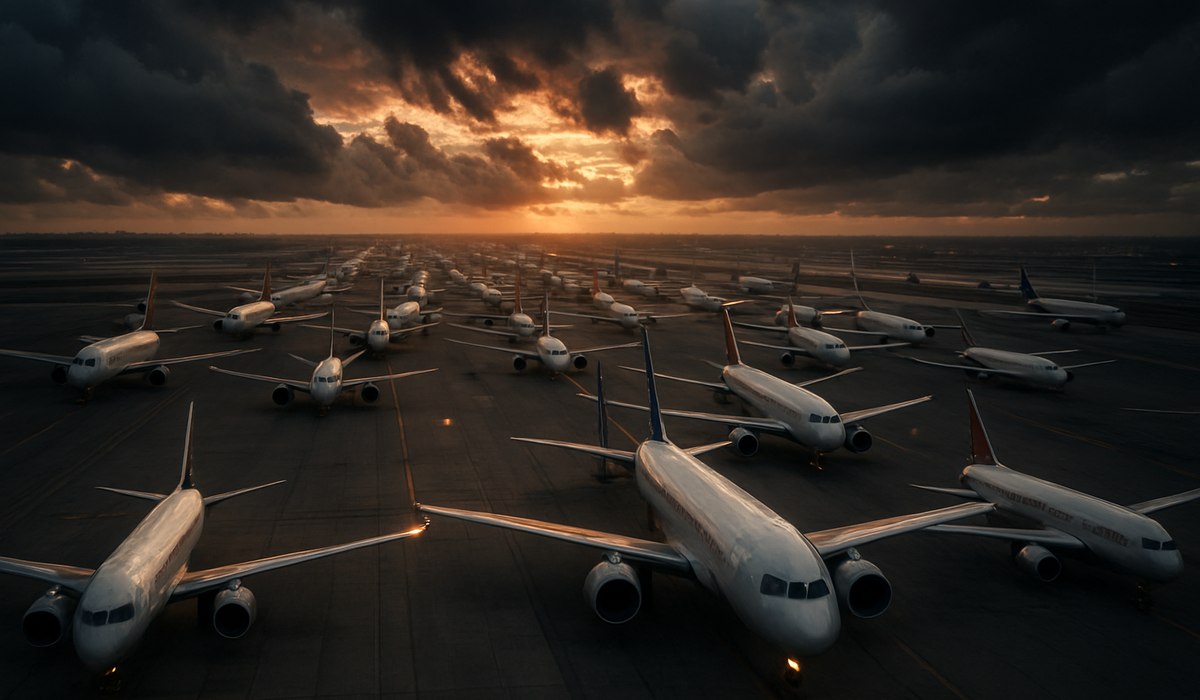
Image generated by AI
Regional Crisis Unfolds Across Four Major Hubs
Tokyo Haneda, Seoul Incheon, Hong Kong International, and Singapore Changi entered April 2026 gripped by unprecedented systemic disruption. Thousands of flight delays and widespread cancellations rippled across Asia-Pacific's busiest airports during the first ten days of the month, stranding hundreds of thousands of passengers and disrupting both international and domestic networks. The April turmoil grinds represents the region's most severe operational crisis since pandemic-related restrictions lifted in 2023, driven by cascading failures rooted in Middle East geopolitics and volatile fuel markets.
Multi-Hub Disruptions Converge in Early April
Unlike isolated airport incidents, the disruption pattern across Asia-Pacific revealed synchronized systemic strain. Operational tracking data from 4 to 10 April documented simultaneous bottlenecks affecting Tokyo, Seoul, Hong Kong, Singapore, Beijing, and Guangzhou. A single day in early April recorded over 150 cancellations and thousands of delays across these major gateways. Singapore Changi experienced hundreds of delays with minimal cancellations, indicating airlines attempted to maintain schedules through increasingly constrained bottlenecks rather than suspend operations entirely.
On 11 March—before April's peak disruption—tracking platforms recorded 770 cancellations and 2,100 delays across Asia-Pacific in one day alone, concentrated at international hubs. The pattern intensified into April, with knock-on effects cascading across domestic networks in China, Japan, and South Korea as long-haul aircraft and crews missed scheduled rotations. Flight mapping revealed that aircraft repositioning delays compounded hourly, creating exponential downstream impacts on regional services.
March industry data showed worldwide cancellations jumped 111 percent compared with earlier 2026 months, establishing the baseline for April's turmoil. Analysts attributed much of the spike to conflict-related airspace closures forcing airlines to operate longer, more complex routing patterns that strained crew availability and maintenance schedules.
Middle East Airspace Rerouting Triggers Cascade Effect
The structural trigger behind April turmoil grinds lies in intensified Middle East conflict that escalated in late February and March 2026. Airspace closures around Persian Gulf corridors and partial operational suspensions at Dubai International—traditionally a critical Europe-Asia routing hub—eliminated traditional flight paths. European aviation safety bulletins issued in March explicitly advised operators to avoid affected Middle Eastern airspace at all flight levels due to elevated risks from missiles, drones, and active air defense systems.
The rerouting impact proved immediate and severe. Flights previously transiting Gulf hubs like Dubai now require hundreds of additional nautical miles, fundamentally restructuring global aviation networks. Travelers from Australia to Europe increasingly faced rerouting through Singapore, Bangkok, Kuala Lumpur, Hong Kong, Tokyo, and Seoul. These diverted flows stacked atop already-strong post-pandemic demand, overwhelming Asia-Pacific airport capacity, air traffic control systems, and crew rosters simultaneously.
Major carriers including Cathay Pacific Airways and Singapore Airlines suspended or reduced direct services to Gulf and Levant destinations through late April, reassigning widebody aircraft to alternative routes. This capacity reallocation meant fewer seats available precisely when rerouted passengers sought alternative connections, creating severe supply-demand mismatches.
Operational Strain Mounts Across Domestic Networks
Domestic aviation networks across China, Japan, and South Korea absorbed secondary impacts from international disruptions. Long-haul crews unable to complete scheduled rotations due to international delays cascaded into cancellations on domestic services. Aircraft positioned for early-morning international departures sat stranded by overnight delays, forcing airlines to cancel or consolidate subsequent domestic flights.
Airlines adopted emergency defensive postures by early March, announcing capacity cuts and frequency reductions. Air New Zealand cancelled approximately 1,100 flights—roughly 5 percent of its total schedule—through early May. Carriers across North Asia and Southeast Asia adjusted pricing aggressively, imposing steep fuel surcharges while trimming frequencies to preserve operational margins.
The fuel crisis compound airspace disruptions. Conflict-related supply interruptions to the Strait of Hormuz—one of the world's most critical energy chokepoints—spiked jet fuel prices regionally. Asia faced particular exposure due to heavy dependence on Gulf crude and refined petroleum products. This economic pressure forced budget-conscious carriers to reduce frequencies further, concentrating existing demand into fewer flights and exacerbating delays.
Global Context: March Cancellations Spike 111 Percent
Worldwide operational data released on 10 April provided critical context for understanding April turmoil grinds severity. March 2026 showed a 111 percent increase in global cancellations compared with January and February, with conflict-related airspace closures and schedule volatility cited as primary drivers. This elevated baseline meant April began with depleted crew reserves, maintenance backlogs, and airline balance sheets already strained by capacity cuts.
The compounding effect proved devastating. Airlines facing fuel cost surges and reduced Gulf capacity entered April already operating at reduced margins. The simultaneous convergence of disruptions at four major Asia-Pacific hubs meant no geographic alternatives remained available for schedule recovery. Typically, disruption at one hub might disperse demand to competitors; April's multi-hub crisis left passengers with severely limited routing options.
Industry commentary from travel platforms and aviation trade media emphasized the unprecedented nature of synchronized disruption. Most operational models assumed isolated airport incidents would resolve within days. April's situation—systemic pressure lasting weeks—exceeded historical planning parameters for most carriers.
Affected Airlines and Route-Specific Impact
Major international and regional carriers experienced differentiated impacts based on their exposure to Middle East routings and Asia-Pacific network dependencies:
| Airline | Primary Impact | Route Disruption | Status April 10 |
|---|---|---|---|
| Singapore Airlines | High | Europe-Asia rerouting | Elevated delays, reduced Gulf services |
| Cathay Pacific Airways | High | Southeast Asia expansion | Suspension of Levant/Gulf routes through late April |
| Japan Airlines (JAL) | Moderate-High | Tokyo hub congestion | International delays affecting domestic rotation |
| ANA (All Nippon Airways) | Moderate-High | Tokyo hub congestion | Frequency reductions on North Asia routes |
| Korean Air | Moderate-High | Seoul hub strain | Extended rerouting on Europe services |
| Air New Zealand | Critical | Australia-Europe via Asia | 1,100 flight cancellations through early May |
| Thai Airways | Moderate | Bangkok hub secondary impact | Moderate delays on regional services |
| Malaysia Airlines | Moderate | Kuala Lumpur alternative routing | Increased passenger loads on rerouted flights |
Real-Time Flight Tracking and Live Disruption Data
Passengers and travel professionals monitoring April disruptions relied on specialized tracking platforms for current operational status. FlightAware provided real-time delay data, cancellation notices, and aircraft routing information updated continuously throughout the crisis period. Flight mapping tools revealed rerouting patterns, showing specific examples of Europe-Asia services adding 6-8 hours to previously standard flight times.
Major airport websites including Tokyo Haneda, Incheon, Hong Kong, and Changi published hourly operational updates, though delay predictions proved unreliable given the systemic nature of disruptions. FAA and equivalent international aviation authorities issued periodic bulletins regarding airspace restrictions affecting the Middle East and secondary impacts on Pacific routing.
Passengers tracking individual flights encountered difficulty distinguishing between temporary delays (recoverable within hours) and schedule cancellations due to structural capacity constraints. Airlines often delayed official cancellation announcements, resulting in gate changes and repeated rebooking attempts that compounded passenger frustration.
Trav
Disclaimer
This article is for informational and educational purposes only. It does not constitute legal, financial, or professional advice. While we strive to provide accurate and up-to-date information, travel policies, regulations, and conditions change rapidly. Always verify information with official sources before making travel decisions. Nomad Lawyer makes no representations about the accuracy, reliability, completeness, or suitability of the information provided. Readers should consult qualified professionals for advice specific to their circumstances. The views expressed in this article are those of the author and do not necessarily reflect the views of Nomad Lawyer.
Kunal K Choudhary
Co-Founder & Contributor
A passionate traveller and tech enthusiast. Kunal contributes to the vision and growth of Nomad Lawyer, bringing fresh perspectives and driving the community forward.
Learn more about our team →