
April Turmoil Chokes Asia-Pacific Aviation Network in 2026
Geopolitical conflict, fuel volatility and infrastructure failures trigger April turmoil chokes across Asia-Pacific aviation in 2026, forcing thousands of cancellations and costly reroutes that disrupt major airline networks.

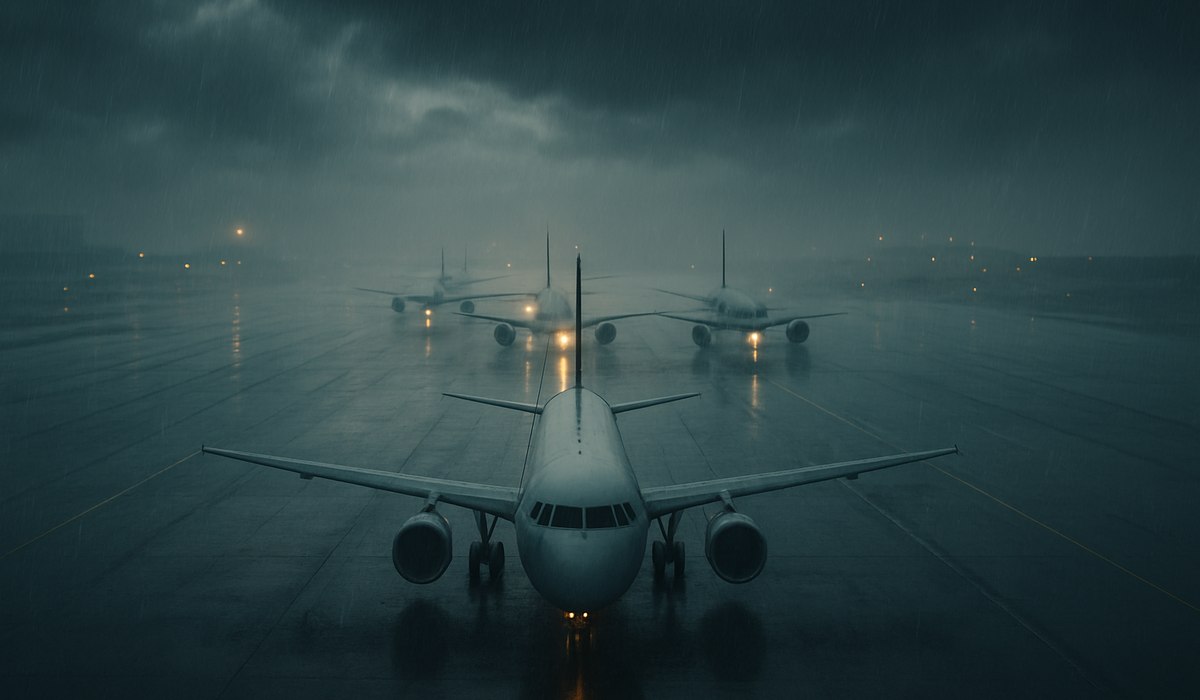
Image generated by AI
April Turmoil Chokes Asia-Pacific Aviation as Geopolitical Crisis Converges with Infrastructure Failures
Thousands of flights across the Asia-Pacific region face cancellation and costly reroutes as geopolitical conflict, volatile fuel markets, and infrastructure bottlenecks create the worst aviation disruption since the pandemic. The April 2026 crisis stems from airspace restrictions over Iran and Iraq, forcing European and Asian carriers to divert traffic through congested alternative corridors. Airlines including Indian carriers, Singapore Airlines, and Cathay Pacific have absorbed millions in additional fuel costs and operational expenses. Major hubs in Delhi, Singapore, Hong Kong, Melbourne, and Sydney are experiencing rolling delays and schedule compression that cascade across both long-haul and regional networks.
Conflict-Driven Reroutes Squeeze Key Asia-Europe Corridors
Geopolitical tensions since late February have rendered traditional high-altitude transit routes over Iran and portions of Iraq unusable for commercial aviation. This airspace closure forces airlines to funnel Europe-Asia traffic through narrower, less efficient east-west corridors spanning the Arabian Peninsula and Central Asia. Flight tracking data via FlightAware reveals that only a handful of routes now handle the bulk of intercontinental traffic, creating severe congestion and adding 2-4 hours to typical long-haul flight times.
The April turmoil chokes efficiency across the region as carriers absorb increased fuel uplift requirements, extended crew duty times, and additional technical stops. Each extra flying hour on sectors already stretched by geopolitical rerouting compounds fuel costs at a moment when jet fuel prices remain volatile due to global energy market pressures. Regional carriers operating from Gulf hubs report insurance premiums rising 15-25 percent for routing near conflict-affected zones. Network realignment decisions made in late March now ripple through April schedules, leaving compressed buffers for managing weather disruptions or air traffic control delays.
Indian Carriers Bear Brunt of Disruptions
Indian aviation faces the heaviest immediate impact from April turmoil chokes impacting the subcontinent. Flight data indicates over 10,000 flights linking India with West Asia have faced cancellation since late February, with hundreds more rerouted via longer southern tracks. Major Indian carriers including Air India, IndiGo, and Vistara have reshuffled summer schedules to accommodate airspace closures and cost pressures, triggering domestic and regional cascading effects.
Aircraft and crews arriving out of position at Delhi, Mumbai, and Bangalore hubs create secondary disruptions affecting onward services. Airlines have compressed flight banks into narrower operating windows, eliminating schedule slack previously built into network timetables. Regulatory changes and heightened operational costs tied to detours force carriers to reduce frequency on profitable Middle East routes, redirecting capacity to domestic services. Travel advisories urge Indian business travelers and expatriates to book alternative routings or adjust travel dates by 3-5 days to avoid the worst disruption windows.
Regional Hubs Grapple with Extended Flight Times and Higher Costs
Southeast Asian carriers based in Singapore, Manila, and Kuala Lumpur confront their own April turmoil chokes challenges as rerouted long-haul traffic intersects with strong regional demand. Singapore Airlines and AirAsia have issued schedule adjustments on trans-Pacific and Middle East routes beginning mid-April, with certain frequencies reduced or services rerouted via secondary hubs. Passengers connecting through Changi, Ninoy Aquino, and Kuala Lumpur are advised to monitor departure times closely as compressed flight schedules leave minimal buffer time.
Australia's main gateways in Sydney, Melbourne, and Perth registered over 400 delays on April 3 alone, with weather systems and air traffic control constraints translating into hours of accumulated disruption. Northeast Asia faces comparable pressure as Japan and South Korea navigate intersection of rerouted international traffic and strong domestic demand. Industry groups representing Asia-Pacific airlines highlight three compounding pressure factors: elevated jet fuel prices, rising insurance premiums for conflict-zone routing, and heightened operating costs tied to disruption management. These factors squeeze margins precisely when international travel demand approaches pre-pandemic levels.
April Turmoil Chokes Aviation: Impact Data Summary
| Metric | April 2026 Impact |
|---|---|
| Flights cancelled India-West Asia (Feb-Apr) | 10,000+ |
| Delays recorded Sydney, Melbourne, Perth (Apr 3) | 400+ |
| Extended flight time per rerouted sector | 2-4 hours |
| Insurance premium increase (conflict zones) | 15-25% |
| Major hubs affected | Delhi, Mumbai, Singapore, Hong Kong, Sydney |
| Estimated network carrier cost impact | Millions USD in fuel and operations |
| Airspace restrictions affecting routes | Iran, Iraq, partial Central Asia coverage |
What This Means for Nomad Lawyers and International Travelers
April turmoil chokes demand immediate action from travelers with Asia-Pacific bookings. The ongoing disruption will persist through mid-May as airlines work through schedule realignment and airspace restrictions remain in place.
Traveler Action Checklist:
-
Contact your airline immediately if booked on routes between India and West Asia, or Europe and Southeast/South Asia. Request rebooking on earlier departures or alternative carriers before April 20.
-
Monitor real-time flight status using FlightAware and your airline's app. Set alerts for your specific flight to catch cancellation notices within 24 hours of departure.
-
Review passenger rights via the U.S. Department of Transportation consumer protection guidelines, which apply to flights involving U.S. carriers and apply similar standards internationally.
-
Extend connection times by 3-4 hours if rebooking through Singapore, Hong Kong, or Indian hubs. Tight connections risk missed onward flights due to delays cascading from conflict-zone rerouting.
-
Request written confirmation of rebooked flights, meal vouchers, and hotel accommodations. Airlines often deny ex-gratia compensation unless passengers follow proper filing procedures within 30 days.
-
Check travel insurance coverage for geopolitical event exclusions. Standard policies may not cover cancellations due to conflict-zone airspace closures; specialty coverage may be required.
-
Verify visa validity for rerouted countries. Longer southern routes through Middle East hubs may require additional transit visas not needed on traditional northern corridors.
FAQ: April Turmoil Chokes and Your Travel Plans
Q: Will my flight be cancelled if I'm booked on India-Europe routes in April?
A: High-risk periods are April 8-20 and April 25-30. Airlines are actively managing schedules, so rebooking on April 1-7 or May 1+ flights carries lower disruption risk. Contact your airline immediately for proactive rebooking options before automatic cancellations occur.
Q: What compensation am I entitled to if my flight is cancelled?
A: Under FAA and international aviation regulations, passengers are entitled to rebooking, meals, and accommodations. Cash compensation (typically USD 400-600 per passenger) applies if rebooking causes 2+ hour delays. Check U.S. DOT consumer rights for your specific route eligibility.
Q: Are flights through Southeast Asia safer than India-West Asia routes?
A: Singapore, Bangkok, and Manila routings avoid direct conflict zones but face secondary delays from rerouted traffic and compressed schedules. Expect 2-4 hour extensions and frequent rebooking offers. Monitor airline schedules hourly if bo
Disclaimer
This article is for informational and educational purposes only. It does not constitute legal, financial, or professional advice. While we strive to provide accurate and up-to-date information, travel policies, regulations, and conditions change rapidly. Always verify information with official sources before making travel decisions. Nomad Lawyer makes no representations about the accuracy, reliability, completeness, or suitability of the information provided. Readers should consult qualified professionals for advice specific to their circumstances. The views expressed in this article are those of the author and do not necessarily reflect the views of Nomad Lawyer.
Preeti Gunjan
Contributor & Community Manager
A passionate traveller and community builder. Preeti helps grow the Nomad Lawyer community, fostering engagement and bringing the reader experience to life.
Learn more about our team →