
Poland Keeps Pace With France and More in Fueling Albania Tourism Surge as Tirana Airport Records 9.2 Million Travellers in 2026
Poland Keeps Pace With France and More in Fueling Albania Tourism Surge as Tirana Airport Records 9.2 Million Travellers in 2026

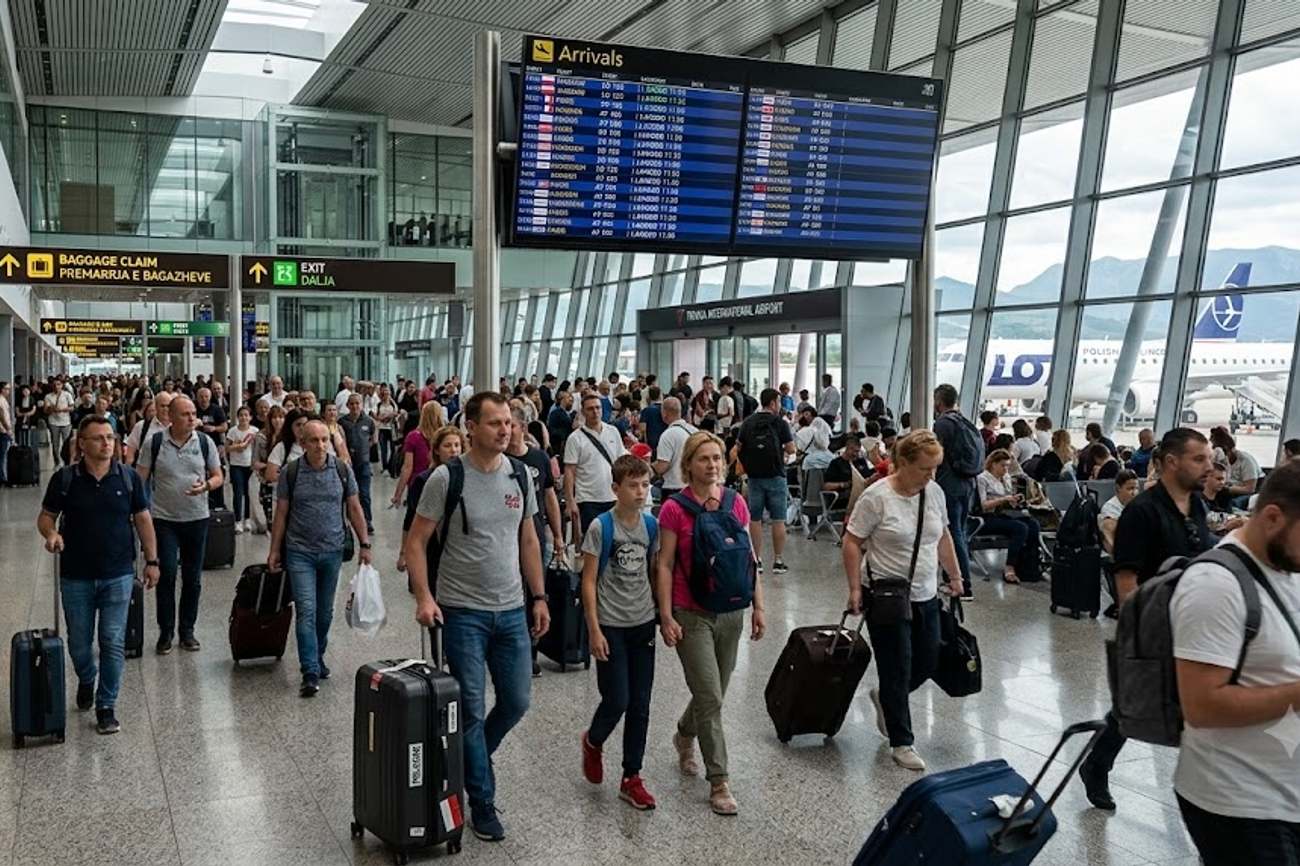
Image generated by AI
9.2 million passengers processed through Tirana International Airport in the first eight months of 2026 signals a fundamental shift in the Mediterranean tourism hierarchy. This surge represents a record-breaking trajectory for Albania, transitioning the nation from a niche "hidden gem" to a primary European destination. The volume of traffic indicates that Albania is no longer merely absorbing overflow from saturated markets like Croatia or Greece but is actively competing for a permanent share of the European summer holiday wallet.
The Mediterranean Pivot: Albania’s Market Ascent
The current explosion in arrivals is the result of a strategic alignment between affordability and accessibility. As traditional Western Mediterranean hubs face pricing pressures and over-tourism regulations, travelers from Central and Western Europe are migrating toward the Adriatic and Ionian coasts. This shift is not accidental; it is driven by a concerted expansion of flight connectivity from key source markets.
The data reveals a diversifying demographic of visitors. While regional proximity continues to fuel arrivals from Kosovo and Greece, there is a marked increase in long-haul European demand. Poland and France have emerged as critical growth engines, reflecting a broader trend where Central European travelers seek high-value, low-cost Mediterranean alternatives. This diversification reduces Albania's reliance on any single nationality, creating a more resilient tourism economy. To understand the broader regulatory environment governing these flights, travelers can reference the International Air Transport Association (IATA), which tracks the global standards for the airline operations currently flooding into Tirana.
Infrastructure Stress and the Digital Solution
The sheer volume of traffic has placed unprecedented strain on Albania's primary gateway. When a single month, August, accounts for 1.7 million passengers, the risk of systemic failure at border control becomes a primary concern for national security and traveler satisfaction. The response from Tirana International Airport has been an aggressive pivot toward automation to prevent the airport from becoming a bottleneck that stifles the very growth the country seeks.
The implementation of automated e-gates has transformed the arrival sequence. By shifting a significant portion of the passenger load to digital processing, the airport is attempting to decouple growth from congestion. The efficiency gains are measurable and significant, as detailed in the operational data below:
| Processing Method | Average Time per Passenger | Efficiency Gain |
|---|---|---|
| Traditional Manual Check | 28 Seconds | Baseline |
| Automated E-Gates | 14 Seconds | 50% Reduction |
| Total E-Gate Volume | 3 Million Passengers | N/A |
This digital transition is essential for maintaining the "destination competitiveness" mentioned in airport reports. For a country attempting to attract high-spending tourists from France and the UK, a three-hour queue at passport control is a deterrent that no amount of scenic coastline can offset.
Expert Analysis: The Economics of the "Alternative Mediterranean"
For travelers booking routes into Tirana, the direct consequence of this 9.2 million passenger surge is a transition from "discovery pricing" to "market pricing." For years, Albania operated as a low-cost alternative. However, the influx of 1.7 million people in August alone creates a supply-demand imbalance that will inevitably drive up the cost of boutique hotels and car rentals along the Albanian Riviera.
The pricing pressure created by this growth means that the "affordable" label currently attached to Albania is under threat. As the airport handles more volume, we can expect a shift in airline behavior: a move from seasonal charters to year-round scheduled services. This will likely lead to more stable pricing but higher baseline fares as the destination matures.
The surge in Albania tourism is largely attributed to the increasing number of flights from European countries, with Poland being one of the top contributors. According to the Tirana International Airport Nënë Tereza website, the airport has seen a significant rise in passenger traffic, with 9.2 million travelers recorded in 2026. This growth is expected to continue, with more airlines adding Albania to their routes.
Furthermore, the reliance on e-gates to process 3 million passengers indicates that Albania is prioritizing throughput over personalized border interaction. For the nomad lawyer or the frequent business traveler, this is a win. However, for the casual tourist, the reliance on digital infrastructure means that any system outage during the August peak could result in total gridlock. The strategic move here is clear: Albania is building a high-capacity "tourism machine" designed to maximize the yield of the summer window. Travelers should monitor the Albanian Ministry of Tourism for updates on new regional airport developments that might alleviate the pressure on Tirana.
Key Takeaways
- Volume Surge: Tirana International Airport handled 9.2 million passengers in the first eight months of 2026, with August alone peaking at 1.7 million.
- Market Diversification: Growth is no longer just regional; Poland and France have become major source markets, alongside steady flows from Italy, Germany, and the UK.
- Operational Efficiency: The adoption of e-gates has halved passport processing time from 28 seconds to 14 seconds, with 3 million passengers already utilizing the system.
- Economic Shift: The transition from an emerging to a recognized destination is driving increased demand for hotels and local services, likely ending the era of ultra-low-cost travel.
FAQ: Albania Travel 2026
Is Tirana Airport too crowded in the summer? Yes, with 1.7 million passengers in August, peak times are extremely congested. However, the new e-gates have significantly reduced wait times for eligible travelers, cutting processing time by 50%.
Which European countries have the best flight connections to Albania? Currently, there is strong connectivity and growing demand from Poland, France, Italy, Germany, and the United Kingdom, making these the primary hubs for entering the country.
Do I need a physical passport for the e-gates at Tirana Airport? Yes, automated e-gates require a biometric passport. These systems processed 3 million passengers recently, reducing the time spent at border control to approximately 14 seconds per person.
Is Albania still an affordable Mediterranean destination in 2026? While it remains competitive compared to Italy or France, the record-breaking arrival of 9.2 million passengers is increasing demand for limited hotel and transport capacity, which is driving prices upward.
The era of the secret Mediterranean escape is over; Albania has officially entered the big leagues of European tourism.
Tags: Tirana International Airport, Albania Tourism 2026, Albanian Riviera, European Aviation Trends, Mediterranean Travel Economics
Related Travel Guides
- Jamaica Steps Up With Saudi Arabia To Unlock New Air Connectivity Corridors And Transform Caribbean Tourism Growth
- Austria Aligns With Slovenia And Italy As Alpine Trail Connects Three Nations Through Scenic Hiking
- Angola Is Now Set To Unlock A Great New Safari Tourism Opportunity As The Luiana Plains Camp Opens
Disclaimer
This article is for informational and educational purposes only. It does not constitute legal, financial, or professional advice. While we strive to provide accurate and up-to-date information, travel policies, regulations, and conditions change rapidly. Always verify information with official sources before making travel decisions. Nomad Lawyer makes no representations about the accuracy, reliability, completeness, or suitability of the information provided. Readers should consult qualified professionals for advice specific to their circumstances. The views expressed in this article are those of the author and do not necessarily reflect the views of Nomad Lawyer.
Kunal K Choudhary
Co-Founder & Contributor
A passionate traveller and tech enthusiast. Kunal contributes to the vision and growth of Nomad Lawyer, bringing fresh perspectives and driving the community forward.
Learn more about our team →