
Oman Aligns Bahrain and Others as Transport Fare Growth Drives New Travel Budget Challenges for Visitors
Oman Aligns Bahrain and Others as Transport Fare Growth Drives New Travel Budget Challenges for Visitors

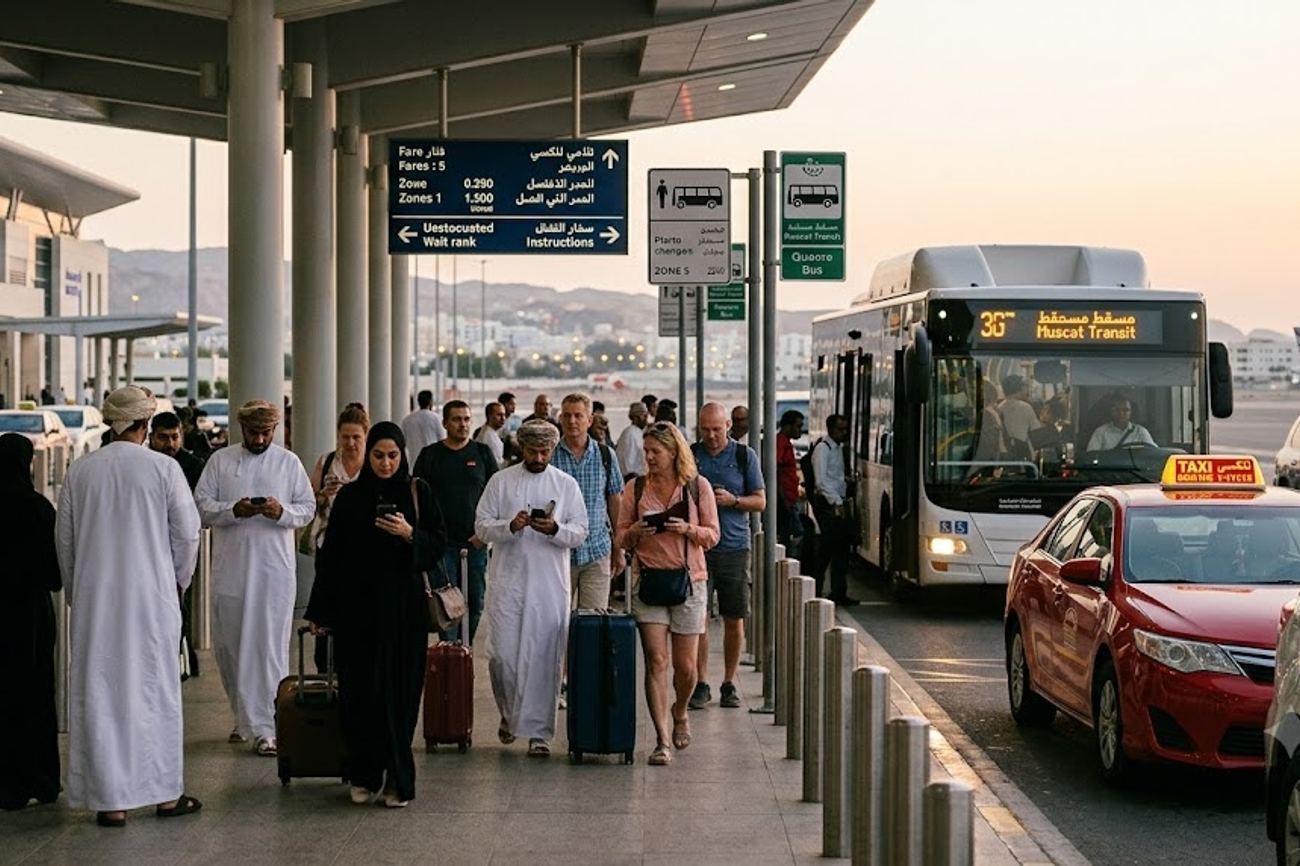
Image generated by AI
Transport inflation in the Gulf Cooperation Council (GCC) has surged to 10.6% in Bahrain and 8.5% in Oman, far outpacing general consumer price growth and signaling a fundamental shift in regional travel economics. This divergence between general inflation and mobility costs creates a "transport trap" where the cost of movement consumes budgets previously reserved for hospitality and leisure, directly impacting the viability of multi-city itineraries.
The Mobility Crisis in Numbers: GCC Transport Inflation
The latest government datasets from the Middle East reveal a systemic decoupling of transport costs from general economic inflation. In the Sultanate of Oman, data from the National Centre for Statistics and Information (NCSI) for August 2026 indicates a general inflation rate of 3.4% year-over-year. However, the transport sector has spiked by 8.5%, the highest increase across all commodity classifications. This outweighs food and non-alcoholic beverages (7%) and miscellaneous personal goods (6.1%), indicating that the primary financial burden for visitors is no longer sustenance or shopping, but movement.
The impact on volume is already evident. Omani airports processed 6,276,117 passengers in the first half of 2026, a 9.3% contraction from the 6,921,569 passengers recorded during the same period in 2025. This decline suggests a price-sensitivity threshold has been crossed, where escalating airfares and operational costs are actively deterring international arrivals.
In the Kingdom of Bahrain, the Information & eGovernment Authority (iGA) reports an even more aggressive trajectory. By July 2026, Bahrain's annual inflation reached 3.0%, the peak level since December 2022. The primary driver is the transport category, which saw a year-on-year surge of 10.6% as of June 2026. This double-digit growth establishes transport as the dominant contributor to national inflation, creating a high-cost barrier for travelers attempting to navigate the kingdom.
Comparative Regional Benchmarks: Oman vs. Bahrain
The current data suggests that while both nations are pursuing diversification via Oman Vision 2040 and Bahrain Economic Vision 2030, the economic friction of transport is manifesting differently. Bahrain is experiencing a more acute spike in transport costs, while Oman is seeing a more pronounced immediate drop in passenger volumes.
The following table compares the inflationary pressures and passenger shifts across these two key markets based on 2025-2026 data.
| Metric | Oman (August 2026) | Bahrain (July 2026) | Variance |
|---|---|---|---|
| General Inflation Rate | 3.4% | 3.0% | +0.4% (Oman) |
| Transport Sector Inflation | 8.5% | 10.6% | +2.1% (Bahrain) |
| Top Non-Transport Inflation | 7.0% (Food/Bev) | N/A | N/A |
| H1 Passenger Volume | 6,276,117 | Not Specified | -9.3% YoY (Oman) |
| H1 2025 Passenger Vol | 6,921,569 | Not Specified | Baseline |
This data correlates with broader trends tracked by IATA, where aviation capacity constraints and volatile energy markets are driving up operational overheads globally, but the GCC's transition away from heavy fuel subsidies is accelerating the local impact.
Practical Traveler Advisory and Strategic Insights
The shift from subsidized mobility to market-driven pricing requires a total recalibration of travel budgeting for the Middle East. For the individual traveler, the "hidden cost" of the trip is no longer the hotel room, but the transit between destinations.
If you are planning a visit to Oman or Bahrain in late 2026 or 2027, consider the following data-driven adjustments:
- Budget Allocation Shift: Historically, travelers allocated a larger percentage of their budget to luxury accommodation. Current data suggests shifting at least 10-15% of the "leisure" budget specifically toward transport to account for the 8.5% to 10.6% inflation rates in this sector.
- Itinerary Consolidation: With transport costs outpacing general inflation, the "multi-city" approach is becoming prohibitively expensive. Travelers should prioritize "hub-and-spoke" itineraries—staying in one primary city and making limited, planned excursions—rather than frequent intercity movement.
- Early Aviation Booking: The 9.3% drop in Omani passenger traffic suggests that airlines are struggling to balance load factors with rising costs. To avoid peak-pricing surges, booking flights 12-16 weeks in advance is now a requirement rather than a suggestion.
Oman is streamlining regional connectivity and pricing structures to maintain its competitiveness against neighboring hubs like Bahrain. Travelers can monitor updated flight schedules and fare adjustments through the Oman Air official portal to optimize their travel budgets. 4. Rental Vehicle Caution: In Bahrain, where transport inflation has hit 10.6%, daily rental rates and fuel costs are the primary drivers of the CPI spike. Travelers should seek long-term rental contracts or utilize integrated transport packages offered by hotels to hedge against daily rate volatility.
Forward Projection: The Hospitality Price Pivot
The current trajectory suggests a looming crisis for the hotel industry in the GCC. As transport costs absorb a larger share of the traveler's wallet, the "disposable" income available for hotel upgrades, fine dining, and spa services will shrink. We are entering a period of "indirect price pressure" on hospitality.
Based on the current 2026 data, hotels cannot maintain static pricing models. If transport costs continue to climb at a rate 2-3 times faster than general inflation, hospitality providers will be forced to implement "value-added" pricing. This likely means bundling transport—such as airport transfers or local shuttles—into the room rate to mask the rising cost of mobility and maintain occupancy levels.
Furthermore, the decline in passenger volumes seen in Oman (from 6.9 million to 6.2 million) serves as a leading indicator. If transport inflation remains in the double digits, we can expect a similar contraction in Bahrain's arrival numbers by Q4 2026. The competitive landscape will shift from "who has the best luxury resort" to "who provides the most seamless and affordable access to the destination."
FAQ: GCC Transport Trends 2026
Will flight prices to Oman and Bahrain continue to rise? Yes. With transport inflation hitting 8.5% in Oman and 10.6% in Bahrain, and a recorded 9.3% drop in Omani passenger volumes, costs are trending upward due to operational overheads and the removal of previous subsidies.
Is this a good time to book a multi-city tour of the GCC? It is financially riskier than in previous years. Because transport costs are outpacing general inflation, the cost of moving between cities is the fastest-growing expense in the region. Consolidating your stay in one city is more cost-effective.
Which sector is driving the most inflation in the Middle East? Transport is currently the primary driver. In Bahrain, it is the single largest contributor to national inflation at 10.6%, significantly outweighing other expenditure groups.
How are hotels responding to these transport costs? Hotels are being pressured to adjust pricing to offer better overall value, as travelers have less disposable income for luxury services after paying for expensive flights and local transit.
The era of subsidized mobility in the Gulf has ended, leaving the industry to navigate a high-cost transit environment where accessibility is the new luxury.
Related Travel Guides
Disclaimer
This article is for informational and educational purposes only. It does not constitute legal, financial, or professional advice. While we strive to provide accurate and up-to-date information, travel policies, regulations, and conditions change rapidly. Always verify information with official sources before making travel decisions. Nomad Lawyer makes no representations about the accuracy, reliability, completeness, or suitability of the information provided. Readers should consult qualified professionals for advice specific to their circumstances. The views expressed in this article are those of the author and do not necessarily reflect the views of Nomad Lawyer.
Kunal K Choudhary
Co-Founder & Contributor
A passionate traveller and tech enthusiast. Kunal contributes to the vision and growth of Nomad Lawyer, bringing fresh perspectives and driving the community forward.
Learn more about our team →