
Oman Follows Sri Lanka as Asia’s Expanding Wellness Landscape Gains Momentum With Luxury Retreats and Ayurveda
Oman Follows Sri Lanka as Asia’s Expanding Wellness Landscape Gains Momentum With Luxury Retreats and Ayurveda

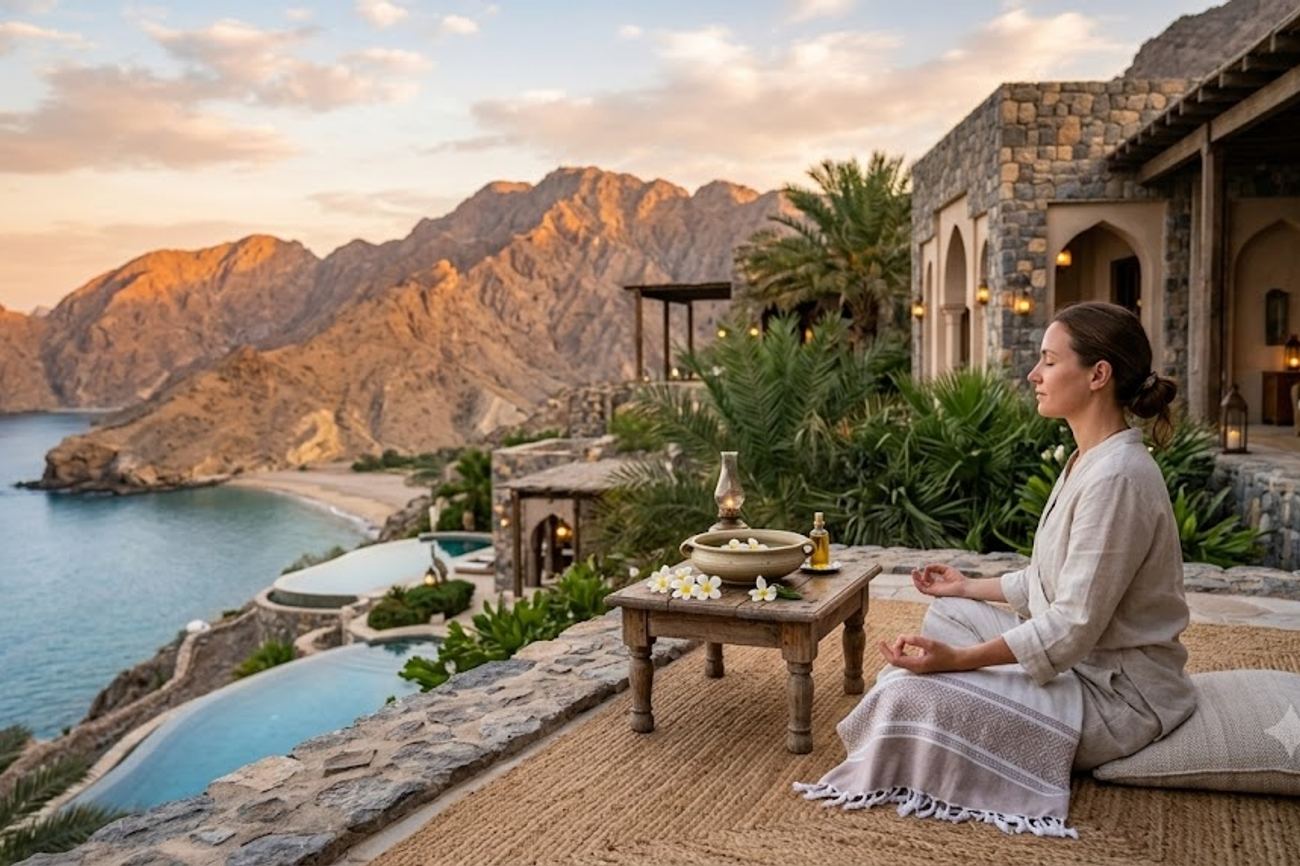
Image generated by AI
Wellness tourism spending now accounts for 17.6% of all global tourism expenditure, despite wellness trips representing only 8.3% of total trip volume. This stark disparity confirms that the restorative travel segment is not merely a niche preference but a high-yield economic engine, with wellness travelers spending disproportionately more per capita than the average tourist.
The Restorative Economy in Numbers
The financial architecture of the wellness sector is undergoing a massive expansion. According to data from the Global Wellness Institute, the global wellness economy reached a valuation of $6.8 trillion in 2024. Within this broader economy, wellness tourism specifically generated $894 billion in spending across 1.24 billion trips. The trajectory suggests an aggressive growth curve, with the total wellness economy projected to reach nearly $9.8 trillion by 2029.
The Asia-Pacific region has emerged as the primary driver of this volume. By 2024, the region recorded wellness-trip levels at 175% of its 2019 benchmarks, signaling a recovery that far outpaces traditional leisure travel. This regional surge is underpinned by massive domestic demand, as China and India collectively account for nearly 75% of all wellness trips within Asia-Pacific. This creates a powerful corridor of demand for neighboring destinations that can offer specialized restorative experiences.
Regional Models: Diversification vs. Specialization
The current market is shifting away from the "hotel spa" model—where wellness is a peripheral amenity—toward "wellness ecosystems." These ecosystems integrate nutrition, mindfulness, and traditional therapies into the core destination identity. Oman, Sri Lanka, and Malaysia illustrate three distinct strategic responses to this shift.
Oman is positioning itself as a premium, nature-led destination. The Ministry of Heritage and Tourism identified 73 four- and five-star establishments with spa facilities in 2024. Rather than pursuing mass volume, Oman is focusing on low-density, high-impact properties. A primary example is the OMRAN Group’s partnership with Santani Wellness Resorts at Jabal Shams, a proposed 70-room retreat. This represents a strategic pivot toward experience-intensive, smaller-scale luxury.
Sri Lanka, conversely, leverages a mature, treatment-led framework. By integrating Ayurveda into its formal tourism-registration structure, the country has transformed wellness into a long-stay product. The economic impact is evident in the duration of stay: health and Ayurveda visitors average 14.7 days, nearly double the 7.6 days seen in MICE (Meetings, Incentives, Conferences, and Exhibitions) travel.
Malaysia utilizes a scale-based approach, blending extensive spa infrastructure with a sophisticated medical-travel ecosystem. By combining multicultural therapeutic traditions with established healthcare networks, Malaysia captures a broader spectrum of the wellness market, from preventive health to holistic luxury.
Comparative Wellness Performance Metrics (2024-2025)
| Metric | Oman (2025) | Sri Lanka (2025) | Global Wellness (2024) |
|---|---|---|---|
| Hotel Guest Growth | 16.6% YoY | 15.1% (Arrivals) | N/A |
| Avg. Stay (Wellness) | Not Specified | 14.7 Days | N/A |
| Avg. Stay (General) | Not Specified | 8.3 Days | N/A |
| Infrastructure Focus | Nature/Premium | Ayurveda/Clinical | Integrated Ecosystems |
| Market Share | Emerging/Diversifying | Mature/Specialized | $894B Spending |
Practical Traveler Advisory and Strategic Insights
The data indicates that wellness travel is splitting into two distinct categories: "Amenity Wellness" (short-term relaxation) and "Transformative Wellness" (long-term health interventions). For the individual traveler, this requires a shift in booking behavior.
If you are planning a restorative trip to Sri Lanka, the data on stay durations suggests that a standard one-week vacation is insufficient for the Ayurveda model. To achieve the results associated with these programs, you should budget for a minimum of 14 days. Furthermore, because these are integrated into healthcare frameworks, verifying the registration of the establishment via the Sri Lanka Tourism Development Authority is essential to ensure medical qualifications.
For those targeting Oman, the shift toward smaller, 70-room boutique retreats like those at Jabal Shams means that availability will be significantly tighter than in traditional resort hubs. Booking windows for these nature-led retreats should be extended to 4-6 months, as the low-inventory model increases competition for specific dates.
Oman is strategically positioning itself as a premier wellness destination by integrating traditional healing practices with high-end luxury infrastructure. Travelers can explore these emerging retreats through resources provided by Experience Oman, the official national tourism portal.
Across all these regions, the trend toward "preventive health" means that travelers can now bundle medical screenings with luxury stays. When researching destinations, look for properties that offer "integrated hospitality"—those that combine nutrition and movement with clinical oversight—as these are the current industry gold standard.
Forward Projection: The $9.8 Trillion Horizon
Based on the current trajectory toward a $9.8 trillion wellness economy by 2029, we can expect a further decoupling of wellness from luxury hotels. We are moving toward a period of "geographical specialization," where specific regions will dominate specific wellness verticals.
Oman is likely to dominate the "Silent Travel" and "Nature Immersion" vertical, leveraging its mountain and coastal privacy. Sri Lanka will likely deepen its hold on the "Clinical Holistic" market, potentially expanding its accreditation standards to attract more Western medical tourists. Malaysia will likely evolve into the "Preventive Hub" of Asia, using its healthcare scale to offer high-tech wellness screenings combined with traditional therapies.
As reported by the World Travel & Tourism Council (WTTC), the integration of health and tourism is a primary driver of economic resilience. We expect to see more governments, following Oman's lead, incorporating wellness into national economic diversification strategies. This will lead to better regulation, standardized accreditation for practitioners, and a more transparent pricing model for long-term wellness retreats.
FAQ: Restorative Travel Trends 2025
Will wellness travel prices increase as demand grows? Yes. The shift toward "experience-intensive" and smaller-scale properties, such as the 70-room model in Oman, limits supply while demand from the Asia-Pacific region rises. Expect premium pricing for nature-led and specialized clinical retreats.
Is now a good time to book an Ayurveda retreat in Sri Lanka? Yes, but planning is critical. With wellness visitors staying an average of 14.7 days, these properties have lower turnover rates than standard hotels. Booking 3-4 months in advance is recommended for registered Ayurvedic centers.
Which destinations offer the best "preventive" wellness? Malaysia is currently the leader in combining large-scale spa infrastructure with established medical-travel ecosystems, making it the primary choice for travelers seeking a blend of healthcare and holistic wellness.
How do I verify if a wellness resort is legitimate? Check for official government registration. In Sri Lanka, ensure the property is recognized within the tourism-registration structure for Ayurveda. In Oman, look for establishments vetted by the Ministry of Heritage and Tourism.
The era of the hotel spa is ending; the era of the destination ecosystem has arrived.
Related Travel Guides
Disclaimer
This article is for informational and educational purposes only. It does not constitute legal, financial, or professional advice. While we strive to provide accurate and up-to-date information, travel policies, regulations, and conditions change rapidly. Always verify information with official sources before making travel decisions. Nomad Lawyer makes no representations about the accuracy, reliability, completeness, or suitability of the information provided. Readers should consult qualified professionals for advice specific to their circumstances. The views expressed in this article are those of the author and do not necessarily reflect the views of Nomad Lawyer.
Preeti Gunjan
Contributor & Community Manager
A passionate traveller and community builder. Preeti helps grow the Nomad Lawyer community, fostering engagement and bringing the reader experience to life.
Learn more about our team →