
Greece and Italy Reveal the New Appeal of Repeat Travel as Tourists Look Beyond Iconic Sights
Greece and Italy Reveal the New Appeal of Repeat Travel as Tourists Look Beyond Iconic Sights

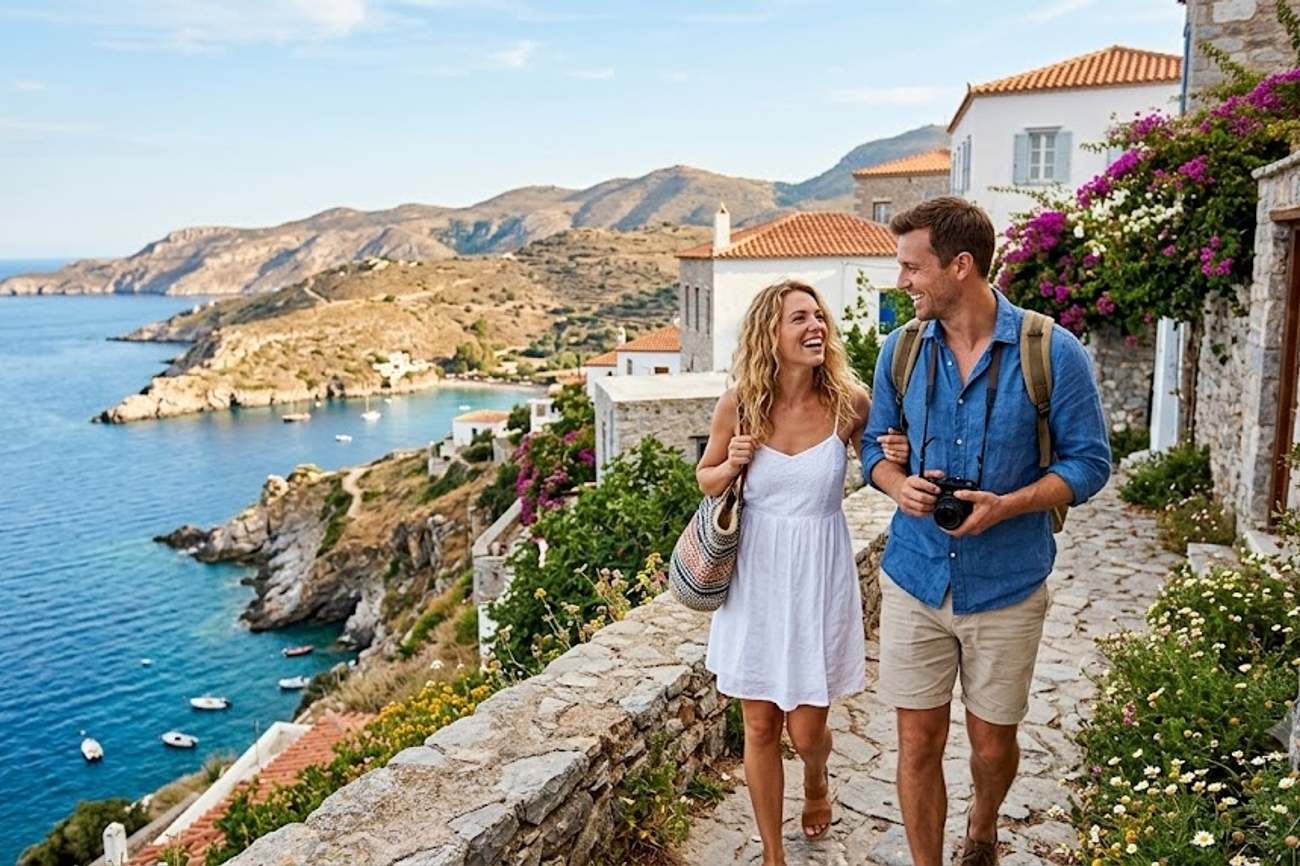
Image generated by AI
While most travelers obsess over checking new countries off a bucket list, a growing movement of "repeaters" is finding that returning to the same city for the third or fourth time reveals more than a first visit to a new continent ever could. This shift in mindset is occurring even as European tourism hits staggering peaks, with the EU recording nearly 3.1 billion tourist accommodation nights in 2025.
The Shift Toward Destination Loyalty
The traditional race to collect destinations is losing its luster. For a specific segment of high-value travelers, the allure of the unknown is being replaced by the comfort of the familiar. When you return to a place you already love, the psychological burden of orientation vanishes. You no longer need to spend your first three days fighting with a foreign transit map or queuing for the "must-see" landmark that everyone photographs.
Instead, the second or third visit allows for a deliberate, slower exploration. The focus shifts from the landmark to the neighborhood, and from the museum to the local tradition. This isn't just about repeating a vacation; it is about purchasing a different version of the same destination. A first trip to Paris is often a cultural crash course; a second trip is a culinary pilgrimage. A first trip to Rome is an archaeological survey; a second is an exercise in the art of the passeggiata through quiet residential districts.
This behavioral change is happening against a backdrop of massive growth. According to Eurostat, tourism accommodation nights in the EU rose by 2.2% from 2024 to 2025. International guest nights saw an even sharper increase of 3.4%, adding 49.7 million stays to the total. This suggests that while the volume of people is increasing, the way they interact with these spaces is becoming more nuanced.
The Powerhouses of European Stay
The scale of European travel is heavily concentrated. In 2025, just four countries accounted for 61.7% of all EU tourism nights. Spain led the pack with 513.6 million nights, followed closely by Italy with 476.9 million, France with 471.7 million, and Germany with 442.1 million.
For the repeat traveler, these numbers represent vast playgrounds of diversity. Italy, for instance, is far more than the "Big Four" cities of Rome, Florence, Venice, and Milan. A visitor who has already seen the Colosseum can return to Italy to explore the Alpine resorts of the north or the rugged coastlines of the south. The familiarity of the language and the general rhythm of Italian life allow them to dive straight into the depth of the experience without the friction of being a total stranger.
France shows a similar pattern of diversification. In 2025, INSEE recorded 465.4 million overnight stays in collective tourist accommodation. The split between these stays reveals how people experience the country: hotels generated 220.2 million nights, while campsites—often the preferred choice for those returning to the countryside or regional routes—contributed 147.6 million.
Greece: A Case Study in Quality Over Quantity
Greece provides the most compelling evidence of how destination loyalty transforms the economy of a place. According to the Bank of Greece, inbound traveler flows grew by 6.4% in 2025, reaching 43.31 million visitors. However, the real story is in the spending. Travel receipts climbed 9.4% to reach €23.63 billion.
Interestingly, the average length of stay actually decreased by 4.5%, dropping from 5.9 nights to 5.6 nights. Despite staying for shorter periods, visitors spent more. The average expenditure per trip rose 2.8% to €545.50, and the average expenditure per overnight stay jumped 7.7% to €96.60.
This data points to a "higher-value" visitor. When people return to Greece, they often move beyond the primary circuit of Athens and Santorini. They begin to explore the Peloponnese, the Ionian Islands, or the deep cultural routes of mainland Greece. By returning, they are no longer just "sightseeing"—they are investing in specific regional experiences, which generates more revenue for local businesses even if the visitor stays for fewer nights. To plan a deeper dive into these regions, the Official Greece Tourism Board offers insights into lesser-known regional hubs.
Visitor Insider Tips
To move from being a tourist to a "repeat guest," you have to change your strategy. Here is how to approach these heavy-hitters with a local lens:
Italy: Beyond the Queue If you have already done the Vatican and the Uffizi, base yourself in the Trastevere district of Rome or the Oltrarno in Florence. These areas maintain a village feel. To avoid the crowds, visit major sites during the "shoulder" windows—either at 7:00 AM or after 6:00 PM. When dining, avoid any place with a printed tourist menu in four languages; look for the trattoria where the menu is handwritten in Italian and the tables are covered in paper.
Greece: The Regional Pivot Stop treating the islands as a checklist. Instead of hopping between five islands in ten days, pick one—like Crete or Rhodes—and stay for the duration. Rent a car and drive into the mountains of the interior. Use the Hellenic Republic's official portals to find local festivals (panigiria), which are the heartbeat of village life and rarely make it into generic guidebooks.
France: The Camping Culture To experience France as the locals do, embrace the campsite. With 147.6 million nights spent in campsites in 2025, this is a massive part of the national identity. Base yourself in a regional campsite in Provence or the Loire Valley. This allows you to explore the surrounding villages by bicycle, avoiding the traffic jams of the main highways.
General Transport Hack In the EU, avoid the temptation to fly between major hubs. The rail networks, particularly in France and Italy, are far more immersive. Booking through official national rail sites allows you to see the transition of the landscape, which is a key part of the "slow travel" philosophy.
Cultural and Environmental Context
The rise of the repeat visitor is a potential lifeline for destinations struggling with "overtourism." When 3.1 billion nights are spent in EU accommodations, the environmental and social strain on cities like Venice or Barcelona becomes critical. The "bucket list" tourist tends to congregate in the same five spots, creating bottlenecks that irritate locals and degrade the heritage sites.
However, the repeat visitor distributes their impact. By venturing into the Peloponnese or the rural campsites of France, they spread the economic benefits to smaller communities that are often overlooked. This shift helps preserve intangible cultural heritage—local crafts, regional dialects, and traditional farming—because it creates a financial incentive for these traditions to survive.
Preserving these sites is a global effort. Many of the locations repeat visitors seek out are UNESCO World Heritage Sites, where the balance between accessibility and preservation is delicate. By choosing depth over breadth, travelers reduce the "churn" of high-volume, low-impact tourism and move toward a symbiotic relationship with the host community.
FAQ: Visiting Europe 2025
What is the best time to visit to avoid crowds? Avoid July and August. The "shoulder seasons" of May-June and September-October offer the best balance of weather and lower crowds, especially in Greece and Italy.
Do I need a visa for the EU? Depending on your nationality, you may need a Schengen visa. Many travelers from visa-exempt countries will soon need to apply for an ETIAS travel authorization before entry. Check official government portals for current requirements.
How do I get between major European cities? High-speed rail is the most efficient and scenic method. Use the national rail operators for France (SNCF) and Italy (Trenitalia) to book tickets in advance for lower rates.
Is it safe for solo travelers? Yes, Europe is generally very safe for solo travelers. Use registered accommodation, keep your belongings secure in crowded tourist areas, and utilize official transport apps for late-night travel.
The greatest luxury in modern travel is no longer seeing everything, but knowing one place deeply.
Related Travel Guides
- Portugal Aligns With Greece as Senior Travellers Emerge as Secret Weapon Against Overtourism and Empty Shoulder Seasons
- Havana Follows San Juan and Other Leading Countries as St. Lucia Wellness Travel Expands in Soufrière
- Brazil Creates a New Adventure Tourism Wave With Iconic Kitesurfing Destinations Across Its Coast
Disclaimer
This article is for informational and educational purposes only. It does not constitute legal, financial, or professional advice. While we strive to provide accurate and up-to-date information, travel policies, regulations, and conditions change rapidly. Always verify information with official sources before making travel decisions. Nomad Lawyer makes no representations about the accuracy, reliability, completeness, or suitability of the information provided. Readers should consult qualified professionals for advice specific to their circumstances. The views expressed in this article are those of the author and do not necessarily reflect the views of Nomad Lawyer.
Preeti Gunjan
Contributor & Community Manager
A passionate traveller and community builder. Preeti helps grow the Nomad Lawyer community, fostering engagement and bringing the reader experience to life.
Learn more about our team →