
Peru Teams Up with Brazil as UNESCO El Niño Heritage Campaign to Aware Tourists on Climate Threats
Peru Teams Up with Brazil as UNESCO El Niño Heritage Campaign to Aware Tourists on Climate Threats

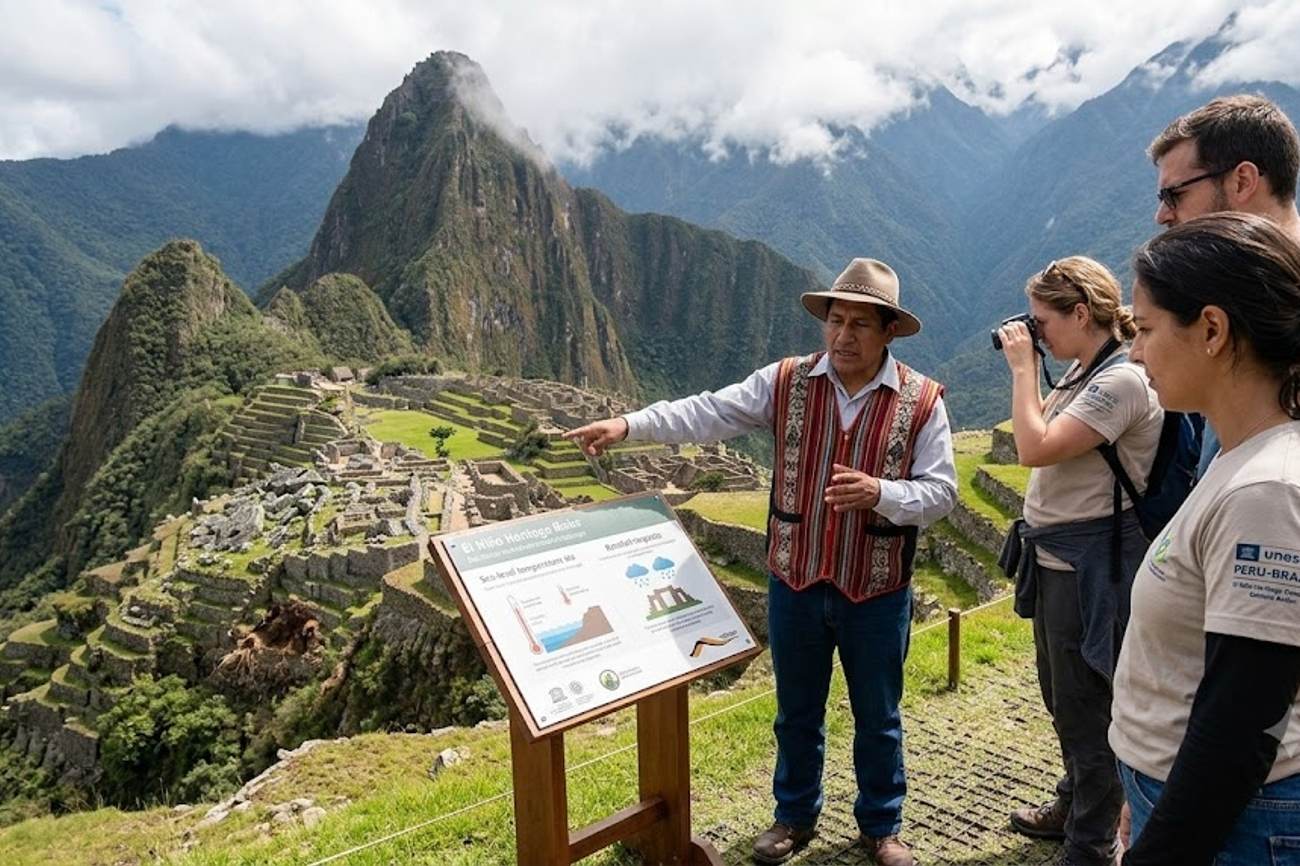
Image generated by AI
[Paris, October 2024] — UNESCO has launched the "Culture x El Niño" campaign to shield global cultural heritage, museums, and indigenous communities from the projected devastation of the 2026–2027 El Niño weather event. The initiative marks a shift toward anticipatory action, moving away from reactive disaster recovery to prevent the irreversible loss of archaeological sites and cultural landscapes before extreme weather strikes.
The campaign integrates scientific forecasting with technical assistance and emergency funding provided via the UNESCO Heritage Emergency Fund. By partnering with national governments and international bodies, the organization aims to mitigate the risks of floods, droughts, wildfires, and landslides that threaten the physical integrity of monuments and the livelihoods of the communities that maintain them.
The Catalyst for Anticipatory Action
The primary trigger for this mobilization is the forecast for the 2026–2027 El Niño cycle, a climate pattern known to disrupt global weather systems. For the travel and culture sectors, these disruptions are not merely meteorological but existential. Extreme rainfall and subsequent flooding can erode ancient foundations, while prolonged droughts create tinderbox conditions for wildfires in sensitive natural reserves.
UNESCO is coordinating this response with a coalition of specialized agencies to ensure a multidisciplinary approach. Key partners include the United Nations Office for Disaster Risk Reduction (UNDRR), the International Centre for the Study of the Preservation and Restoration of Cultural Property (ICCROM), the International Council of Museums (ICOM), and the Smithsonian Institution. Together, these entities are deploying risk assessments and capacity-building programs to ensure that local authorities can execute emergency protocols the moment climate thresholds are crossed.
Nations and Sites Under Immediate Protection
While UNESCO has not released a comprehensive master list of all participating states, specific high-risk zones have been identified for immediate technical intervention and funding.
| Country | Primary Focus Areas | Specific Risks | Key Sites/Regions |
|---|---|---|---|
| Peru | Archaeological & Built Heritage | Extreme rainfall, flooding | Piura, Lambayeque, La Libertad |
| Brazil | Natural & Cultural Landscapes | Drought, wildfires | Pantanal, Serra do Amolar |
| São Tomé and Príncipe | Local Capacity & Infrastructure | Extreme weather events | National cultural assets |
| Sudan | Museum Collections & Institutions | Water damage, humidity, power failure | Sudan National Museum |
In Peru, the focus is heavily weighted toward the northern regions of Piura, Lambayeque, and La Libertad. These areas house archaeological treasures that are central to Peru's international tourism appeal but remain highly susceptible to physical degradation during severe rain cycles.
In Brazil, the strategy extends beyond architecture to include the Pantanal. As one of the world's largest tropical wetlands, the Pantanal represents a complex intersection of biodiversity and human culture. El Niño-driven droughts in this region threaten not only the ecosystem but the very identity of the local communities and the tourism operators who rely on the landscape's stability.
Practical Traveler Advisory and Strategic Insights
For the average traveler or tour operator, the "Culture x El Niño" campaign translates to a shift in how destination stability is managed and communicated.
1. Potential for Temporary Site Closures As UNESCO and national authorities implement "preparedness planning," travelers may encounter preemptive closures of archaeological sites or museums. These are not signs of failure but are planned interventions to protect assets from forecasted weather spikes.
2. Shift in Destination Reliability Travelers booking trips to the Pantanal or northern Peru for the 2026–2027 window should anticipate higher volatility. The campaign highlights that "destination identity" is at risk; a wildfire in the Pantanal or a flood in La Libertad does not just damage a building—it alters the entire tourist experience.
3. Increased "Climate Awareness" Messaging Tourists should expect more explicit warnings and educational materials at heritage sites. UNESCO is pushing for tourists to understand their role in the ecosystem and how climate change directly impacts the viability of the landmarks they are visiting.
Peru and Brazil are collaborating on a UNESCO-backed campaign to educate international visitors about the impact of El Niño on fragile ecosystems. Travelers are encouraged to consult the PROMPERÚ official tourism portal for updated safety guidelines and sustainable travel practices to mitigate climate threats.
4. Infrastructure Instability In regions like Sudan and São Tomé and Príncipe, the focus on "building infrastructure" and "electricity disruption" suggests that basic tourist amenities (climate-controlled museums, reliable transport) may be under significant strain during El Niño peaks.
The Roadmap to 2027
The current phase of the campaign is focused on "capacity development." This involves training local heritage professionals to identify early warning signs and strengthening the coordination between scientific bodies and site managers. By the time the 2026–2027 event reaches its peak, UNESCO intends to have a network of "ready-response" teams capable of deploying the Heritage Emergency Fund instantly.
Beyond the four identified countries, UNESCO is preparing "bespoke technical assistance" for other nations in high-risk zones. This means the list of protected sites will expand as meteorological data becomes more precise. The ultimate goal is to create a global standard for "heritage resilience," ensuring that the world's most iconic landmarks do not become casualties of a predictable climate cycle.
FAQ: El Niño Heritage Protection 2026-2027
Will my flights or hotels be canceled due to this UNESCO campaign? No. The campaign focuses on protecting physical heritage and cultural sites, not managing commercial travel logistics. However, extreme weather events associated with El Niño may cause airlines or hotels to cancel bookings independently.
Which specific Peruvian sites are most at risk? While UNESCO focuses on the regions of Piura, Lambayeque, and La Libertad, any archaeological site in northern Peru is considered vulnerable to the extreme rainfall and flooding predicted for the 2026–2027 cycle.
How does El Niño affect a museum in Sudan? Beyond direct flooding, El Niño causes humidity fluctuations and power grid instability. This can destroy sensitive artifacts that require strict climate control, which is why the Sudan National Museum is a priority for infrastructure support.
Can tourists donate to help protect these sites? The current initiative is funded through the UNESCO Heritage Emergency Fund and government partnerships. Travelers are encouraged to follow official UNESCO channels for information on how to support global heritage preservation.
Preserving the past requires predicting the future.
Related Travel Guides
- Thailand Strengthens Norway Tourism Links With Wellness Experiences and Hidden Destinations in Oslo
- Panama Unlocks New Tourism Growth in 2026 as Millions of Visitors, Hotels and Events Drive Economic Rise
- Ontario Wilderness Expeditions Spike Wild Tourism Demand For Thrill Seekers Seeking To Travel Canada, Find Out Now
Disclaimer
This article is for informational and educational purposes only. It does not constitute legal, financial, or professional advice. While we strive to provide accurate and up-to-date information, travel policies, regulations, and conditions change rapidly. Always verify information with official sources before making travel decisions. Nomad Lawyer makes no representations about the accuracy, reliability, completeness, or suitability of the information provided. Readers should consult qualified professionals for advice specific to their circumstances. The views expressed in this article are those of the author and do not necessarily reflect the views of Nomad Lawyer.
Raushan Kumar
Founder & Lead Developer
Full-stack developer with 11+ years of experience and a passionate traveller. Raushan built Nomad Lawyer from the ground up with a vision to create the best travel and law experience on the web.
Learn more about our team →