
Kenya Aligns with Tanzania and More African Nations as Germany Issues New Travel Advisory Covering Safety Alerts and Entry Rules
Paying attention to global politics is important and the Germany travel advisory for Africa 2026 shows changes to internation

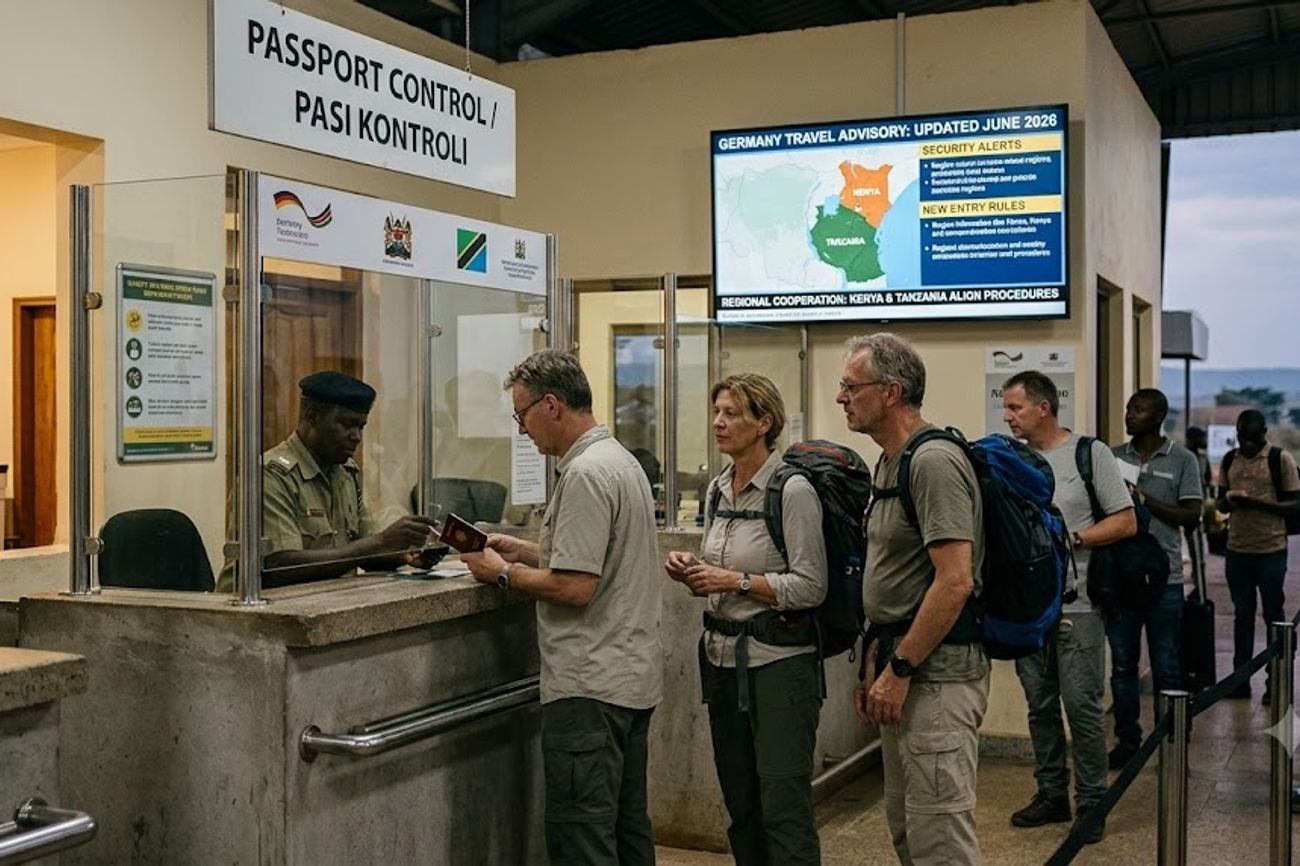
Image generated by AI
Paying attention to global politics is important and the Germany travel advisory for Africa 2026 shows changes to international tourism. Several countries in East Africa including Kenya and Tanzania have improved their border security and other measures to protect visitors. Other provisions for visitor safety including adherence to the eTA directives, presence of adequate medical evacuation insurance and heed to local security alerts, provide ample justification for visitors from Europe and other regions to explore the wildlife and other touristic attractions that East Africa has to offer. Improved relations between Germany and Africa will boost tourism and other international trade activities. It is expected that with the aforementioned provisions, East Africa will benefit from improved tourism and other international trade activities.
Background: The Shift in East African Travel Protocols
The international tourism sector is witnessing a paradigm shift in how cross-border mobility is managed across the African continent. For decades, East Africa operated on a relatively relaxed border entry system, relying heavily on visas issued on arrival to facilitate the rapid influx of European tourists. However, as global security dynamics have evolved and regional threats have become more sophisticated, the necessity for robust, proactive screening mechanisms has become undeniable. The introduction of the Germany travel advisory Africa 2026 represents a critical juncture in this evolution, prompting East African nations to fundamentally restructure their immigration and tourist facilitation frameworks.
Historically, travellers from Germany and the broader European Union enjoyed streamlined access to nations like Kenya and Tanzania. The traditional model, while convenient for tourists, presented significant security blind spots for local authorities. Customs officials were often tasked with processing thousands of international arrivals daily without the benefit of advanced passenger information or real-time access to global security watchlists. Recognising these vulnerabilities, Kenya and Tanzania have decisively pivoted toward comprehensive digital vetting systems, aligning their national security interests with the stringent safety expectations of major European source markets.
This transformation is not merely a bureaucratic adjustment; it is a strategic geopolitical realignment. By synchronising their entry protocols with the rigorous standards outlined by the German Federal Foreign Office (Auswärtiges Amt), East African nations are sending a clear message to the international community: visitor safety is paramount. The modern European traveller must now engage with a sophisticated digital infrastructure long before they board their flight. This proactive approach ensures that any potential security threats are identified and mitigated before individuals reach the border, thereby protecting both the sovereign integrity of the host nations and the safety of the legitimate tourist population.
Kenya has joined forces with Tanzania and other African nations to enhance tourism and travel experiences, amidst Germany's new travel advisory. The advisory, which covers safety alerts and entry rules, can be found on the German Federal Foreign Office website for the most up-to-date information. Travelers are advised to check the official government website for the latest travel warnings and regulations before planning their trip.
Furthermore, this regional alignment highlights a growing trend of intra-African cooperation. The East African Community (EAC) has recognised that disparate border policies create loopholes that can be exploited by transnational criminal networks and extremist factions. By presenting a unified regulatory front, Kenya, Tanzania, Rwanda, and Uganda are effectively insulating their vital tourism sectors against external shocks. For the German traveller in 2026, understanding this background is crucial for appreciating why the application processes have become more demanding and why adherence to the new East Africa travel safety guidelines is strictly non-negotiable.
Latest Official Developments in 2026 Kenya’s eTA Evolution
One of the most consequential developments in the 2026 travel landscape is Kenya’s definitive transition away from the traditional visa system. In its place, the Kenyan government has mandated the Electronic Travel Authorization (eTA) for all incoming international visitors. This sophisticated digital clearance system is not a visa in the traditional sense, but rather a mandatory pre-travel security protocol designed to meticulously vet incoming passengers. The eTA system represents a massive technological leap, automatically cross-referencing applicant data with international security databases, including Interpol and European intelligence watchlists, to ensure that individuals flagged for criminal or terrorist activities are preemptively denied entry.
Passenger logistics are expected to be streamlined, with airlines such as Kenya Airways providing clear guidelines on entry requirements and travel restrictions. For the latest flight schedules and travel advisories, passengers can visit the Kenya Airways website for more information. Additionally, the airline has implemented measures to ensure a smooth travel experience, including online check-in and baggage tracking.
For German citizens and other European nationals, the Kenya eTA rules demand precise logistical planning. It is no longer possible to arrive at Jomo Kenyatta International Airport or Moi International Airport and expect to process entry paperwork at the immigration desk. Authorities officially recommend submitting the eTA application at least two weeks prior to the scheduled departure. This window allows sufficient time for the automated systems and human adjudicators to verify the submitted documents. Crucially, the eTA is intrinsically linked to a traveller’s specific itinerary; applicants must provide confirmed accommodation details, and any discrepancies between the submitted itinerary and actual travel plans can trigger immediate rejection or questioning upon arrival.
Tanzania’s E-Visa and Border Security Enhancements
Parallel to Kenya’s digital overhaul, Tanzania has instituted its own rigorous E-Visa framework, effectively eliminating the older, manual systems that previously caused extensive bottlenecks at primary points of entry like Julius Nyerere International Airport and the Namanga land border. The Tanzania eVisa update of 2026 enforces strict compliance; travellers must secure digital approval prior to boarding their flights. The Tanzanian immigration portal now requires high-resolution uploads of biographical documents, and the processing algorithms are highly sensitive to errors or illegible scans. German citizens must ensure their passports possess a minimum validity of six months beyond their intended date of departure and contain at least two completely blank pages for entry and exit stamping.
Tourism insights suggest that Kenya and Tanzania are expected to benefit from the new alliance, with an increase in tourist arrivals and revenue. For more information on tourism opportunities and travel guides, visitors can explore the Tanzania Tourism Board website for insider tips and expert advice. The board provides valuable resources and insights for travelers, including information on national parks, cultural events, and accommodation options.
The tightening of Tanzania’s entry protocols is directly correlated with the country’s heightened security posture. Following the complex political landscape that emerged after the October 2025 elections, Tanzanian border authorities have been placed on elevated alert. The E-Visa system allows the state to carefully monitor the influx of foreign nationals, ensuring that tourist visas are not being exploited by individuals seeking to engage in illicit activities or political interference. For tourists planning multi-country safaris, the requirement to have the Tanzanian E-Visa confirmed before attempting to cross from Kenya is absolute; arriving at a land border without pre-approval will result in immediate denial of entry and a mandate to return to Nairobi.
Synchronisation Across the East African Community (EAC)
The regulatory tightening is not confined to Kenya and Tanzania. Uganda and Rwanda have actively participated in this regional synchronisation, significantly upgrading the East African Tourist Visa infrastructure. This joint visa, which permits multiple entries across Kenya, Uganda, and Rwanda, has become the gold standard for regional safaris. However, obtaining it in 2026 requires navigating an ultra-strict digital portal that demands comprehensive biometric data, detailed travel histories, and verifiable proof of financial self-sufficiency.
The primary objective of this synchronisation is the creation of a secure, seamless travel corridor within the EAC. By standardising the technological requirements and security thresholds, these nations have effectively created a unified intelligence-sharing ne
FAQ: Kenya Aligns with Tanzania and More Afri 2026
What are the new entry rules for Kenya? Visa requirements remain unchanged for most nationalities.
Are there safety concerns in Tanzania? Yes, exercise caution in crowded areas and border regions.
How does the German travel advisory affect travel? It provides safety alerts and entry rule guidance for German citizens.
Do I need vaccinations to travel to Kenya? Yes, consult your doctor about required vaccinations and medications.
Related Travel Guides
- Thailand Leads Other Countries in Tightening Travel Rules as Asia Expands Digital Border Checks and Nomad Audits
- Morocco Follows Rwanda and Others as Africa Embraces Slow Travel and Better Distributed Tourism
- Curaçao Aligns With Jamaica And More Countries To Propel Aruba Tourism GDP Over 24% Through Global Demand, Cruise Growth And Aviation Links
Disclaimer
This article is for informational and educational purposes only. It does not constitute legal, financial, or professional advice. While we strive to provide accurate and up-to-date information, travel policies, regulations, and conditions change rapidly. Always verify information with official sources before making travel decisions. Nomad Lawyer makes no representations about the accuracy, reliability, completeness, or suitability of the information provided. Readers should consult qualified professionals for advice specific to their circumstances. The views expressed in this article are those of the author and do not necessarily reflect the views of Nomad Lawyer.
Raushan Kumar
Founder & Lead Developer
Full-stack developer with 11+ years of experience and a passionate traveller. Raushan built Nomad Lawyer from the ground up with a vision to create the best travel and law experience on the web.
Learn more about our team →