
Iryo to Boost Spanish High-Speed Rail Capacity by 13.8% With Fleet Expansion
Iryo is increasing rail capacity by 13.8% in 2027, adding three ETR1000 trains to enhance Madrid, Malaga, and Sevilla connections. Details inside.
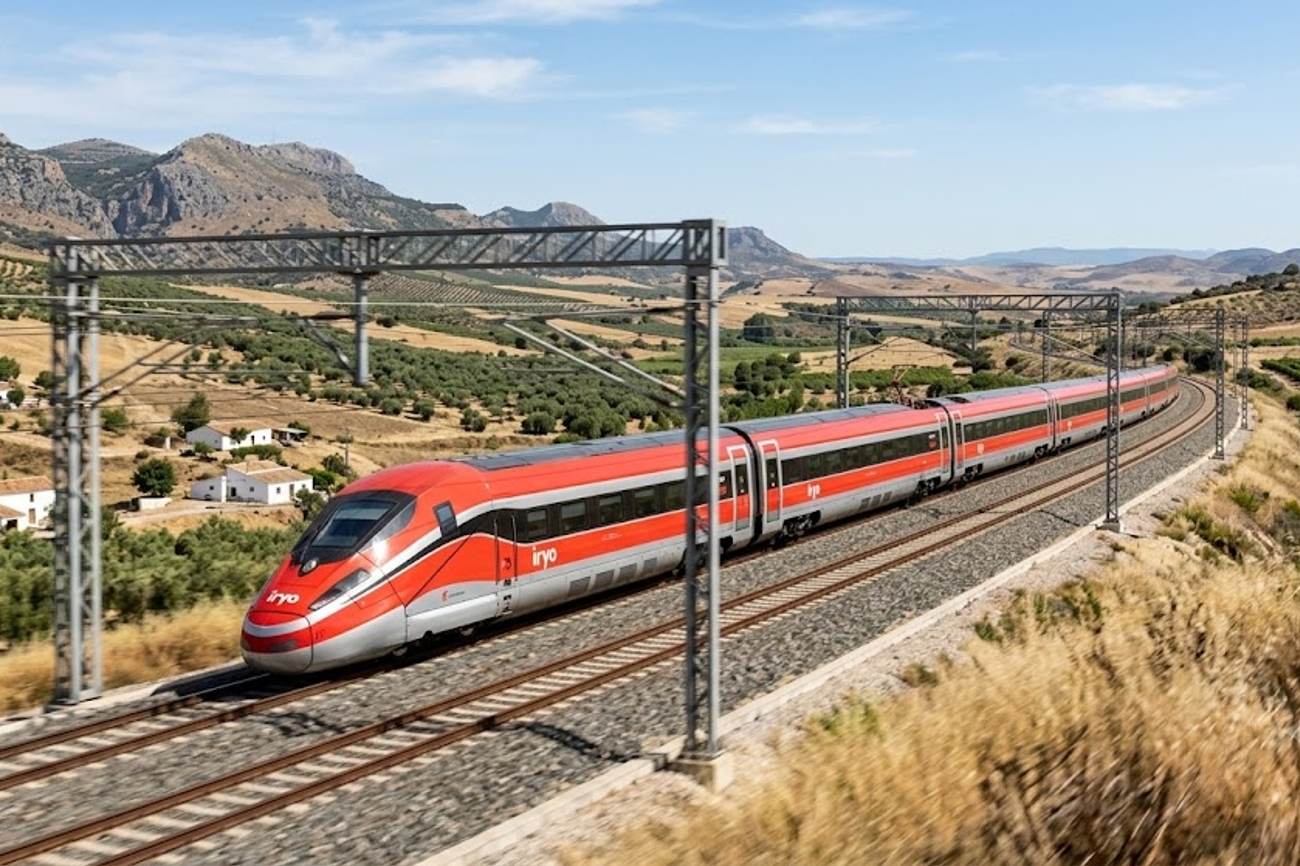
Image generated by AI
Spain Accelerates High-Speed Rail Growth
Spain is poised for a major surge in rail connectivity as Iryo prepares to scale its operations significantly by 2027. The private rail operator is integrating three new Hitachi-built ETR1000 trainsets into its active fleet, a move that will enable more than 2,700 additional journeys over the next year. This strategic growth is designed to tighten the links between Madrid and Spain's primary hubs for commerce, culture, and tourism, while simultaneously increasing the frequency of stops at smaller regional stations.
For the modern traveler, this expansion transforms the rail network into a more viable and convenient alternative to short-haul flights or road travel for both corporate commutes and leisure excursions.
Fleet Growth Driven by Hitachi ETR1000 Deliveries
The operational backbone of this expansion is the acquisition of three ETR1000 trainsets. Logistics are already underway, with the first of these new units arriving at the Santa Catalina depot in Madrid on 26 August 2026.
These additions are part of a broader procurement strategy. The trains stem from options linked to an initial order for 20 ETR1000 units, an investment program valued at €920 million placed by shareholder Trenitalia in November 2023.
This fleet increase is not merely for growth but also for operational recovery. Iryo has been operating with a reduced fleet of 19 trains following a derailment incident at Adamuz. Currently, one driving car from train 109012 is held at Villanueva de Córdoba awaiting a final decision on repairs. By adding new rolling stock, Iryo avoids a simple "replacement" strategy and instead pushes for an aggressive increase in market share and timetable frequency.
Madrid Serves as the Hub for Regional Expansion
Madrid remains the epicenter of Iryo's 2027 growth strategy, acting as the primary artery connecting the capital to Spain's most lucrative travel markets.
The Madrid–Malaga corridor is slated for a significant boost, with 1,367 additional train movements planned for 2027. As the primary gateway to the Costa del Sol, Malaga's increased connectivity allows international and domestic tourists to transition more seamlessly between urban centers and coastal resorts.
Similarly, the Madrid–Sevilla route will see 1,091 additional movements. Given Sevilla's status as a year-round cultural magnet known for its historic architecture and festivals, the increased frequency is expected to drive a rise in short-break tourism.
While the operator has expressed interest in the Mediterranean coast, infrastructure bottlenecks mean that standard-gauge services between Barcelona and València are unlikely to materialize until late 2027.
Enhancing Connectivity for Intermediate Spanish Cities
A critical component of the 2027 plan is the decentralization of high-speed benefits. Iryo is shifting focus toward intermediate stations to ensure that high-speed rail is not exclusively a "city-to-city" luxury.
The impact on smaller hubs is substantial:
- Córdoba is projected to see 2,779 additional stops.
- Ciudad Real and Puertollano are each expected to receive 1,834 more stops.
- Zaragoza and Albacete will also experience increased service frequencies.
This shift encourages a "multi-destination" travel pattern, where tourists are more likely to visit secondary cities rather than sticking to the Madrid-Barcelona axis. For local residents, these additions improve access to essential services, education, and employment in larger metropolitan areas.
2027 Service Expansion Data
| Route or Location | Planned 2027 Change | Travel Significance |
|---|---|---|
| Madrid–Malaga | 1,367 additional train movements | Greater access to the Costa del Sol |
| Madrid–Sevilla | 1,091 additional train movements | More flexibility for Andalusian travel |
| Córdoba | 2,779 additional stops | Stronger intermediate-city connectivity |
| Ciudad Real | 1,834 additional stops | Improved access to central Spain |
| Puertollano | 1,834 additional stops | More high-speed travel opportunities |
| Overall Iryo network | 2,700+ additional trips | 13.8% increase in capacity |
Strategic Scheduling to Alter Passenger Habits
Iryo is redesigning its timetable to prioritize early morning and late evening departures. This scheduling shift is specifically targeted at the "same-day" traveler.
For the business sector, this removes the necessity for overnight hotel stays, allowing professionals to travel to a destination, conduct a full day of meetings, and return home by nightfall. For leisure travelers, early departures maximize the available sightseeing time in cities like Sevilla or Malaga, while late returns allow for a full final day of exploration.
This focus on convenience and frequency mirrors a broader European trend where rail competitiveness is no longer measured solely by speed, but by the flexibility of the timetable.
Extended Planning Windows for Travelers
To complement the increase in physical capacity, Iryo has updated its booking systems to allow passengers to reserve seats up to one year in advance. This extended window provides significant planning security for international tourists and corporate planners, ensuring that the increased capacity of 22,764 total services planned for 2027 is utilized efficiently.
Why This Matters: The Shift in Spanish Mobility
For the traveler, this expansion represents a fundamental shift in how Spain is navigated. The addition of 13.8% capacity isn't just a statistic; it is the removal of a bottleneck. When intermediate cities like Puertollano and Ciudad Real receive thousands of additional stops, the "high-speed" experience is democratized, moving away from an elite service for major hubs toward a comprehensive regional transit system.
From a logistical standpoint, the move toward "same-day" scheduling creates a direct challenge to domestic aviation. As rail frequency increases and booking windows expand, the friction of airport security and transit times becomes less attractive compared to a city-center to city-center rail journey. This expansion effectively shrinks the geography of southern Spain, making the Andalusian region more accessible to the Madrid business core.
Related Travel Guides
Disclaimer
This article is for informational and educational purposes only. It does not constitute legal, financial, or professional advice. While we strive to provide accurate and up-to-date information, travel policies, regulations, and conditions change rapidly. Always verify information with official sources before making travel decisions. Nomad Lawyer makes no representations about the accuracy, reliability, completeness, or suitability of the information provided. Readers should consult qualified professionals for advice specific to their circumstances. The views expressed in this article are those of the author and do not necessarily reflect the views of Nomad Lawyer.