
Renfe Reinstates Electric Scooter Access Under Strict New Safety Framework
Renfe reinstates electric scooters on Cercanías, Media Distancia, and Larga Distancia trains effective September 7, 2026, under strict DGT registration and safe

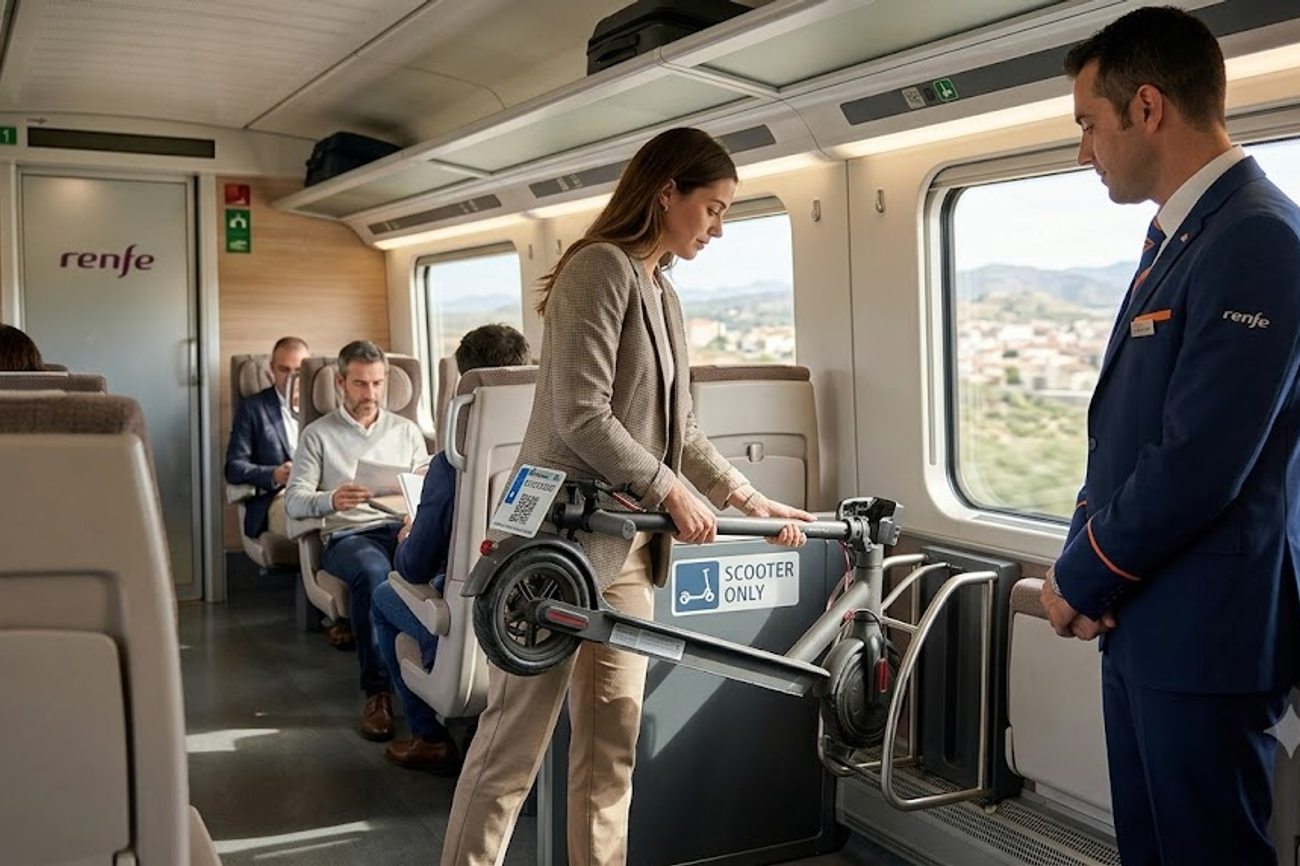
Image generated by AI
Effective September 7, 2026, Renfe has restored the ability for passengers to carry approved electric scooters on most train services, provided they meet rigorous new registration and insurance mandates.
The Core Development
Renfe has officially updated its carriage policy to allow electric scooters on Cercanías, Media Distancia, and Larga Distancia networks. This move aims to integrate rail travel with "last-mile" urban mobility, allowing commuters and tourists to bridge the gap between stations and final destinations without relying on private cars.
However, this is not a blanket return to previous rules. The reinstatement is tied to a new Spanish national regulatory framework. To board, scooters must now be legally registered and insured, shifting the responsibility of compliance directly onto the passenger.
Key Facts Breakdown
- Effective Date: Monday, 7 September 2026.
- Permitted Services: Cercanías, Media Distancia, and Larga Distancia.
- Excluded Services: Rodalies in Catalonia and Cercanías Euskadi (temporarily excluded).
- Mandatory Registration: All vehicles must be registered with the Directorate-General for Traffic (DGT).
- Identification: Scooters must display a visible identification plate or label.
- Insurance: Compulsory third-party liability insurance and a circulation certificate are required.
- Onboard Conduct: Vehicles must remain folded and switched off; charging via train power sockets is strictly prohibited.
Service Eligibility Matrix
| Renfe Service | Electric Scooters (From 7 Sept 2026) | Primary Travel Impact |
|---|---|---|
| Cercanías | Permitted (Subject to requirements) | Urban/Metropolitan connectivity |
| Media Distancia | Permitted (Subject to requirements) | Regional transit |
| Larga Distancia | Permitted (Subject to requirements) | Intercity travel |
| Rodalies Catalonia | Temporarily Not Permitted | Local rail exclusion |
| Cercanías Euskadi | Temporarily Not Permitted | Local rail exclusion |
Onboarding Compliance Checklist
| Step | Requirement | Action Required |
|---|---|---|
| 1 | Eligibility | Confirm route is not Rodalies (Catalonia) or Cercanías Euskadi |
| 2 | Certification | Ensure model is approved/certified |
| 3 | DGT Registration | Register vehicle with the official DGT register |
| 4 | ID Plate | Attach visible identification plate or label |
| 5 | Insurance | Maintain valid civil-liability insurance |
| 6 | Certification | Carry a valid circulation certificate |
| 7 | Stowage | Fold scooter and switch off completely before boarding |
| 8 | Placement | Store in luggage areas; do not block aisles or exits |
| 9 | Power | Do not connect battery to onboard power sockets |
Why This Matters
From a logistical perspective, this policy shift signals a transition from "tolerance" to "regulation." By requiring DGT registration and third-party insurance, Renfe is mitigating the liability risks associated with lithium-ion batteries and urban accidents.
For the traveler, the "last-mile" problem is significantly reduced, but the barrier to entry is now higher. Passengers can no longer bring generic, uncertified scooters on board. This effectively cleanses the rail ecosystem of substandard hardware that may pose fire risks, while rewarding users who invest in certified, legal mobility solutions.
Industry Outlook
We expect the temporary exclusions in Catalonia and the Basque Country to be resolved as local authorities align their regional bylaws with the national DGT framework. Furthermore, the strict ban on onboard charging suggests that Renfe is prioritizing fire safety over passenger convenience, a trend likely to be mirrored by other European rail operators facing similar battery-safety challenges.
Related Travel Guides
Disclaimer
This article is for informational and educational purposes only. It does not constitute legal, financial, or professional advice. While we strive to provide accurate and up-to-date information, travel policies, regulations, and conditions change rapidly. Always verify information with official sources before making travel decisions. Nomad Lawyer makes no representations about the accuracy, reliability, completeness, or suitability of the information provided. Readers should consult qualified professionals for advice specific to their circumstances. The views expressed in this article are those of the author and do not necessarily reflect the views of Nomad Lawyer.
Naina Thakur
Contributor & Travel Specialist
Travel enthusiast and legal writer covering visa regulations, responsible tourism, and cultural journeys across global destinations.
Learn more about our team →