
California High-Speed Rail Pivots to Private Funding as Track Installation Nears
California High-Speed Rail shifts toward private capital and P3 models as track laying for the 220 mph system prepares to begin in late 2026.

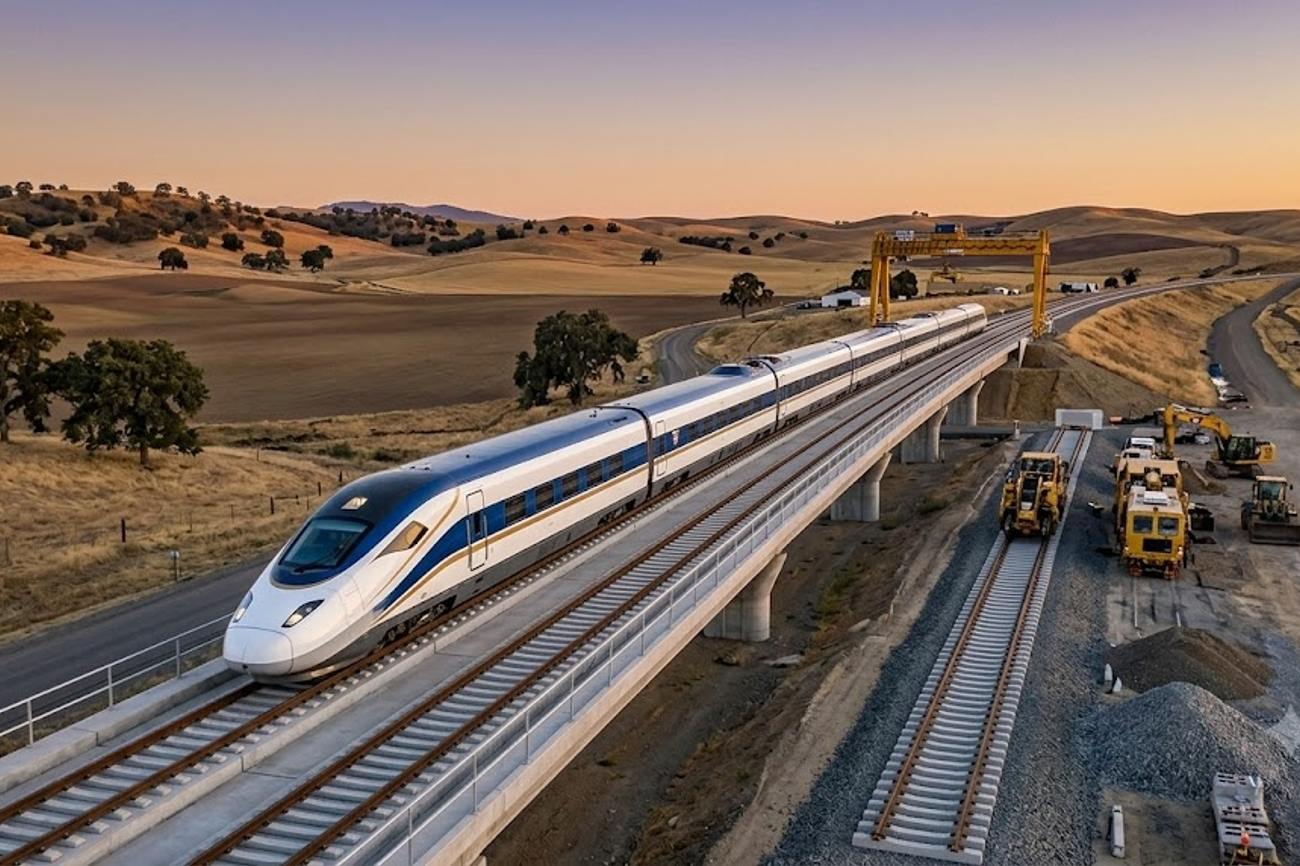
Image generated by AI
Shifting the Financial Blueprint
California is fundamentally altering how it finances the fastest rail line in the United States. Moving away from a total reliance on public sector grants, the state is now implementing a strategy centered on private capital and international infrastructure models to sustain operations through 2033.
According to an August 2026 report from CEO Ian Choudri, the project has evolved beyond a standard civil engineering venture. It is now a global test case for hybrid infrastructure financing, blending state guarantees with private investment to overcome the liquidity gaps common in mega-projects.
The Strategic Value of the Central Valley Corridor
Critics have frequently dismissed the Merced-Bakersfield segment as a "train to nowhere," but the Authority views this 119-mile active construction zone as a critical operational foundation.
The Central Valley serves two primary functions:
- Operational Proving Ground: The 220 mph rolling stock requires vast, uninterrupted stretches of high-precision track for safety certification—conditions impossible to find in the dense urban cores of San Francisco or Los Angeles.
- Economic Catalyst: The region faces extreme highway congestion on Highway 99 and Interstate 5. The rail line aims to alleviate these bottlenecks while addressing severe air quality issues.
Current progress indicates the project has reached critical mass. Of the 92 major structures required for the initial line, 65 are finished. Additionally, 89 miles of continuous guideway have been completed within the 119-mile construction zone.
Transitioning to Railway Systems
The project is moving from "earthworks"—the grading of land and pouring of concrete—to the installation of actual railway systems. This shift was solidified in June 2026 with the signing of the Track and Systems Construction Contract (TSCC).
The TSCC is managed by a joint venture consisting of Kiewit, Stacy Witbeck, and Herzog. Physical track installation is slated to begin by the end of 2026, focusing on four primary technical areas:
- Precision Trackway: Installing ballast and slab tracks engineered for 220 mph dynamic loads.
- Power Infrastructure: Deploying overhead contact systems (OCS) via high-tension electrical catenary wires.
- Digital Signaling: Implementing Positive Train Control (PTC), automated train protection (ATP), and advanced digital signaling.
- Support Facilities: Constructing the necessary sub-stations and maintenance hubs to service the fleet.
Leveraging Private Capital and Cap-and-Invest
To accelerate development, the Authority appointed Momentum Alliance Partners as its Co-Development Partner in mid-2026. The goal is to restructure the project's financial framework to attract global pension managers and infrastructure funds.
A cornerstone of this strategy is the "Cap-and-Invest" program. Established in 2025, this mechanism commits $1 billion annually to the project through 2045. While this ensures a $20 billion revenue stream over two decades, the Authority needs immediate upfront capital rather than annual payments.
By utilizing Public-Private Partnership (P3) models, the state intends to securitize these guaranteed annual payments to attract massive private-sector investment.
Overcoming Legislative Hurdles
The transition to private funding requires more than just investors; it requires new laws. CEO Ian Choudri has identified Senate Bill 198 as a primary legislative bottleneck.
Current statutes limit the state's ability to enter into Design-Build-Finance-Operate-Maintain (DBFOM) contracts. Amending SB 198 would allow the Authority to:
- Transfer Risk: Shift ridership and maintenance risks to private concessionaires.
- Accelerate Funding: Enable private consortiums to provide immediate upfront capital.
Project Progress Summary
| Metric | Status/Detail |
|---|---|
| Top Speed Goal | 220 mph |
| Active Construction Segment | 119 miles |
| Continuous Guideway Completed | 89 miles |
| Major Structures Completed | 65 of 92 |
| Track Installation Start Date | Late 2026 |
| Annual Cap-and-Invest Funding | $1 billion (through 2045) |
| Total Cap-and-Invest Stream | $20 billion |
| Key Contractors (TSCC) | Kiewit, Stacy Witbeck, Herzog |
Key Takeaways
- Funding Pivot: California is shifting toward a hybrid P3 model to attract private equity and global infrastructure funds.
- Technical Milestone: The project is moving from heavy civil engineering to systems installation (track, power, and signaling) by late 2026.
- Strategic Logic: The Central Valley is being built first to serve as a safety testing ground for 220 mph speeds before entering urban areas.
- Legislative Need: Amendments to Senate Bill 198 are required to allow for full private-sector risk-sharing and capital deployment.
FAQ
Why start in the Central Valley instead of the big cities? The Central Valley provides the long, straight stretches of land necessary to certify 220 mph speeds safely. It is impossible to perform these initial high-speed tests in the constrained environments of LA or San Francisco.
How does the Cap-and-Invest program work? It provides a guaranteed $1 billion per year until 2045. The state plans to use this guaranteed income to attract private investors who can provide the large sums of cash needed immediately.
Who is building the tracks? A consortium consisting of Kiewit, Stacy Witbeck, and Herzog is responsible for the Track and Systems Construction Contract (TSCC).
Related Travel Guides
Disclaimer
This article is for informational and educational purposes only. It does not constitute legal, financial, or professional advice. While we strive to provide accurate and up-to-date information, travel policies, regulations, and conditions change rapidly. Always verify information with official sources before making travel decisions. Nomad Lawyer makes no representations about the accuracy, reliability, completeness, or suitability of the information provided. Readers should consult qualified professionals for advice specific to their circumstances. The views expressed in this article are those of the author and do not necessarily reflect the views of Nomad Lawyer.
Raushan Kumar
Founder & Lead Developer
Full-stack developer with 11+ years of experience and a passionate traveller. Raushan built Nomad Lawyer from the ground up with a vision to create the best travel and law experience on the web.
Learn more about our team →