
France's Battery Train Retrofit: A New Era for Regional Rail
France saves billions by retrofitting diesel trains with batteries. Discover how the Occitanie and Sud regions are revolutionizing eco-friendly travel.

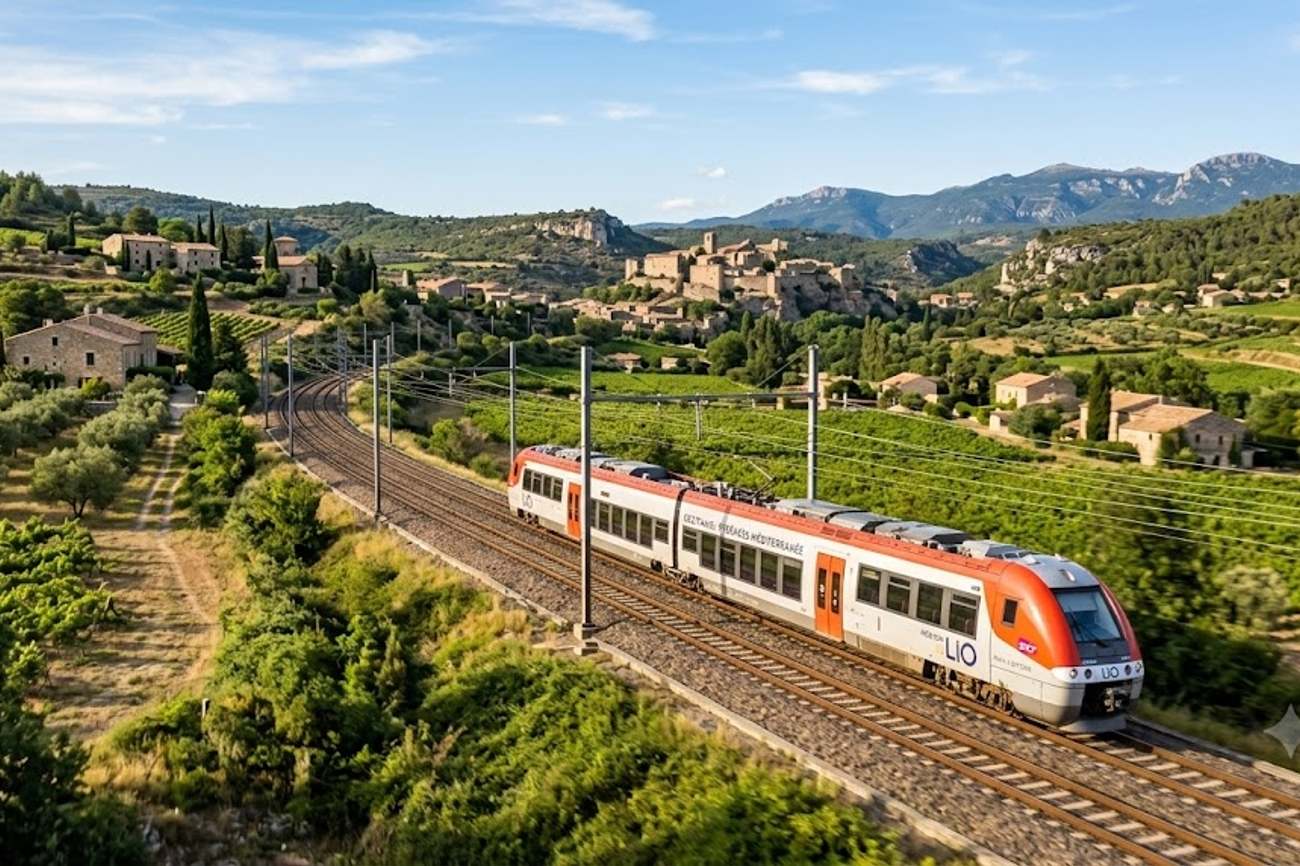
Image generated by AI
The future of European transit is no longer tied to the expensive installation of overhead wires. As of August 2026, the Occitanie and Sud regions have deployed the first electric battery-powered regional trains (TER), proving that 100% sustainability on rural routes is achievable without the astronomical costs of traditional infrastructure.
The Shift to Smart Retrofitting
While the global conversation often centers on purchasing brand-new fleets, France has pivoted toward an economic masterstroke: retrofitting. By swapping heavy diesel engines in existing dual-mode AGC railcars for high-density lithium-ion battery packs, the government has bypassed the financial impossibility of electrifying thousands of kilometers of secondary lines.
This move shatters the old binary choice between costly overhead catenary wires and polluting diesel engines. Occitanie now operates as a multi-tech sandbox, deploying three distinct systems based on terrain and distance:
- Battery-Electric Rail: Optimized for medium-distance secondary lines.
- Hydrogen-Powered Rail: Reserved for long-haul non-electrified routes, such as the Montréjeau–Luchon line.
- Hybrid Rail: A mix of electric, battery, and diesel for complex, multi-terrain transit.
Engineering the Seamless Journey
The Avignon–Carpentras route serves as the primary model for this technology. The system operates through a sophisticated cycle: it draws power from overhead lines in urban hubs like Avignon, charges its batteries while in motion, and then automatically switches to battery power at Sorgues station where the wires end.
These trains can travel over 80 kilometers in pure battery mode with zero carbon emissions. Furthermore, regenerative braking feeds kinetic energy back into the batteries during deceleration or descents, cutting overall energy consumption by up to 20%.
Regional Expansion and Economic Impact
The €41 million initiative is expanding beyond the south. Three additional regions are now integrating these retrofits:
- Auvergne-Rhône-Alpes: Tackling mixed mountainous topography.
- Hauts-de-France: Serving high-frequency urban-suburban commuter belts.
- Nouvelle-Aquitaine: Replacing aging diesel units on long rural corridors.
The impact extends beyond the environment. Regional transportation management organizations in Southern Europe report that the shift to silent, vibration-free travel has increased off-peak leisure travel by 12-18%. This surge is directly benefiting local economies in towns like Vauvert and Carpentras, as the commute becomes a productive, stress-free experience rather than a noisy chore.
Cultural & Environmental Value
For the visitor, the real impact is the "silent corridor." The removal of diesel noise pollution allows the natural soundscapes of the French countryside to return, transforming the train ride into a mindful experience. By choosing to retrofit rather than scrap existing AGC railcars, SNCF and Alstom are practicing a form of industrial sustainability—reducing waste by extending the life of existing assets. This approach aligns with the goals of regional conservation bodies to reduce the industrial footprint on rural landscapes.
Visitor Insider Tips
- Off-Peak Exploration: With the 12-18% increase in leisure travel, avoid midday weekends on the Avignon–Carpentras line; instead, travel early Tuesday or Wednesday to experience the silent glide of the battery trains in peace.
- Local Flavor: When exiting at Carpentras, skip the main tourist hubs and visit the local markets for seasonal truffles or Provençal honey to support the direct local economy.
- Etiquette: These new trains are significantly quieter than diesel models. To maintain the "silent travel" atmosphere, keep voice calls low and use headphones—a practice highly appreciated by French commuters.
- Eco-Route Planning: Use the SNCF official app to identify "Green" routes; the battery-powered segments are often highlighted as eco-friendly alternatives.
Tourism Outlook
The success of this rollout suggests that battery retrofitting will become the gold standard for secondary rail across Europe. If the 80-kilometer range and 20% energy savings hold steady across diverse climates, we will see a rapid decline in diesel rail globally. This transition will likely turn previously "isolated" rural villages into accessible, eco-friendly weekend destinations, further decentralizing tourism away from overcrowded cities.
Related Travel Guides
Disclaimer
This article is for informational and educational purposes only. It does not constitute legal, financial, or professional advice. While we strive to provide accurate and up-to-date information, travel policies, regulations, and conditions change rapidly. Always verify information with official sources before making travel decisions. Nomad Lawyer makes no representations about the accuracy, reliability, completeness, or suitability of the information provided. Readers should consult qualified professionals for advice specific to their circumstances. The views expressed in this article are those of the author and do not necessarily reflect the views of Nomad Lawyer.
Raushan Kumar
Founder & Lead Developer
Full-stack developer with 11+ years of experience and a passionate traveller. Raushan built Nomad Lawyer from the ground up with a vision to create the best travel and law experience on the web.
Learn more about our team →