
Global Passport Rankings 2026: Singapore, Japan, and the UAE Redefine International Travel Freedom
The 2026 Henley Passport Index reveals an extraordinary geopolitical shift as Singapore holds the world’s most powerful passport with 192 visa-free destinations, the UAE climbs to rank five, and the US slips to tenth.

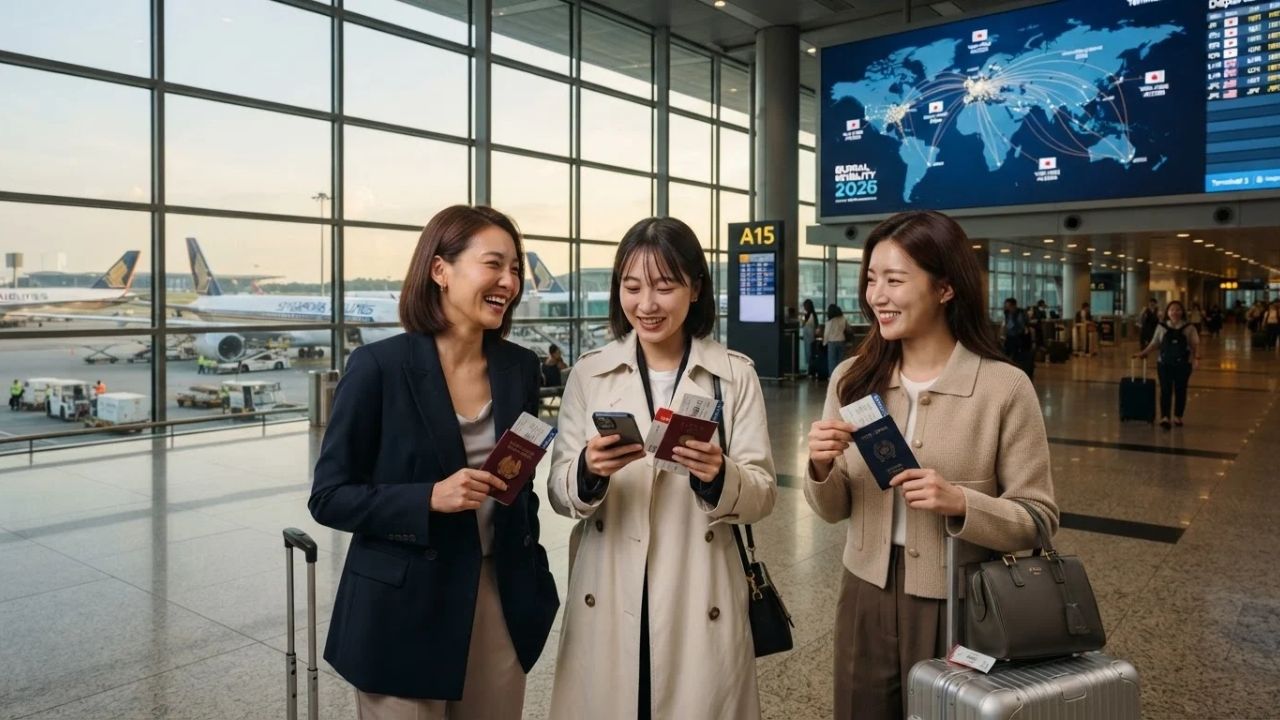
Image generated by AI
While the United States once defined the undisputed peak of cross-border travel privilege, the 2026 Henley Passport Index reveals a dramatic geopolitical inversion: the United Arab Emirates has surged by adding 149 visa-free destinations since 2006 to tie for fifth place globally with 184 accessible destinations, while the United States has slipped to tenth place with 179 destinations and reciprocal visa-free entry for only 46 nationalities. At the very pinnacle of global mobility, Singapore has retained the world's most powerful passport for the third consecutive year, granting its citizens seamless access to 192 destinations out of 227 evaluated. Drawing on comprehensive monthly assessments and verified data from the International Air Transport Association, this shift signals a profound transformation in how international transit hubs operate, how airlines deploy widebody fleets, and how modern cultural explorers navigate an increasingly fragmented world.
The Shifting Geography of Travel Freedom: 2026 Index Breakdown
The evaluation of 199 passports against 227 destinations by the Henley Passport Index relies on a strict binary metric that tallies visa-free entry, visas-on-arrival, and electronic travel authorities (ETAs). Rather than static annual tables, monthly updates capture real-time diplomatic alignments, border agreements, and reciprocal security pacts. Over the past two decades, historical patterns have yielded to a new distribution of geopolitical trust.
Singapore’s rise from an eleventh-place ranking in 2010 to world leadership in 2026 reflects sustained bilateral diplomacy, foreign policy neutrality, and economic stability. Sharing the second tier directly behind Singapore are Japan and South Korea, tied with visa-free or equivalent access to 188 destinations each. Both Asian democracies combine deep diplomatic missions with robust bilateral trade corridors across the Asia-Pacific and Western worlds.
European nations, anchored by the Schengen area's unified external borders, maintain an imposing presence across the top tiers:
- Rank 1: Singapore (192 destinations)
- Rank 2 (Tie): Japan and South Korea (188 destinations each)
- Rank 3 (Tie): Denmark, Luxembourg, Spain, Sweden, and Switzerland (186 destinations each)
- Rank 4 (Tie): Austria, Belgium, Finland, France, and Germany (185 destinations each)
- Rank 5 (Tie): Hungary, Portugal, Slovakia, Slovenia, and the United Arab Emirates (184 destinations each)
The United Arab Emirates’ climb to 184 destinations represents one of the fastest diplomatic expansions in modern history, transitioning from a regional commercial crossroads into an elite mobility powerhouse. In contrast, the United States has steadily descended from its historic high-water marks in 2006 and 2014 to tenth place with 179 destinations. Stricter domestic security vetting, suspended consular processing in multiple jurisdictions, and reciprocal resistance from emerging nations have curbed American travel freedom. At the extreme opposite end of the spectrum, acute conflict and diplomatic isolation leave Afghanistan at the bottom with access to only 24 destinations.
What Makes Global Hub Mobility Different: From Consular Queues to Automated Corridors
The gap between high-mobility and restricted passports creates vastly different realities on the ground. For travelers originating from top-tier jurisdictions like Singapore, Tokyo, or Seoul, crossing an international border has evolved into an automated, contactless interaction. Stepping off an overnight flight into Changi, Incheon, or Haneda means gliding through biometric facial-recognition gates in less than two minutes without advance paperwork.
Conversely, passport holders from lower-tier nations face extensive consular queues, mandatory in-person interviews, non-refundable administrative fees, and weeks of uncertainty. This administrative friction disrupts spontaneous travel and fragments international business. When emergencies demand rapid multi-country deployments, multinational enterprises increasingly avoid staffing friction by deploying personnel with dual-citizenship portfolios or permanent residency status acquired through investment migration programs.
Aviation networks have actively reorganized around these demographic realities. With premier mobility hubs generating exceptional volumes of premium leisure and corporate traffic, major long-haul carriers are reallocating high-capacity aircraft to key corridors. Flag carriers such as Qatar Airways have reinstated flagship Airbus A380 double-decker aircraft on strategic trunk routes, including Singapore to Doha, serving an affluent customer base that travels across continents on short notice. Official regional tourism bodies like the Singapore Tourism Board and the Japan National Tourism Organization have oriented their campaigns to cater to this mobile international elite, curating specialized cultural encounters, private tea ceremonies, and architectural residencies.
Visitor Insider Tips: Navigating High-Yield International Transit Corridors
Whether holding an elite passport or navigating strict entry requirements, smart travel across major aviation gateways requires strategic preparation:
- Electronic Travel Authorization Readiness: Never assume visa-free means paperwork-free. Destinations across North America, Europe, East Asia, and the UK increasingly require approved electronic travel authorizations (such as US ESTA, European ETIAS, or South Korea’s K-ETA) submitted at least 72 hours prior to departure. Airlines will deny boarding at check-in if your electronic clearance is unlinked to your current passport number.
- Changi and Incheon Layover Secrets: If transiting through Singapore Changi or Seoul Incheon for more than 5.5 hours, bypass terminal shopping malls and register at the official transit desk for complimentary city heritage tours. In Singapore, these guided excursions take transit passengers into the historic shophouses of Kampong Glam and Chinatown; in Seoul, transit buses journey directly to Joseon-dynasty palace grounds, returning you through priority security lines.
- Dual Passport Alignment: Dual nationals must maintain strict discipline regarding documentation. Always enter and depart a country using the exact same passport. Presenting one passport at airline check-in and another at immigration border controls can cause automated security flags, carrier-denied boarding, and secondary questioning.
- Avoid Consular Processing Pitfalls: When applying for visas to jurisdictions requiring appointments, monitor embassy slots between 00:01 and 01:00 local time, when cancelled interview appointments are routinely cycled back into booking systems. Maintain certified digital copies of tax returns, travel health insurance, and multi-entry flight reservations stored securely in an encrypted cloud vault.
- Border Etiquette and Tech Decorum: Put away mobile phones and remove smart glasses, hats, and headphones well before reaching immigration counters. Greet border officials politely in the local tongue, answer only the precise questions asked, and keep physical documentation for onward travel and lodging immediately accessible in your carry-on bag.
Cultural and Environmental Context: Mobility Equity, Overtourism, and Visa Diplomacy
The growing polarization of passport power shines a sharp light on global mobility inequality. While citizens of Singapore, Western Europe, and Japan enjoy near-effortless movement, billions of travelers across the Global South encounter mounting digital and physical barriers. Visa fees often exceed several weeks of local average wages, creating an exclusionary system where cultural exchange flows predominantly in one direction.
This concentration of travel freedom also impacts heritage preservation. High-tier passport holders tend to converge heavily on celebrated cultural capitals, placing immense strain on historic urban centers and fragile environments. Ancient neighborhoods like Kyoto’s historic Gion district, Venice’s lagoon canals, and Amsterdam’s Jordaan quarter have implemented tourist caps, local zoning bans on vacation rentals, and day-tripper fees to protect civic life from being overwhelmed by unmanaged visitor influxes.
Simultaneously, visa diplomacy is increasingly wielded as an economic and environmental lever. Emerging destinations are selectively lifting visa requirements for travelers who contribute to ecological conservation, cultural preservation, and decentralized regional economies. Initiatives documented by the UNESCO World Heritage Centre emphasize that sustainable tourism depends on dispersing visitors away from overcrowded monuments into rural heritage communities, where tourism spending directly supports traditional craftsmanship, vernacular architecture restoration, and local environmental stewardship.
FAQ: Global Passport Mobility 2026
What makes Singapore's passport the most powerful in 2026?
Singapore holds first place with visa-free or on-arrival access to 192 destinations, achieved through decades of diplomatic neutrality, strong bilateral trade pacts, and international trust.
Why has the United States dropped to tenth place in global rankings?
The US has fallen to 179 accessible destinations due to strict domestic vetting policies, reciprocal visa requirements, and permitting visa-free entry to citizens of only 46 nationalities.
How significantly did the United Arab Emirates climb in the rankings?
The UAE achieved a historic surge, adding 149 visa-free destinations since 2006 to reach fifth place globally with access to 184 destinations in 2026.
Does a visa-free passport guarantee entry at an international border?
No. Border immigration officials hold ultimate discretion to assess financial self-sufficiency, purpose of stay, valid onward travel, and required electronic travel authorizations before granting entry.
Real travel freedom is measured not merely by the stamps inside a passport, but by the empathy and cultural humility one carries across every border.
Related Travel Guides
Disclaimer
This article is for informational and educational purposes only. It does not constitute legal, financial, or professional advice. While we strive to provide accurate and up-to-date information, travel policies, regulations, and conditions change rapidly. Always verify information with official sources before making travel decisions. Nomad Lawyer makes no representations about the accuracy, reliability, completeness, or suitability of the information provided. Readers should consult qualified professionals for advice specific to their circumstances. The views expressed in this article are those of the author and do not necessarily reflect the views of Nomad Lawyer.
Raushan Kumar
Founder & Lead Developer
Full-stack developer with 11+ years of experience and a passionate traveller. Raushan built Nomad Lawyer from the ground up with a vision to create the best travel and law experience on the web.
Learn more about our team →