
Abu Dhabi Unveils Digital Islands and Marine Guide for Over 200 Coastal Destinations Under Tourism Strategy 2030
Abu Dhabi launches its comprehensive Islands and Water Sports Guide, categorizing over 200 islands and marine areas across six access tiers to advance its Tourism Strategy 2030.

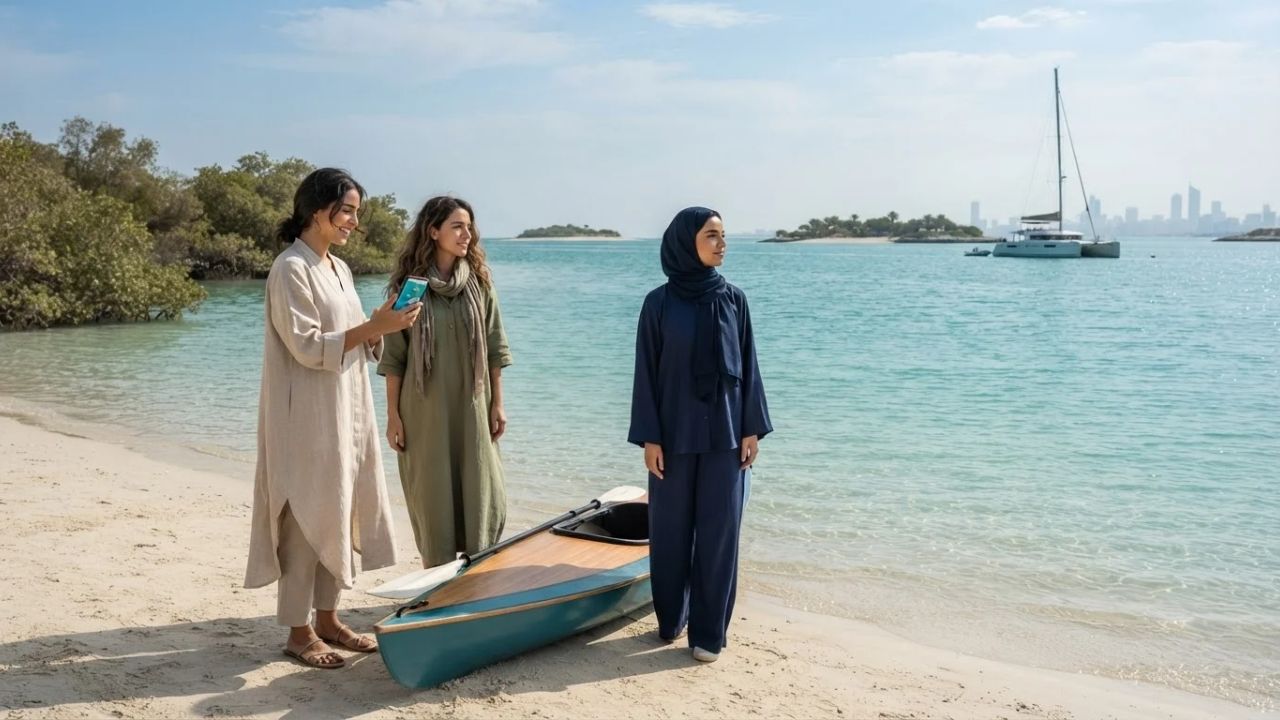
Image generated by AI
While most international visitors picture Abu Dhabi through the lens of soaring glass towers and desert dunes, the emirate quietly encompasses more than 200 natural islands scattered across turquoise Arabian Gulf shallows. Until now, navigating these vast archipelagos was a privilege largely reserved for private boat captains and local pearl diving families who knew the shifting sandbanks by memory. That barrier has officially dissolved with the launch of the Abu Dhabi Islands and Water Sports Guide, an interactive digital platform that catalogues every accessible sand spit, coral barrier, and mangrove channel. This landmark initiative forms a core pillar of the emirate's wider Tourism Strategy 2030, a roadmap engineered to welcome 39.3 million annual visitors, generate 178,000 new sector jobs, and elevate tourism's economic contribution to AED 90 billion.
The Six-Tier Marine Blueprint: Regulating Coastal Exploration
What makes this digital system distinct is its clear-eyed balance between visitor access and fragile habitat preservation. Rather than treating its aquatic territories as an unregulated playground, Abu Dhabi has organized its islands and marine territories into six precise operational categories: highly recommended locations, accessible islands, limited-access areas, marine protected zones, privately owned islands, and strictly prohibited sanctuaries.
This classification provides independent sailors, sea kayakers, and charter guests with exact clarity on where they can drop anchor freely and where environmental permits or licensed guides are legally required. Developed through coordinated cooperation among municipal maritime authorities, transport departments, environmental agencies, and economic boards, the portal connects travelers directly with certified, insured marine operators. By establishing formal access parameters, the platform eliminates the confusion that once surrounded offshore navigation, allowing international adventurers to chart multi-day itineraries across channels once considered off-limits.
What Makes Abu Dhabi's Archipelago Different: Mangrove Canals and Dugong Sanctuaries
Unlike the deep ocean coastlines found elsewhere in the Arabian Sea, the marine world of Abu Dhabi is an intricate coastal maze shaped by shallow lagoons, hypersaline sabkhas, and ancient coral cays.
At the edge of the downtown skyline lies the Jubail Mangrove Park and the Eastern Mangroves lagoon, accessible through Visit Abu Dhabi authorized expeditions. These dense forests of grey mangroves (Avicennia marina) serve as the ecological lungs of the city, trapping carbon at rates significantly higher than terrestrial rainforests. Paddling through these serene brackish channels at dawn reveals a calm aquatic realm where Arabian gazelles occasionally browse the shoreline and pink flamingos stalk the shallows.
Venturing farther offshore into the waters overseen by the Environment Agency – Abu Dhabi, the marine environment becomes even more remarkable. The offshore shoals shelter the world's second-largest population of dugongs, gentle marine herbivores that feed on extensive seagrass beds alongside breeding colonies of critically endangered hawksbill sea turtles. Farther west toward the Al Dhafra region, historic anchorages like Delma Island preserve Neolithic shell middens and ancient water cisterns dating back over 7,000 years, offering living testimony to an unbroken seafaring culture that flourished millennia before oil was discovered. Through maritime coordination with Abu Dhabi Maritime, travelers can now navigate these historic shipping straits with real-time digital charts that highlight safe depths and sensitive reef structures.
Visitor Insider Tips: Navigating the Islands and Waters
To experience the best of Abu Dhabi's marine environment without falling into generic tourist itineraries, follow these local insights:
- Optimal Seasonal and Daily Windows: Marine exploration is best planned between November and early April, when sea temperatures hover around a comfortable 22°C to 26°C and offshore winds remain steady. During the warmer months, schedule all kayaking or paddleboarding between 05:30 and 08:00 to catch calm tides and avoid the intense midday heat.
- Navigational Etiquette and Marine Rules: Respect all buoy-marked speed restrictions near mangrove forests and coral nursery zones. A strict five-knot no-wake rule applies around shallow sandbars where dugongs feed. When chartering private vessels or jet skis, verify that your operator holds an official commercial maritime license displayed in the digital directory.
- Local Coastal Flavors to Savor: After a morning on the water, head to the historic Al Bateen fishing harbor for a feast of machboos samak, spiced basmati rice simmered with dried black limes, cardamom, and freshly caught local hammour or kingfish (chanad). Accompany your meal with a cup of light, cardamom-infused gahwa (Arabic coffee) and sweet rutab dates.
- Where to Base Yourself for Island Adventures: For quiet coastal immersion, stay on Saadiyat Island, which balances eco-luxury resorts with strict beachfront building limits designed to protect nesting turtles. If you prioritize sailing and marina life, base yourself near Yas Marina or the historic quays of Al Bateen, where charter yachts and water taxis depart daily.
- Transport and Booking Hacks: Avoid booking boat excursions through informal beachside touts. Use the official digital platform to cross-check operator credentials and access real-time coastal weather advisories. For quick harbor transits, make use of the municipal water taxi network connecting Al Maya Island, Yas Bay, and the Corniche quayside.
Cultural and Environmental Context: Seafaring Heritage and Modern Conservation
The relationship between Abu Dhabi and the Arabian Gulf is rooted in centuries of pearl harvesting and maritime trade. Before the mid-twentieth century, life in the emirate rotated around the seasonal ghous—the grueling summer pearl diving expedition where wooden dhows spent months at sea. Skilled divers descended up to thirty meters into the warm Gulf waters equipped with nothing more than a nose clip of turtle shell and a woven stone-weighted basket.
Today, that maritime memory is preserved at traditional dhow building yards in Bateen and through coastal heritage festivals. However, rapid urban growth along the coast has created urgent conservation challenges. Warming sea temperatures, dredging, and shoreline development have placed pressure on natural coral banks and seagrass meadows.
The introduction of the digital marine directory represents an essential conservation mechanism. By distributing visitor footfall across dozens of approved, resilient coastal sectors, the emirate prevents environmental degradation at high-profile beaches while educating international travelers on delicate marine ecosystems. Sustainable tourism revenue directly funds active habitat restoration, including the planting of millions of mangrove seedlings and the creation of artificial reef sanctuaries throughout the archipelago.
FAQ: Visiting Abu Dhabi's Islands and Marine Reserves 2026
What is the best time of year for water sports in Abu Dhabi?
The ideal period runs from November through April, when daytime temperatures average 24°C to 28°C and sea conditions remain calm for kayaking, sailing, and snorkeling across the islands.
Do I need special permits to visit Abu Dhabi's offshore islands?
Public islands like Saadiyat, Yas, and Jubail require no special permits. However, marine protected areas and restricted conservation zones require visitors to book through approved, licensed operators registered on the official digital platform.
How can I book licensed boat charters and mangrove kayaking tours?
Use the official Abu Dhabi Islands and Water Sports Guide digital platform to verify licensed marine operators, compare itineraries, and book certified guides directly.
Is it safe to kayak and sail in the Arabian Gulf around Abu Dhabi?
Yes. The inner channels and mangrove lagoons are sheltered from major ocean swells. Always check local tidal forecasts, wear life jackets, and follow no-wake and environmental guidelines provided by local maritime authorities.
Out on the quiet sandbars where the desert yields to the warm turquoise tides, Abu Dhabi's truest spirit is written in the gentle rhythm of the sea.
Related Travel Guides
Disclaimer
This article is for informational and educational purposes only. It does not constitute legal, financial, or professional advice. While we strive to provide accurate and up-to-date information, travel policies, regulations, and conditions change rapidly. Always verify information with official sources before making travel decisions. Nomad Lawyer makes no representations about the accuracy, reliability, completeness, or suitability of the information provided. Readers should consult qualified professionals for advice specific to their circumstances. The views expressed in this article are those of the author and do not necessarily reflect the views of Nomad Lawyer.
Raushan Kumar
Founder & Lead Developer
Full-stack developer with 11+ years of experience and a passionate traveller. Raushan built Nomad Lawyer from the ground up with a vision to create the best travel and law experience on the web.
Learn more about our team →