
UAE Leisure Tourism Rebounds as Saudi Arabia, India, and Domestic Staycations Drive Experience Travel
Following a sharp hospitality downturn, the UAE leisure market stages a powerful recovery powered by Saudi short breaks, Indian demand, domestic staycations, and a regional pivot toward heritage and bleisure.

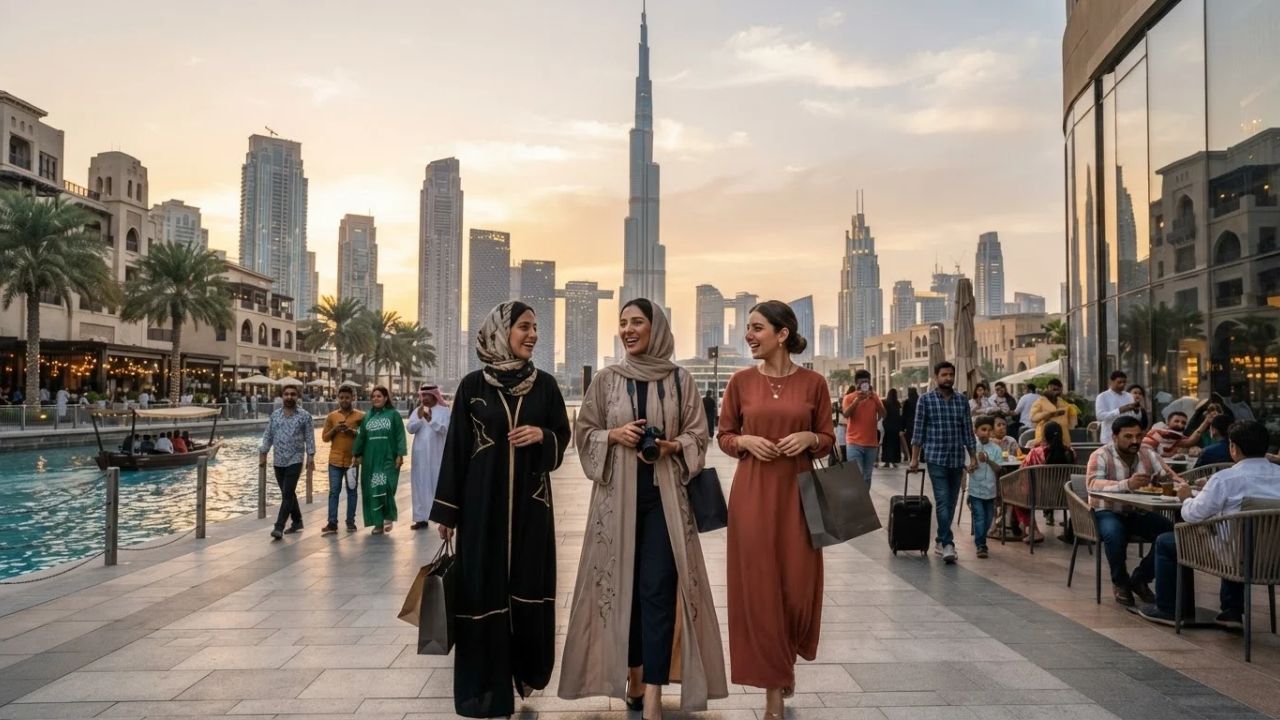
Image generated by AI
While international travel brochures long portrayed the United Arab Emirates as a playground exclusively dependent on European holidaymakers, it was domestic resident staycations and regional travelers from Saudi Arabia that powered the nation's leisure rebound after a sharp hospitality downturn. Combined with relentless visitor flows from India and broader Asian origin markets, this regional travel bloc pulled Dubai hotel occupancy dramatically upward from its lowest points. Rather than returning to passive beach holidays, the Emirates has responded by fundamentally reorganizing its tourism identity around cultural exploration, wellness retreats, mountain excursions, and multi-emirate journeys that connect Dubai's cosmopolitan energy with the heritage enclaves of Sharjah and Abu Dhabi.
The Regional Axis: How Saudi Arabia and India Power the Emirates Rebound
The recovery of the UAE hospitality sector demonstrates how rapidly source market dynamics can reshape an international transit hub. Following an acute slowdown earlier in the year that severely tested hotels, aviation networks, and tour operators, hotel occupancy has climbed steadily back to health. What distinguishes this rebound is its geographic composition. Long-haul Western European markets have moved along diverging trajectories: while early leisure demand has begun returning from Germany and Russia, traditional powerhouse markets such as the United Kingdom and France have experienced a noticeably slower recovery path.
In their absence, regional proximity and cultural alignment stepped into the breach. Domestic UAE residents, incentivized by imaginative staycation packages and boutique resort openings, provided essential baseline occupancy during the most uncertain phases. Simultaneously, Saudi Arabia solidified its standing as the preeminent regional force in Gulf leisure. Fueled by dense flight schedules, brief flight times, and shared familial traditions, Saudi travelers flocked to Dubai and Abu Dhabi for long weekends, shopping festivals, and seasonal entertainment breaks.
India has proven equally indispensable, providing consistent international arrival numbers across family reunions, luxury retail getaways, and independent explorations. Backed by expanding airline capacity, Indian travelers increasingly look beyond standard package itineraries, seeking out immersive dining, interactive arts programming, and heritage excursions. Together with broader South Asian flows, the CIS countries, and the MENA region, these source markets have created a resilient, diversified visitor profile that insulates the Emirates from distant economic shocks. As highlighted by Visit Dubai, destination authorities have responded by pivoting marketing resources toward experiential depth rather than mere footfall volume.
What Makes the Emirates Experience Different: Beyond the Skyscraper Illusion
First-time visitors frequently imagine the UAE as an unbroken corridor of glass skyscrapers and artificial islands, yet the true character of the country emerges in the stark contrasts between its seven distinct emirates. Within a single ninety-minute drive, a traveler can transition from the ultra-modern corporate boardrooms of Downtown Dubai to the tranquil oasis sanctuaries of Al Ain in Abu Dhabi. Recognised internationally on the UNESCO World Heritage Centre register, the cultural sites of Al Ain preserve date palm plantations fed by Bronze Age falaj irrigation channels that have nourished desert communities for over four thousand years.
To the north, the emirate of Sharjah provides an intellectual and artistic sanctuary that contrasts sharply with neighboring commercial centers. Sharjah has rigorously protected its architectural roots, transforming the coral-stone merchant residences of the Heart of Sharjah into contemplative calligraphy museums, contemporary art foundations, and quiet internal courtyards scented with burning frankincense. In the eastern regions, the jagged peaks of the Hajar mountains drop steeply into the Gulf of Oman, offering terraced farm trails and cool mountain wadis that feel centuries removed from coastal consumerism.
This multifaceted geography has accelerated the rise of bleisure travel. Business professionals arriving for corporate meetings, international conferences, and MICE networking events at the Dubai World Trade Centre or Abu Dhabi National Exhibition Centre are routinely extending their stays by three to four days. Rather than confining themselves to conference hotel lounges, these travelers rent vehicles to explore Khor Fakkan’s coastal ridges, visit the restored hilltop fortresses of Ras Al Khaimah, or book desert conservation safaris where indigenous Arabian oryx roam free across protected dunes.
Visitor Insider Tips: Navigating the Seven Emirates Like a Resident
To experience the authentic cadence of the Emirates while bypassing the tourist masses, travelers should structure their itineraries around local habits and subtle regional customs:
- Timing and Crowd Avoidance: Avoid visiting major cultural institutions and waterfront promenades during Friday and Saturday evenings, when local families and GCC weekend visitors gather in large numbers. Schedule visits to the Louvre Abu Dhabi, Sharjah Heritage Museum, or Dubai’s Al Fahidi Historical Neighbourhood between 08:30 and 11:00 on Tuesday through Thursday. You will encounter empty galleries, tranquil courtyards, and soft morning light ideal for architectural photography.
- Transit Hacks Across Borders: Commuting by car between Dubai and Sharjah along the E11 highway during weekday rush hours (07:00 to 09:30 and 17:00 to 20:00) involves heavy traffic delays. Instead, take advantage of the inter-emirate bus network managed by the Dubai Roads and Transport Authority departing from Al Ghubaiba or Union Metro stations, or ride the Dubai Ferry from Al Ghubaiba to Sharjah Aquarium for an airy coastal crossing that bypasses highway gridlock entirely. Within Dubai, purchasing a silver Nol card unlocks seamless, budget-friendly transit across the automated Metro, public buses, and the Dubai Tram.
- Neighborhood Bases for Character: Skip generic chain hotels along multi-lane highways. In Dubai, base yourself near the historic waters of Dubai Creek in Al Seef or Deira, where century-old dhows still load cargo bound for East Africa and Iran. In Sharjah, book accommodation within walking distance of the Arts and Heritage areas to enjoy pedestrianized plazas and authentic tea stalls. In Abu Dhabi, consider staying near the Corniche or Saadiyat Island to balance cultural access with pristine maritime reserves.
- Local Etiquette and Cultural Respect: While the UAE is globally minded and accommodating, respecting cultural norms remains paramount. Dress modestly in government buildings, public transit, and traditional souks by keeping shoulders and knees covered. Always ask permission before photographing individuals, especially local women and families. When offered Arabic coffee (gahwa) infused with cardamom and saffron in a majlis or heritage center, accept the small handleless cup with your right hand and gently shake it from side to side when you have had enough.
- Regional Specialties Worth Hunting: Move beyond international hotel menus to sample true Khaleeji cuisine. Visit local neighborhood kitchens to order machboos, a slow-cooked dish of spiced basmati rice, tender lamb or kingfish, and sun-dried black limes (loomi). For breakfast, seek out balaleet, delicate sweet vermicelli scented with cardamom and saffron topped with a savory egg omelet, paired with warm khubz regag, crisp wafer-thin bread griddled fresh and smeared with cheese and date syrup.
Cultural and Environmental Context: Community Roots, Oasis Heritage, and Desert Preservation
The rapid evolution toward experience-led travel has brought welcome scrutiny to the relationship between visitor growth, regional communities, and fragile desert environments. For decades, mass tourism concentrated intensely on high-density coastal strips, creating an economic bubble that left inland heritage sites largely unvisited. The recent shift toward domestic exploration and authentic regional leisure has begun redistributing visitor spending directly into rural farming villages, artisanal pottery workshops, and desert conservation reserves.
In Sharjah, heritage zoning laws have prevented the demolition of historic quarters, ensuring that the legacy of pearl-diving ancestors and maritime trading families remains integrated into daily urban life. Rather than building over historical footprints, traditional barjeel wind towers have been restored to natural cooling functions, demonstrating how ancient passive ventilation architecture can combat intense summer heat without excessive carbon emissions.
Simultaneously, the environmental pressures of operating a world-class tourism destination in an arid desert climate have prompted critical sustainability initiatives. Groundwater depletion in traditional agricultural zones like Dhaid and Liwa has forced a transition toward solar-powered drip irrigation and treated water recycling. Along the coastal margins, Abu Dhabi and Umm Al Quwain have placed extensive mangrove forests under strict ecological protection, recognizing that these marine ecosystems protect shorelines from erosion, provide nurseries for marine life, and sequester carbon at rates significantly higher than terrestrial forests. By supporting eco-tours that respect these delicate marine channels, visitors directly fund long-term conservation projects that protect the Emirates for generations to come.
FAQ: Visiting the UAE in 2026
What is the best time of year to visit the UAE for outdoor exploration?
November through March offers pleasant daytime temperatures ranging from 24°C to 28°C. This window is ideal for walking historical quarters, desert camping, and exploring mountain wadis before intense summer heat sets in.
Do international travelers need separate visas when traveling between different emirates?
No. A tourist visa issued for any emirate allows unrestricted domestic movement across all seven emirates, including Dubai, Abu Dhabi, Sharjah, Ajman, Umm Al Quwain, Ras Al Khaimah, and Fujairah, without internal checkpoints.
How can visitors travel smoothly between Dubai, Abu Dhabi, and Sharjah?
Air-conditioned public express buses link central stations like Dubai’s Al Ghubaiba with central Abu Dhabi and Sharjah. Alternatively, metered taxis, ride-hailing apps, or rental vehicles provide flexible transit across well-maintained multi-lane highways.
Is the UAE safe for solo travelers and independent women?
The UAE consistently ranks among the world's safest travel destinations, with low crime rates, well-lit public transit, dedicated women-only metro carriages, and strict public safety laws across all seven emirates.
By stepping beyond the glass towers into the oases, souks, and cultural quarters of the Emirates, travelers discover an ancient crossroad where hospitality is not an industry, but a sacred heritage.
Related Travel Guides
Disclaimer
This article is for informational and educational purposes only. It does not constitute legal, financial, or professional advice. While we strive to provide accurate and up-to-date information, travel policies, regulations, and conditions change rapidly. Always verify information with official sources before making travel decisions. Nomad Lawyer makes no representations about the accuracy, reliability, completeness, or suitability of the information provided. Readers should consult qualified professionals for advice specific to their circumstances. The views expressed in this article are those of the author and do not necessarily reflect the views of Nomad Lawyer.
Raushan Kumar
Founder & Lead Developer
Full-stack developer with 11+ years of experience and a passionate traveller. Raushan built Nomad Lawyer from the ground up with a vision to create the best travel and law experience on the web.
Learn more about our team →