
Frecciarossa High-Speed Rail Tests New Direct Links Between Italy and Munich for 2027
Frecciarossa begins technical trials in Germany and Austria for direct high-speed rail links from Rome and Milan to Munich, planned for Summer 2027.

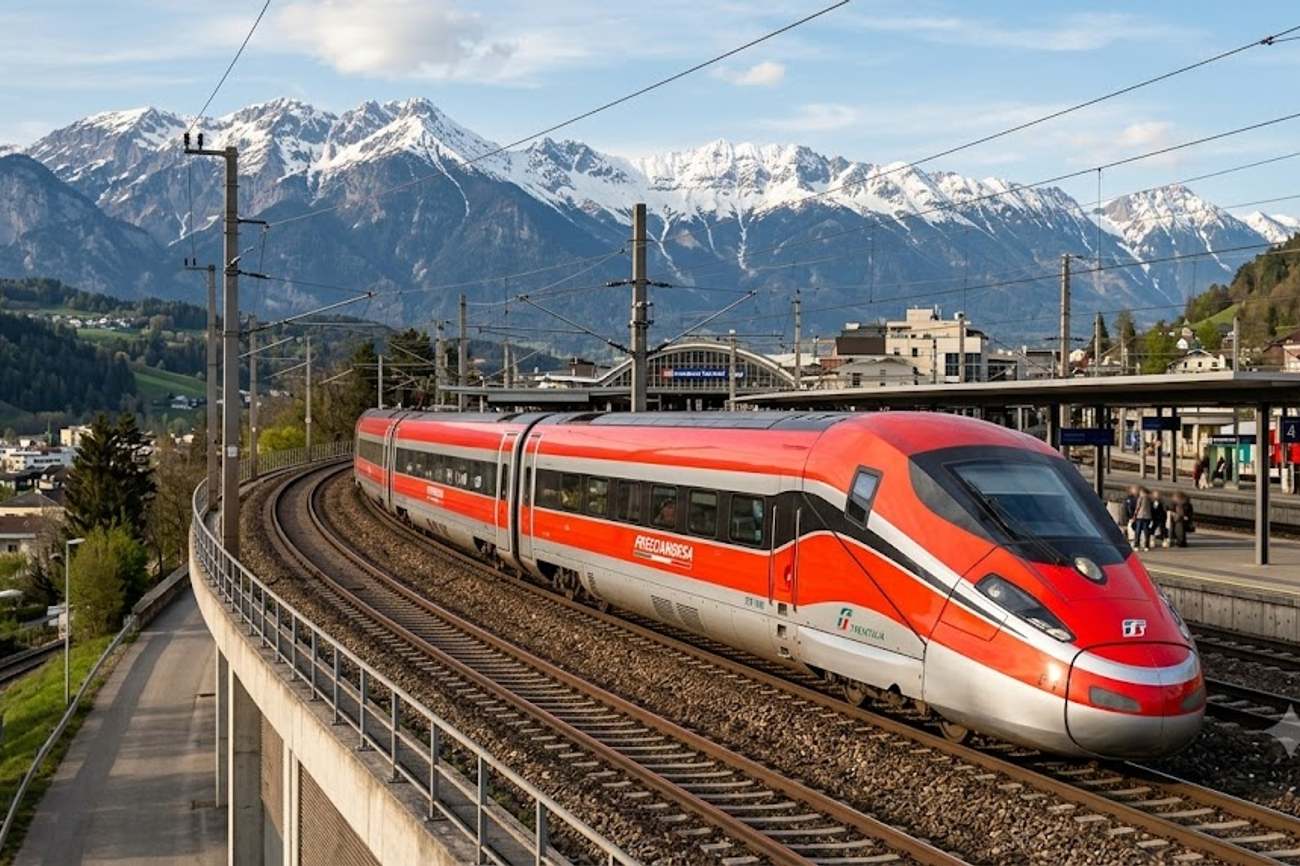
Image generated by AI
Technical Trials Pave Way for Cross-Border Expansion
Frecciarossa high-speed trains have entered a rigorous testing phase across Germany and Austria. These trials are a mandatory part of the technical certification process, ensuring the Italian fleet can operate safely across diverse national railway networks before carrying passengers.
The certification process is complex, as trains must be adapted to handle varying electrical power systems, differing signaling requirements, and specific national safety regulations. To meet these standards, several trains are being outfitted with national train-protection systems and are undergoing speed tests reaching 300 kilometres per hour.
Current testing zones include:
- Germany: Network segments connecting Berlin, Munich, and Kufstein.
- Austria: Routes spanning Kufstein to the Brenner pass, as well as the Salzburg and Vienna corridors.
New Transit Corridors: Rome and Milan to Munich
Once approved, the service will offer a seamless alternative to short-haul flights and fragmented rail journeys between Italy and southern Germany. The routes are designed not just as city-to-city links, but as regional connectors serving several Alpine and cultural hubs.
The Milan–Munich route is positioned as a fast link for those combining Northern Italy with Bavaria. Meanwhile, the Rome service provides a comprehensive overland journey from the Italian capital, calling at major tourist centers including Florence and Bologna.
Planned Route Specifications
The initial commercial rollout intends to launch four connections across these two primary corridors.
| Planned Route | Approx. Journey Time | Key Intermediate Stops | Expected Launch |
|---|---|---|---|
| Milan–Munich | 6.5 hours | Brescia, Verona, Rovereto, Trento, Bolzano, Innsbruck | Summer 2027 |
| Rome–Munich | 8.5 hours | Florence, Bologna, Verona, Rovereto, Trento, Bolzano, Innsbruck | Summer 2027 |
Note: Journey times and stops are planned specifications and remain subject to final regulatory approval.
Infrastructure Gains and Future Network Growth
The efficiency of these routes is expected to increase with the completion of the Brenner Base Tunnel. This massive infrastructure project beneath the Alps is projected to shave approximately one hour off the total travel time between Italy and Germany.
This Munich expansion is the first phase of a broader European strategy. The long-term vision includes:
- Network Expansion: Extending services to include Naples and Berlin.
- Capacity Growth: A target of ten total connections across the wider network by December 2028.
- Future Destinations: Exploring potential demand for routes reaching Frankfurt and Krakow.
Impact on European Rail Integration
The Frecciarossa project highlights the logistical hurdles of international rail. Beyond the tracks, the project requires deep collaboration between Italian, German, and Austrian operators to synchronize driver training and safety certifications.
If successful, these links will reduce reliance on air travel and simplify multi-country itineraries, allowing passengers to traverse the Alps on a single service.
Key Takeaways
- Launch Window: Commercial services are targeted for Summer 2027.
- Direct Connectivity: New links from Rome (8.5 hours) and Milan (6.5 hours) to Munich.
- Technical Milestones: Trains are being tested up to 300 km/h with multi-national signaling systems.
- Future Scaling: Plans to expand to 10 connections by December 2028, potentially including Berlin and Naples.
- Efficiency Boost: The Brenner Base Tunnel is expected to reduce travel time by one hour.
FAQ
When will the Frecciarossa service to Munich begin? The planned launch is Summer 2027, pending the completion of technical authorizations and safety certifications.
Which cities will the trains stop at between Italy and Munich? Both routes will serve Verona, Rovereto, Trento, Bolzano, and Innsbruck. The Rome service additionally stops in Florence and Bologna, while the Milan service stops in Brescia.
Will these trains eventually go to other cities? Yes, the long-term strategy includes expanding the network to Berlin and Naples, with potential future interest in Frankfurt and Krakow.
Related Travel Guides
Disclaimer
This article is for informational and educational purposes only. It does not constitute legal, financial, or professional advice. While we strive to provide accurate and up-to-date information, travel policies, regulations, and conditions change rapidly. Always verify information with official sources before making travel decisions. Nomad Lawyer makes no representations about the accuracy, reliability, completeness, or suitability of the information provided. Readers should consult qualified professionals for advice specific to their circumstances. The views expressed in this article are those of the author and do not necessarily reflect the views of Nomad Lawyer.
Kunal K Choudhary
Co-Founder & Contributor
A passionate traveller and tech enthusiast. Kunal contributes to the vision and growth of Nomad Lawyer, bringing fresh perspectives and driving the community forward.
Learn more about our team →