
Four Workers Killed in Limited Express Train Collision at Shin-Kanuma Station Tochigi 2026
A fatal collision at Shin-Kanuma Station on the Tobu Nikko Line has left four maintenance workers dead, sparking a major investigation into Japanese railway safety protocols.

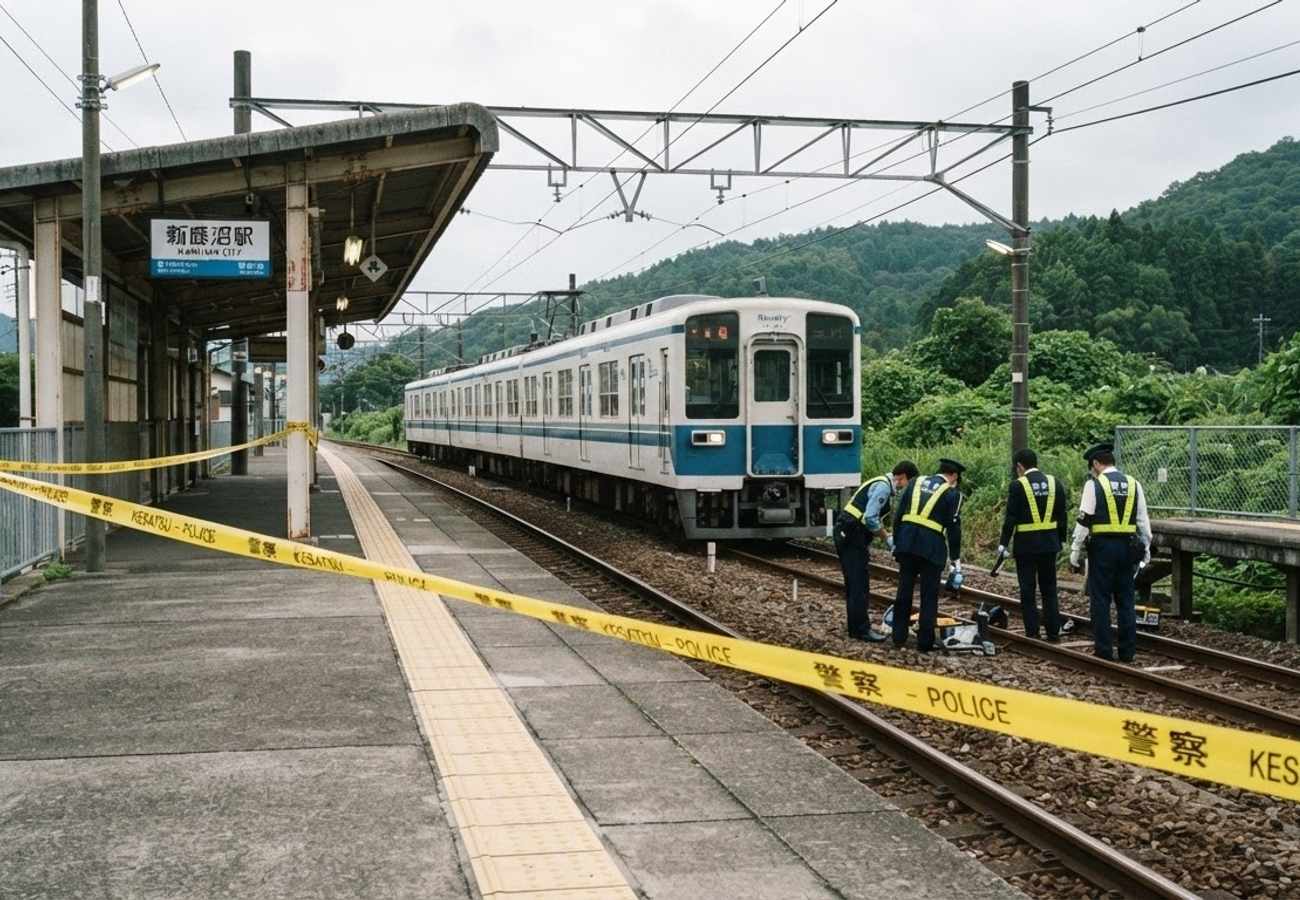
Image generated by AI
Four maintenance workers were killed on Thursday morning after being struck by a limited express train at Shin-Kanuma Station in Tochigi Prefecture. The incident, which occurred at approximately 10:46 a.m. on August 20, 2026, has resulted in significant disruptions across the Tobu Nikko Line and triggered an urgent investigation into track safety protocols.
The victims, described as men in their mid-to-late fifties and sixties, were part of a seven-person crew tasked with clearing vegetation and weeds from the railway corridor. According to reports from local police and emergency responders, three of the workers were found trapped beneath the train carriage, while a fourth was located on the station platform.
Fatal Collision Paralyzes Tobu Nikko Line Traffic
The accident took place at Shin-Kanuma Station, a key node on the Tobu Nikko Line. This specific rail artery is vital for both local commuters and the regional tourism economy, as it serves as a primary gateway for travelers heading toward the historic shrines, temples, and natural landscapes of Nikko.
Immediately following the impact, all services on the affected section of the line were suspended. The halt in operations created a ripple effect, impacting passengers traveling from the Tokyo metropolitan area toward northern Tochigi. Because the Tobu Nikko Line is a cornerstone of regional accessibility, the suspension caused immediate logistical challenges for both residents and international tourists.
Industry reports confirm that the train involved was a limited express service. Unlike the Shinkansen high-speed rail, limited express trains operate on conventional tracks but provide accelerated transit between major urban centers and regional destinations.
Passenger Accounts of Emergency Braking
Individuals aboard the limited express service reported a sudden and jarring transition from normal operation to a complete halt. One passenger noted hearing an unusual sound immediately preceding the emergency stop, which occurred shortly after the train entered the station perimeter.
Following the stop, railway personnel informed those on board that staff were investigating the cause of the unexpected interruption. Passengers remained confined to the train for a period while emergency crews and police secured the site to recover the victims and preserve evidence for the subsequent investigation.
Scrutiny of Railway Maintenance Safety Protocols
The tragedy has raised serious questions regarding the safety measures in place for workers operating on active lines. Standard operating procedure for Japanese railway maintenance typically requires a designated lookout—a staff member positioned to provide early warnings of approaching trains to the work crew.
It remains unclear whether a lookout was present or if the warning system failed at Shin-Kanuma Station. Investigators are currently focusing on several critical areas:
- The specific communication chain used between the train driver and the ground crew.
- Whether the necessary work permissions and safety clearances were granted for that specific time slot.
- The effectiveness of the warning signals provided to the vegetation-clearing team.
- The exact positioning of the workers relative to the tracks at the moment of impact.
Technical Summary of the Shin-Kanuma Incident
| Detail | Information |
|---|---|
| Location | Shin-Kanuma Station, Kanuma, Tochigi Prefecture |
| Railway Line | Tobu Nikko Line |
| Date of Incident | 20 August 2026 |
| Time of Occurrence | Approximately 10:46 local time |
| Casualties | Four railway workers (deceased) |
| Activity Underway | Vegetation and weed clearing |
| Train Classification | Limited express |
| Operational Impact | Immediate suspension of Tobu Nikko Line services |
| Current Status | Official investigation into safety arrangements |
Regional Tourism and Logistical Implications
For the international traveler, this incident underscores the volatility of regional rail schedules during emergency events. Tochigi is one of Japan's premier tourist destinations, and the Tobu railway network is the primary lifeline for those visiting Nikko’s UNESCO World Heritage sites.
While there is no evidence suggesting that tourist activity contributed to the accident, the operational fallout is significant. Travelers are advised to allow for additional transit time and monitor real-time updates from Tobu Railway, as emergency inspections and safety audits may lead to further intermittent delays or route diversions.
Assessing Japan's Railway Safety Record
Japan is globally renowned for its operational discipline and a safety record that is among the best in the world. However, this event highlights a critical distinction: passenger safety is often managed through automated systems, whereas worker safety relies heavily on human communication and strict adherence to manual protocols.
The death of four experienced workers in a single incident is an anomaly that will likely lead to a systemic review of how vegetation management and track maintenance are handled across conventional lines. The findings of this probe may result in new mandates for electronic warning systems or stricter track-access lockdowns during maintenance windows.
Why This Matters: The Human and Legal Cost
For the traveler, this event is a reminder that the seamless efficiency of Japanese rail is supported by high-risk manual labor. From a logistical standpoint, a single failure in communication can paralyze an entire regional corridor, proving that the "last mile" of maintenance is often the most vulnerable point in the network.
From a legal and workplace safety perspective, this incident creates a precedent for how responsibility is assigned when "standard" lookout procedures are in place but fail to prevent a catastrophe. If it is discovered that the warning system was bypassed or improperly implemented, it could lead to significant liability for the contractors and the railway operator.
The recovery of the victims and the ongoing forensic analysis of the track signals will determine whether this was a systemic failure or a tragic human error.
Related Travel Guides
Disclaimer
This article is for informational and educational purposes only. It does not constitute legal, financial, or professional advice. While we strive to provide accurate and up-to-date information, travel policies, regulations, and conditions change rapidly. Always verify information with official sources before making travel decisions. Nomad Lawyer makes no representations about the accuracy, reliability, completeness, or suitability of the information provided. Readers should consult qualified professionals for advice specific to their circumstances. The views expressed in this article are those of the author and do not necessarily reflect the views of Nomad Lawyer.
Kunal K Choudhary
Co-Founder & Contributor
A passionate traveller and tech enthusiast. Kunal contributes to the vision and growth of Nomad Lawyer, bringing fresh perspectives and driving the community forward.
Learn more about our team →