
Japan Regional Rail Guide 2026: Exploring Tohoku and Kyushu Cultural Routes and Volcanic Landscapes
An authoritative analysis of rail-based travel through Japan's Tohoku and Kyushu regions, detailing samurai heritage, volcanic calderas, and essential passenger transit data for 2026.

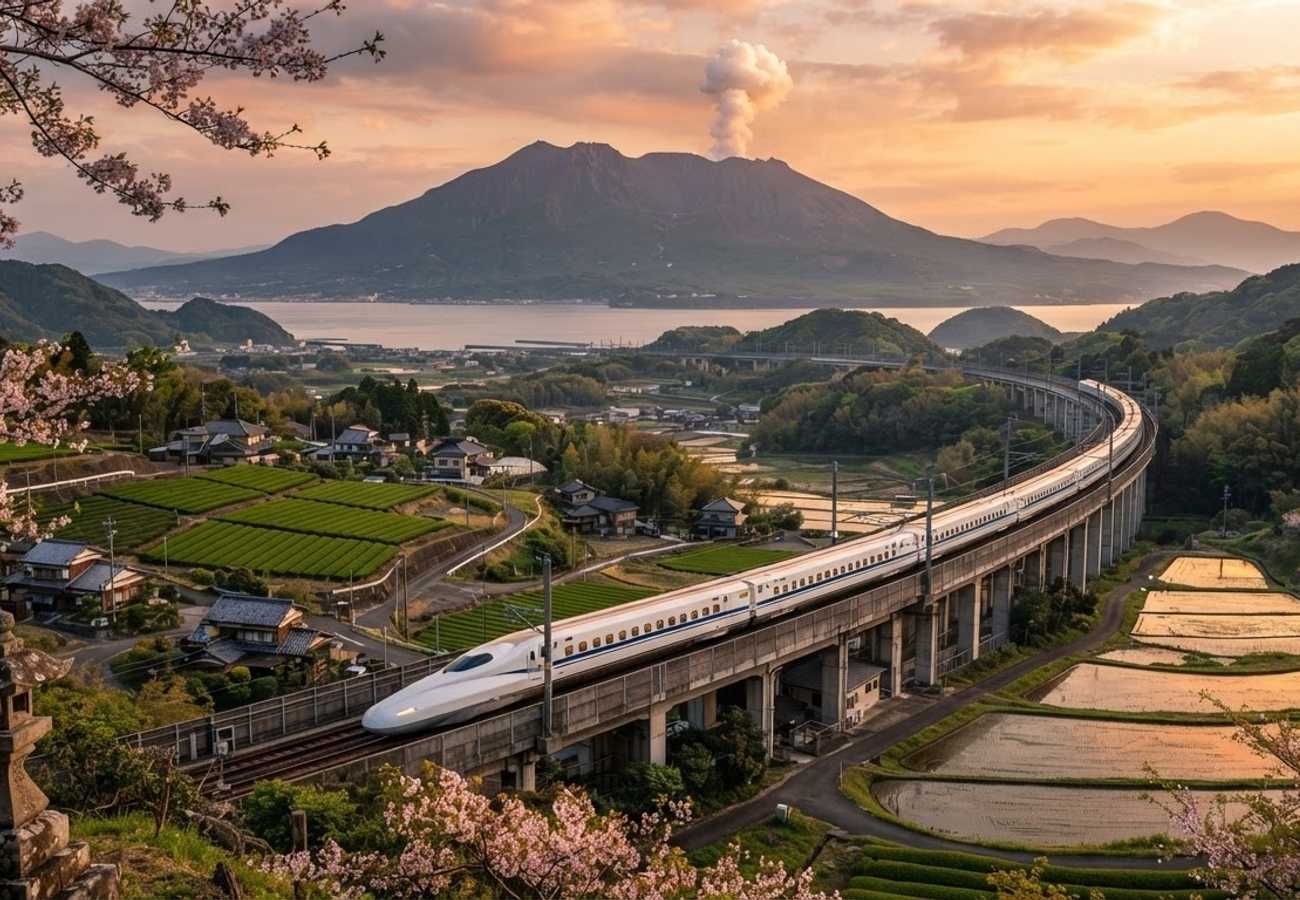
Image generated by AI
Japan's rail infrastructure continues to decentralize tourism away from the Tokyo-Kyoto-Osaka corridor. For the 2026 travel season, the Tohoku and Kyushu regions emerge as the primary hubs for high-yield cultural and geological tourism.
Regional Transit Analysis: The North and South Divide
Our analysis of Japan's current transit patterns indicates a significant shift toward regional exploration. While the "Golden Route" remains popular, the Tohoku (North) and Kyushu (South) regions offer distinct logistical frameworks and cultural assets accessible via the Japan Rail (JR) network.
Tohoku is defined by its seasonal volatility and preserved feudal history, whereas Kyushu is characterized by its volcanic activity and international maritime history. Both regions rely on a tiered rail system: high-speed Shinkansen for inter-city transit and localized lines for rural penetration.
Tohoku: Heritage and Seasonal Logistics
Tohoku comprises six prefectures. Travel here is heavily dictated by the calendar, with specific festivals and agricultural harvests driving passenger surges.
Key Regional Hubs and Attractions:
- Fukushima: The primary entry point for samurai heritage. Tsuruga Castle and local sake breweries are the central draws.
- Miyagi (Sendai & Matsushima): High-density transit for maritime tourism. Matsushima Bay is a critical stop for sightseeing cruises.
- Iwate: Focused on quiet heritage. Hiraizumi is the primary destination for temple and garden architecture.
- Akita: Center for cultural festivals, including the Akita Kanto Festival and the winter Yokote Kamakura Festival.
- Yamagata: Known for the Yamadera mountainside temple and the traditional ryokan culture of Ginzan Onsen.
- Aomori: The northern terminus, famous for the Nebuta Festival and Hirosaki Castle.
Tohoku Travel Matrix
| Destination | Primary Travel Experience | Key Asset |
|---|---|---|
| Fukushima | Samurai Heritage | Tsuruga Castle |
| Sendai/Matsushima | Maritime Scenery | Pine-covered islands |
| Hiraizumi | Spiritual Heritage | Temples and Gardens |
| Akita | Cultural Traditions | Akita Inu & Kanto Festival |
| Yamagata | Wellness & Nature | Ginzan Onsen & Yamadera |
| Aomori | Agricultural/Festivals | Nebuta Traditions |
Kyushu: Volcanic Landscapes and Coastal Transit
Kyushu, Japan's third-largest island, offers a geological experience fundamentally different from the north. The transit network here is designed to connect urban centers with remote volcanic sites.
Strategic Transit Points:
- Fukuoka: The logistical gateway. It serves as the primary rail hub for all southern excursions.
- Saga: Specialized in ceramic tourism, specifically the pottery towns of Arita and Imari.
- Nagasaki: A site of complex historical significance. Key sites include the Peace Park, Atomic Bomb Museum, and the Dutch Slope.
- Kumamoto: The gateway to Mount Aso, featuring one of the world's largest volcanic calderas.
- Oita: The epicenter of onsen culture, specifically in Beppu, where volcanic activity supports extensive bathing traditions.
- Miyazaki: Coastal geological sites, including the Aoshima "Devil's Washboard" sandstone formations.
- Kagoshima: The southern terminus featuring Sakurajima, one of the world's most active volcanoes.
Passenger Rights & Rail Advisory
For passengers navigating these regional networks, understanding the logistics of the JR system is essential for avoiding disruption.
Rebooking and Compensation Framework: Our analysis of JR policies suggests that while Japanese rail is renowned for punctuality, extreme weather (particularly snow in Tohoku or volcanic activity in Kyushu) can trigger cancellations. For the affected passenger, this means:
- Ticket Validity: In the event of a Shinkansen cancellation, tickets are generally valid for the next available service on the same route.
- Refunds: Full refunds are typically provided for unused tickets if the train is canceled or significantly delayed.
- Alternative Routing: Passengers are advised to use the official JR apps for real-time rerouting. In the event of a total line failure, JR often coordinates with local bus networks to ensure passenger transit.
Pro Tip for 2026 Travelers: To maximize value, passengers should utilize regional rail passes (e.g., JR East Pass or JR Kyushu Pass) rather than the national JR Pass, as these offer more targeted flexibility for these specific regions.
Industry Analyst View
The expansion of tourism into Tohoku and Kyushu represents a strategic move by the Japanese government to alleviate "over-tourism" in Kyoto and Tokyo. By leveraging the Tohoku Shinkansen and the JR Kyushu network, Japan is successfully converting "repeat visitors" into "regional explorers."
The integration of luxury sleeper trains and themed regional expresses suggests that the rail experience itself is becoming the destination. We expect further infrastructure investment in the "last mile" connectivity—connecting Shinkansen stations to rural onsens and heritage sites via automated shuttles and improved local bus synchronization.
Diversifying your Japanese itinerary beyond the urban centers is no longer a luxury, but a logistical necessity for the modern traveler.
Related Travel Guides
Disclaimer
This article is for informational and educational purposes only. It does not constitute legal, financial, or professional advice. While we strive to provide accurate and up-to-date information, travel policies, regulations, and conditions change rapidly. Always verify information with official sources before making travel decisions. Nomad Lawyer makes no representations about the accuracy, reliability, completeness, or suitability of the information provided. Readers should consult qualified professionals for advice specific to their circumstances. The views expressed in this article are those of the author and do not necessarily reflect the views of Nomad Lawyer.
Raushan Kumar
Founder & Lead Developer
Full-stack developer with 11+ years of experience and a passionate traveller. Raushan built Nomad Lawyer from the ground up with a vision to create the best travel and law experience on the web.
Learn more about our team →