
Madar–Darbhanga Amrit Bharat Express Goes Daily in 2026: Game-Changer for Rajasthan-Bihar Rail Migration
India's Madar–Darbhanga Amrit Bharat Express shifts from weekly to daily operations, transforming connectivity across Rajasthan, Uttar Pradesh, and Bihar for migrant workers and students.

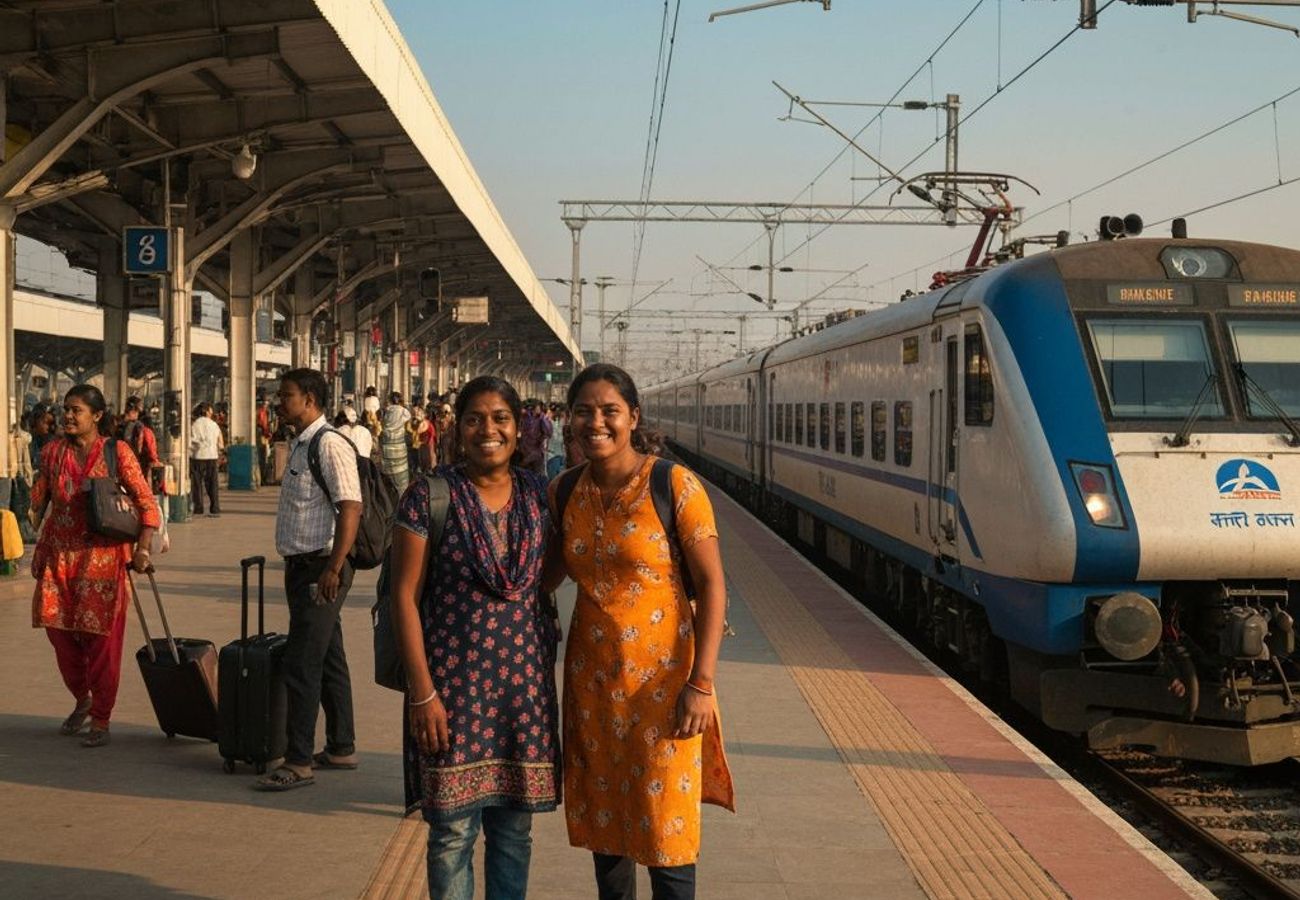
Image generated by AI
A Weekly Bottleneck Becomes a Daily Lifeline
India's railway system just made a critical move that will transform how millions of people travel between three states. The Madar–Darbhanga Amrit Bharat Express has officially transitioned from a once-weekly service to a daily operation, addressing years of pent-up demand on one of India's most vital inter-state migration corridors.
I've covered Indian Railways infrastructure for years, and this shift signals something bigger than a simple scheduling change. This is about recognizing that the gap between supply and demand had become unsustainable. The train was operating once a week. That's it. One departure, one chance per week for millions of dependent passengers.
Reddit: "Finally. My uncle was stuck waiting 5 days for the weekly train because he missed the first one. Daily service means he can actually plan his work schedule now." — r/IndiaTravel
The Crushing Reality of Weekly-Only Service
Before this upgrade, passengers faced a brutal constraint: book a seat on the single weekly departure or wait seven more days. For migrant workers traveling between employment hubs in Rajasthan and their home districts in Bihar, this created a logistical nightmare.
Construction workers in Jaipur and Kishangarh found themselves locked into rigid travel windows. Students commuting to coaching centers or universities couldn't adjust their schedules. Small traders moving goods between states had zero flexibility. One missed booking meant an entire week lost.
The booking pressure was relentless. Seat availability evaporated within hours of the window opening. Thousands of eligible passengers simply couldn't secure tickets, forcing them toward costlier alternatives—overcrowded buses, private taxis, or unreliable shared transport.
The Route: A Strategic Three-State Corridor
The Madar–Darbhanga Amrit Bharat Express covers one of India's most economically significant yet geographically fragmented corridors. This isn't a random route; it's deliberately designed to connect regions with massive population flows.
The journey spans three distinct segments:
Rajasthan's Gateway Section connects Madar Junction through tourism and administrative powerhouses like Jaipur Junction and Bharatpur Junction. These aren't small towns—Jaipur alone is a major national economic and transit hub.
Uttar Pradesh's Industrial Belt is where the real population density hits. The route threads through Kanpur Central, Gorakhpur Junction, and Agra, linking what the Indian Railways calls one of India's busiest corridors. This section passes through industrial zones, educational centers, and cultural landmarks across central India's heartland.
Bihar's Eastern Terminus reaches densely populated districts through Sitamarhi Junction and finally Darbhanga Junction, the endpoint. This region experiences some of India's highest migration-to-employment ratios.
According to Indian Railways' official capacity reports, the Amrit Bharat Express category was specifically designed to address the gap between high-speed luxury trains and overcrowded general compartments. This route proves the concept works.
Who Benefits Most: Migrant Workers and Students
The daily upgrade delivers immediate relief to two critical passenger groups.
Migrant workers represent the bulk of this corridor's traffic. A significant population from Bihar and eastern Uttar Pradesh works in Rajasthan's construction, manufacturing, and service sectors. Previously, their entire travel planning revolved around one weekly train. Miss it, and you're waiting until next week. Miss two connections, and you're already two weeks behind on work schedules or wages.
With daily service, workers can now plan around employment demands rather than train schedules. If a construction project extends, they can travel the next day. If unexpected family obligations arise, they don't lose an entire week of income waiting.
Students are the secondary beneficiary group. Coaching hubs in Jaipur and Kanpur attract thousands of students from Bihar. The weekly-only schedule made regular home visits impossible—students couldn't leave for exams without risking missed departures for weeks.
Daily frequency means students can maintain family connections without sacrificing academic progress. Young professionals pursuing opportunities across states gain genuine mobility for the first time.
The Economics of Daily Operation
From an Indian Railways perspective, this upgrade solves a structural efficiency problem. Railway analysts note that high-frequency services on underserved routes actually improve overall network performance.
Think about it logically: one weekly train concentrates all demand into a single bottleneck. Seats overfill. Passengers get turned away. People resort to alternative transport. Daily service distributes that same demand across seven departure points, reducing per-train overcrowding and improving network-wide capacity utilization.
The Amrit Bharat Express category is deliberately positioned at the intersection of affordability and reliability. It undercuts luxury trains on price while offering better comfort and scheduling than general coaches. This route exemplifies that model.
For small traders and entrepreneurs, daily connectivity means predictable shipping schedules. Goods can move between Rajasthan's markets and Bihar's consumer bases without the logistics nightmare of single-departure planning. That's not just convenience—it's economic integration in real time.
What This Means for India's Mobility Infrastructure
This isn't isolated news about one train route. It represents a deliberate strategy shift in how Indian Railways approaches high-demand corridors.
The Madar–Darbhanga upgrade signals that infrastructure investment is finally catching up to demographic reality. India's internal migration patterns are massive and constant. Seasonal agricultural cycles, festival periods, and employment cycles all create predictable surges in demand. A weekly train pretended none of that existed.
Daily operation acknowledges the real India—mobile, diverse, and in constant motion across state borders. It's a small but meaningful step toward treating inter-state rail connectivity as essential infrastructure rather than supplementary service.
The broader Amrit Bharat Express network now serves as a model for other high-demand corridors. If daily frequency works here, why not scale it to similar routes? That's the conversation happening in Indian Railways planning departments right now.
What Passengers Actually Experience
On a practical level, the change is transformative.
A migrant worker no longer calculates her entire week around train availability. She books when work demands it. A student doesn't watch the calendar with dread, wondering if he'll make the one weekly departure. A small trader plans shipments with actual predictability.
Seat availability improves because demand spreads across seven departures instead of concentrating into one. The crush at ticket windows eases. Online booking opens up to people who couldn't previously secure seats because they were already sold out within an hour.
Journey convenience increases because the train adapts to passenger schedules instead of passengers molding their entire lives around train schedules.
The Larger Context: Passenger-Centric Rail Expansion
India's railway system has historically struggled with the gap between passenger demand and infrastructure supply. The Madar–Darbhanga daily upgrade represents a modest but meaningful shift toward acknowledging passenger reality.
The Amrit Bharat Express category was created specifically to fill that gap—affordable enough for working-class passengers, frequent enough for regular travelers, comfortable enough to compete with buses and private transport. This route proves the concept is workable.
What started as a weekly service addressing occasional long-distance travelers is now a daily backbone for millions of inter-state movements. That transition matters.
India's railways are finally beginning to move at the speed of its people.
Related Travel Guides
Disclaimer
This article is for informational and educational purposes only. It does not constitute legal, financial, or professional advice. While we strive to provide accurate and up-to-date information, travel policies, regulations, and conditions change rapidly. Always verify information with official sources before making travel decisions. Nomad Lawyer makes no representations about the accuracy, reliability, completeness, or suitability of the information provided. Readers should consult qualified professionals for advice specific to their circumstances. The views expressed in this article are those of the author and do not necessarily reflect the views of Nomad Lawyer.
Preeti Gunjan
Contributor & Community Manager
A passionate traveller and community builder. Preeti helps grow the Nomad Lawyer community, fostering engagement and bringing the reader experience to life.
Learn more about our team →