
European Coach Travel Expansion: Italy and EU Regional Tourism Trends
Analysis of how Italy, France, Spain, Germany, and Sweden are leveraging coach travel to decentralize tourism and connect major gateways to rural heritage sites

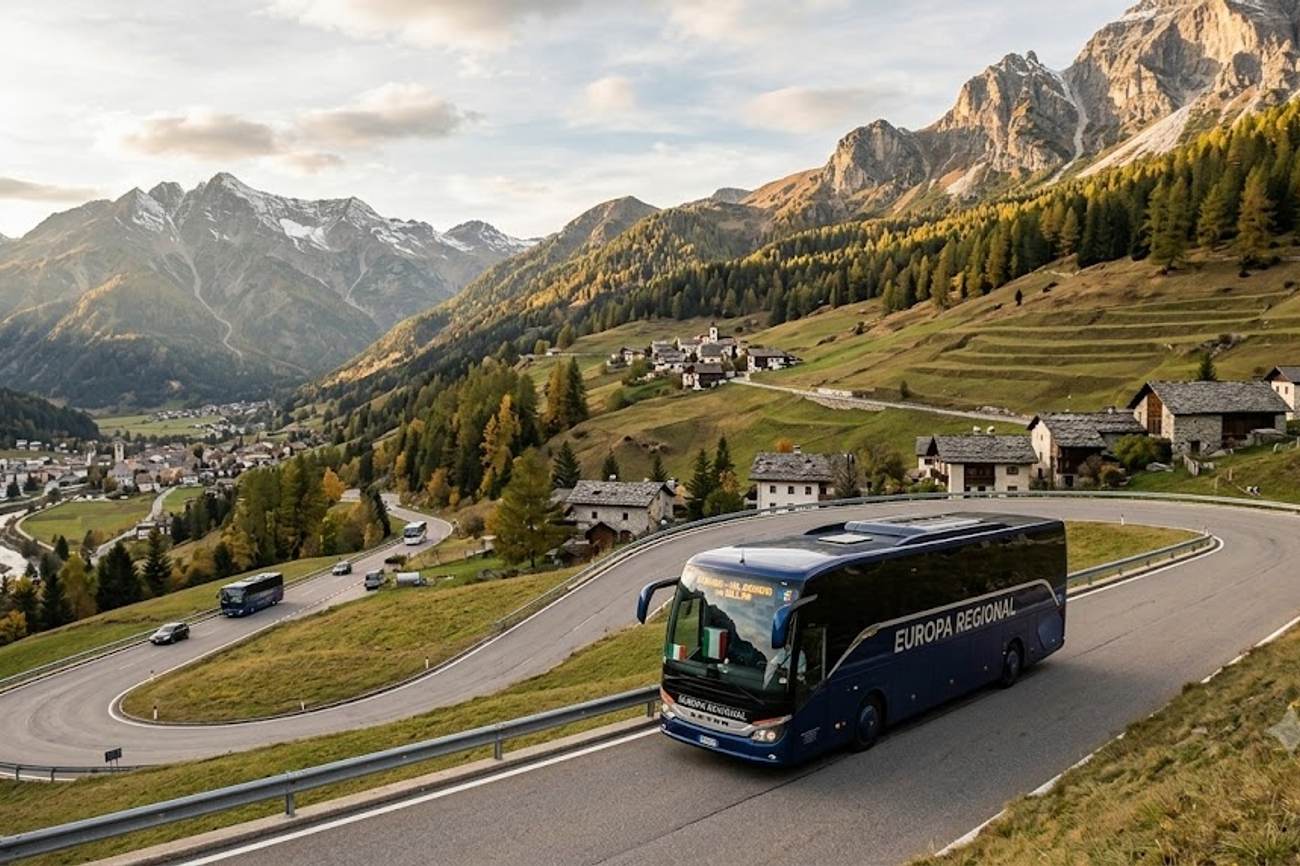
Image generated by AI
The Core Development
European tourism authorities are pivoting toward organized coach travel to solve the "overtourism" crisis in major hubs. By utilizing coaches to bridge the gap between primary gateways—such as airports and high-speed rail terminals—and secondary destinations, countries like Italy, France, Spain, Germany, and Sweden aim to distribute visitor spending more equitably across their territories.
This is not a unified five-country program but a fragmented adoption of coach logistics to reach sites where rail or air infrastructure is absent. The goal is to create seamless multimodal journeys that reduce the friction of luggage transfers and local transit for groups, students, and older travelers.
Key Facts Breakdown
- Market Volume: EU residents completed nearly 1.2 billion overnight tourism trips in 2024; 92.2% remained within the EU.
- Growth Trends: In H1 2026, tourist accommodation reached 1.321 billion nights (an increase of 21.8 million year-on-year).
- International vs. Domestic: International nights rose by 2.5%, while domestic nights grew by 0.9%.
- Transport Share (2023):
- Cars: 70.6% of passenger-kilometres.
- Aircraft: 14.7%.
- Buses/Coaches/Trolleybuses: 7.2%.
- Rail: 7.1%.
- Fleet Size: The EU operated 737,142 buses and motor coaches in 2024.
Data Table: Strategic Coach Travel Framework
| Subject | Verified Position |
|---|---|
| Leading Destination | Italy |
| Comparison Nations | France, Spain, Germany, Sweden |
| Policy Driver | Forthcoming EU Sustainable Tourism Strategy |
| Primary Function | Connecting gateways to regional/rural destinations |
| Target Demographics | Groups, families, students, seniors, event delegates |
| Core Benefit | Access to sites with limited rail/air connectivity |
| Primary Constraints | City access, parking, workforce capacity, fleet costs |
Why This Matters
From a logistical perspective, the reliance on cars (70.6% of passenger-kilometres) is unsustainable for Europe's heritage sites. The real impact of this shift is the "last-mile" solution. While high-speed rail connects Rome to Florence, it does not connect a tour group to a remote Umbrian village or a specific archaeological site.
Our analysis of the route maps indicates that coach travel is the only viable method for "cluster touring"—where a single group visits multiple low-density sites without the overhead of multiple hotel transfers or car rentals. For the industry, this means the value is no longer in the transport itself, but in the intermodal synchronization. If a coach cannot efficiently exit a cruise port or airport due to restrictive city-access rules, the entire regional tourism chain fails.
Industry Outlook
The success of this expansion depends on three non-negotiable infrastructure upgrades:
- Digital Access Integration: Real-time updates on Low-Emission Zones (LEZ) and drop-off restrictions to prevent driver delays.
- Dedicated Terminalization: Moving beyond makeshift street parking to formal coach hubs that include driver facilities and passenger amenities.
- Fleet Modernization: To align with the EU Sustainable Tourism Strategy, operators must transition to low-emission vehicles to avoid being banned from historic city centers.
Expect a rise in "hub-and-spoke" itineraries where travelers fly into a major city and utilize a dedicated coach circuit for regional exploration, reducing the pressure on urban centers.
Internal Link Suggestions:
- Sustainable Aviation Trends in the EU
- The Rise of Multimodal Transport Hubs in Southern Europe
- Impact of Low-Emission Zones on European Logistics
Related Travel Guides
Disclaimer
This article is for informational and educational purposes only. It does not constitute legal, financial, or professional advice. While we strive to provide accurate and up-to-date information, travel policies, regulations, and conditions change rapidly. Always verify information with official sources before making travel decisions. Nomad Lawyer makes no representations about the accuracy, reliability, completeness, or suitability of the information provided. Readers should consult qualified professionals for advice specific to their circumstances. The views expressed in this article are those of the author and do not necessarily reflect the views of Nomad Lawyer.
Preeti Gunjan
Contributor & Community Manager
A passionate traveller and community builder. Preeti helps grow the Nomad Lawyer community, fostering engagement and bringing the reader experience to life.
Learn more about our team →